Ted Sorensen: The Confidant in the Shadow of Power
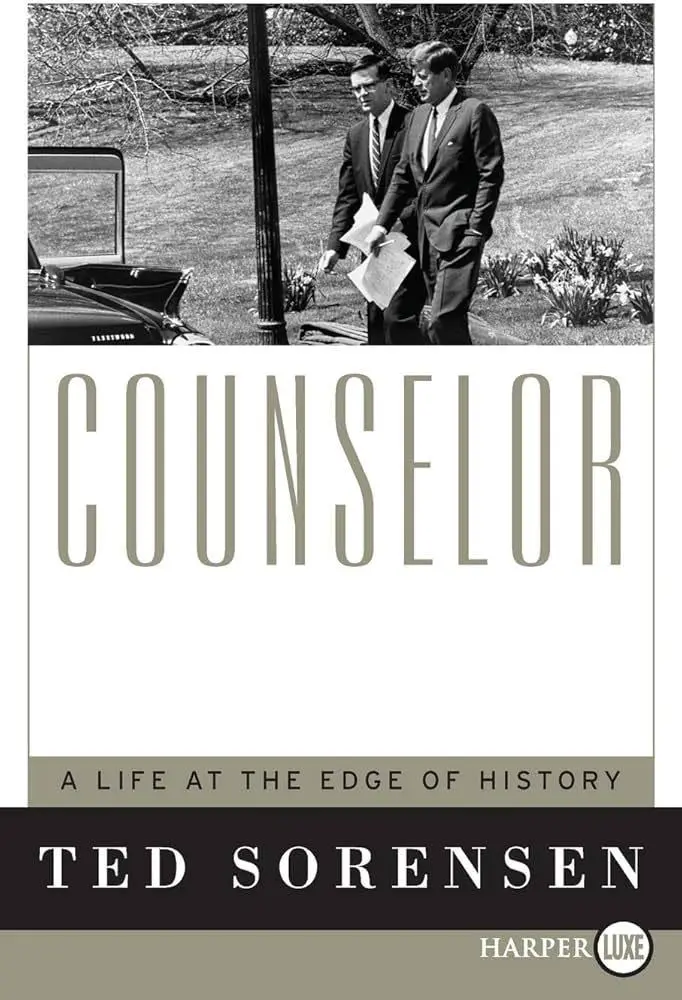
Ted Sorensen was much more than a speechwriter. He was the voice, the conscience, and, in many moments, the intellectual architect of John F. Kennedy’s presidency. In his autobiography, Counselor: A Life at the Edge of History, Sorensen takes us into the inner workings of power, revealing not only his role in shaping U.S. policy but also the journey of a man whose pen and conviction forged an indelible legacy.
From Nebraska to the White House
Sorensen was born in 1928 in Lincoln, Nebraska, into a progressive family that valued public service and education. From a young age, he displayed an extraordinary talent for writing and a deep interest in politics, which led him to study law at the University of Nebraska. His passion for justice and skill with words took him to Washington, D.C., where in 1953, he joined the team of a young senator from Massachusetts named John F. Kennedy. Thus began one of the most consequential alliances in American political history.
The Voice of a President
Kennedy’s rise to the presidency in 1961 cemented Sorensen as his closest advisor. Not only did he craft some of the most iconic speeches of the 20th century, but he was also a key player in the president’s political strategy. He was the mind behind the phrase that inspired generations: “Ask not what your country can do for you, ask what you can do for your country.”
But his influence extended beyond rhetoric. Sorensen played a fundamental role in shaping policies on civil rights, space exploration, and foreign relations. During the Cuban Missile Crisis, his ability to synthesize ideas and project calm amid chaos helped prevent a nuclear conflict. It was he who drafted Kennedy’s response to Nikita Khrushchev, a letter that, with its precise and strategic tone, de-escalated one of the most dangerous tensions of the Cold War.
A Man Without a President
Kennedy’s assassination in 1963 was a devastating blow for Sorensen, who left the White House the following year. He moved to New York and dedicated himself to law, though he never entirely abandoned politics. In 1977, President Jimmy Carter nominated him to lead the CIA, but the Senate blocked his appointment due to his liberal past and criticisms of the intelligence community.
The book is not just an account of his days in power but also a reflection on ethics in politics and the fragility of democracy. Sorensen warns against the cynicism that has corroded trust in leaders and emphasizes the importance of honesty in public service. For him, Kennedy represented the possibility of principled leadership, and his legacy should be remembered as a beacon of what politics could — and should — be.
A Testimony for History
Beyond power and crises, Counselor is a testament to the importance of words. For Sorensen, politics was not just a game of strategy but a moral commitment to truth and the common good. His account reminds us that history is not only written in great events but also in moments of decision, in carefully chosen words, in ideals defended even when adversity threatens to silence them.
At a time when trust in leaders is increasingly scarce, Ted Sorensen’s story resonates strongly. It reminds us that behind every great president are minds that shape their ideas, hearts that believe in something greater than themselves, and consciences that, even in the shadows, illuminate the path of history.