- Honor as Weight and Legacy: Condoleezza Rice and Foreign Policy from Within
- Ted Sorensen: The Confidant in the Shadow of Power
- “Public Affairs and Democratic Ideals” by Curtis Ventriss (2021)
- "The Chaos Machine: The Inside Story of How Social Media Rewired Our Minds and Our World" by Max…
- "The Righteous Mind: Why Good People Are Divided by Politics and Religion" by Jonathan Haidt (2013)
- “The Engineers of Chaos” by Giuliano da Empoli (2019)
Integrity crisis.
The Omnipresence of Conflicts of Interest
In every sphere of life, from business to government, conflicts of interest lurk as a silent enemy of integrity and public trust. A conflict of interest arises when an individual or organization has personal or private interests that could compromise their ability to act in the best interest of the greater good they are supposed to serve.
These conflicts can take various forms. Direct conflicts of interest occur when an individual has a direct financial or personal interest that clashes with their professional responsibilities, such as a regulator who owns shares in a company they oversee. More common, and often more difficult to discern, are indirect conflicts of interest, where the connection is more subtle. These can arise from family ties, political affiliations, or even the prospect of future employment in an industry one currently regulates.
The Ethical Implications of Conflicts of Interest
Beyond these distinctions, conflicts of interest pose profound ethical challenges. At their core, they test an individual’s ability to subordinate their private interests to the public good. They erode trust, which is the foundation of all social and economic interactions.
And when left unchecked, they can lead to corruption and favoritism, undermining the very legitimacy of our institutions.
For these reasons, the regulation of conflicts of interest is essential. Without clear rules that require the disclosure and management of these conflicts, we risk a world where public decisions are made for private gain. The risks are especially acute in contexts where power is concentrated and oversight is weak, as in many developing countries.
The implications are far-reaching. In the business world, undisclosed conflicts of interest can lead to decisions that benefit executives or shareholders at the expense of employees and customers. In the academic world, they can skew research results, undermining the disinterested pursuit of truth. And in government, they can lead to policies that serve narrow special interests over the public good.
Conflicts of Interest in the Justice System
But perhaps nowhere are conflicts of interest more concerning than in the realm of justice. Here, impartiality is not just an ideal but a fundamental requirement for the fair protection of rights and the just application of the law.
When prosecutors or judges have personal or political interests in the outcome of a case, the very foundations of the rule of law are undermined.
For prosecutors, conflicts of interest can arise from political connections, career ambitions, or even strong personal beliefs. These can lead to decisions about whether to file charges, what charges to file, and how to pursue a case, not based on the facts and the law, but on calculations of personal or political advantage. In their most extreme form, this can result in politically motivated prosecutions of opponents or the protection of powerful allies from accountability.
For judges, conflicts of interest can arise from many of the same sources, as well as from financial or personal connections to litigants or lawyers involved in cases before their court. Even the appearance of such a conflict can be deeply damaging, eroding public trust in the impartiality of the judiciary. History is rife with examples of how such conflicts have distorted the course of justice, from judges presiding over cases involving companies in which they had financial interests, to prosecutors refusing to investigate political allies accused of wrongdoing.
Each of these cases is a stain on the credibility of legal institutions and a betrayal of the citizens they are supposed to serve. Addressing conflicts of interest in the legal sphere requires robust safeguards. These may include strict disclosure requirements for judges and prosecutors, clear processes for recusal in cases of conflict, and independent bodies to investigate and sanction violations. But beyond formal rules, a culture of integrity is needed within the legal profession, one where serving the interests of justice is valued above personal gain.
Conflicts of Interest in the Medical Profession
Equally concerning is the potential for conflicts of interest in the medical profession. Here, commercial interests can directly clash with the sacred duty of doctors to prioritize their patients’ well-being. When doctors have financial ties to pharmaceutical companies or medical device manufacturers, whether through investments, consulting fees, or gifts, there is a possibility that these relationships will unduly influence their medical judgment. This can manifest in multiple ways, from prescribing certain medications or treatments not because they are the most effective or appropriate, but because they financially benefit the doctor, to participating in clinical trials or research biased by commercial interests.
In extreme cases, doctors may even withhold potentially beneficial treatments from patients if they threaten their own interests. The consequences for public health can be severe. Patients may receive suboptimal or even harmful care, increasing the risks of adverse outcomes. Healthcare costs may rise as more expensive but not necessarily more effective treatments are prescribed.
And trust in the medical profession, a fundamental pillar of an effective healthcare system, may be severely eroded.
Addressing this challenge will require a concerted effort. We need robust disclosure policies that require doctors to report any potentially conflicting financial relationships. We need clear and enforceable ethical guidelines that unequivocally prioritize patient well-being.
And we need strong leadership from medical and public health organizations to foster a culture of integrity and accountability. But the responsibility does not rest solely with individual doctors or medical organizations. Pharmaceutical and medical device companies must also commit to ethical and transparent practices.
And policymakers must ensure that regulatory frameworks are strong enough to safeguard the public interest without stifling beneficial innovation. Ultimately, safeguarding the integrity of the medical profession and ensuring that it always prioritizes patient well-being is the responsibility of the entire society. It requires constant vigilance, courageous action, and an unwavering commitment to the principle that healthcare is first and foremost a public service, not a commodity.
Conflicts of Interest in Media and Opinion Making
Nowhere are these conflicts more evident than in the world of media and opinion making, especially in the digital age. Here, conflicts of interest can arise not only from advertising contracts with private or governmental entities but also from the constant struggle for attention on digital platforms. In a media environment where metrics like ‘likes,’ shares, and comments often dictate revenue and influence, the temptation to tailor content to maximize engagement is powerful.
For digital opinion makers, whether social media influencers, YouTubers, or podcasters, this dynamic can lead to the promotion of views or products not because they are true or beneficial, but because they generate clicks and controversy.
It can encourage the adoption of extreme or sensationalist positions, or disproportionate coverage of certain topics or actors, not because of their intrinsic importance but because of their viral potential.
Moreover, the opacity of the algorithms that govern these platforms can exacerbate these conflicts. If a creator learns that a certain type of content is favored by the algorithm and therefore reaches more people and generates more income, the temptation to produce more of that content, regardless of its value or truthfulness, can be powerful.
This dynamic affects not only individual creators but also the platforms themselves. If a platform discovers that certain types of content or certain actors drive greater engagement and user retention, it may have a financial incentive to prioritize that content, even if it is divisive, misleading, or harmful.
Self-Censorship and Unconscious Bias
But conflicts of interest in this area are not always so direct. Sometimes, they can manifest in more subtle ways, such as self-censorship or unconscious bias. A creator may avoid certain topics or viewpoints out of fear of alienating followers or advertisers, even if they believe those topics deserve attention. Or they may, without realizing it, give more coverage to perspectives that reinforce their own beliefs or those of their audience, creating an echo chamber that distorts reality.
These biases can be especially problematic because they are often invisible. Unlike a direct advertising contract, they do not leave a paper trail. But they can have just as powerful an impact on shaping public discourse, perhaps even more so because they operate at a subconscious level.
Addressing these more subtle conflicts will require a high degree of self-awareness and reflection on the part of creators. They will need to constantly interrogate their own biases and motivations and actively seek out perspectives outside of their comfort zone. They will need to be willing to tackle difficult topics and tolerate the discomfort of challenging their audience.
But this cannot be solely an individual responsibility. Platforms also have a role to play in creating an environment that values integrity over engagement at all costs. This could mean adjusting algorithms to prioritize quality over quantity or providing tools and training to help creators recognize and mitigate their own biases.
Ultimately, navigating these complex conflicts will require an effort from the whole society. It will require transparency, accountability, and an unwavering commitment to the pursuit of truth, no matter how uncomfortable or unpopular it may be. It will require recognizing that in the digital age, the integrity of our information sphere is of vital importance to the health of our democracy.
The road ahead will not be easy. The incentives for sensationalism, polarization, and bias are deeply ingrained in our current media landscape. But the costs of not addressing them are too high. In a world where misinformation spreads faster than ever, where trust in institutions is declining, we cannot afford the luxury of complacency.
Perhaps it is time for a new social contract for the digital age. One that recognizes that freedom of expression comes with the responsibility to speak truthfully. One that values dialogue over diatribe, complexity over simplicity, and empathy over emotion. One that understands that attention is not an end in itself but a tool that must be used in service of truth and the common good.
Forging this new contract will not be the work of a single legislator, platform, or creator. It will be the work of all of us, citizens of the digital age, determined to build an online world that elevates the best of our shared humanity rather than the worst.
Conflicts of Interest in International Diplomacy
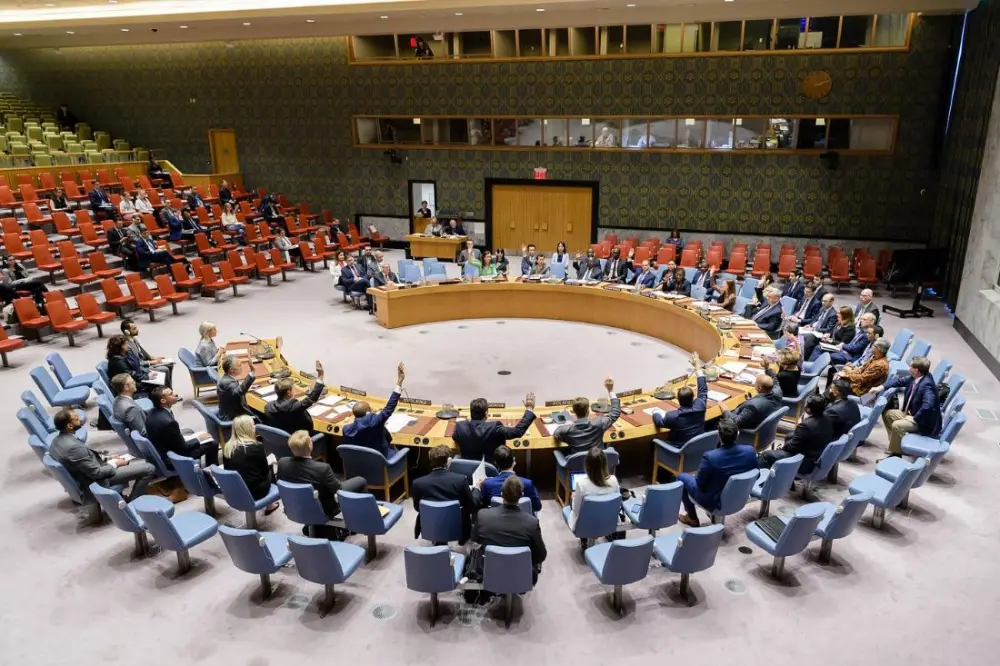
In the realm of international diplomacy, these challenges become even more acute. Here, conflicts of interest can distort not only policies but also relationships between nations, with profound consequences for global peace and prosperity. In developing countries, where diplomatic institutions often lack the capacity to effectively manage these tensions, the risks are especially high.
But it is not only nation-states that face these challenges. International organizations and non-profits are equally vulnerable. In the case of international organizations, conflicts of interest can arise from the disproportionate influence of certain member states, particularly those with greater economic or political power. This can lead to policies and decisions that reflect the interests of these powerful states over the collective good of the organization.
For non-profit organizations, conflicts of interest often arise from reliance on external donors. The need to secure funding can create pressures to align priorities and programs with donor preferences, potentially at the expense of the needs of the communities they are supposed to serve.
How, then, can we manage these conflicts in the diplomatic sphere? The answer lies in a multidimensional approach based on transparency, adaptability, and cooperation.
First, we need robust disclosure policies. All diplomatic actors, from individual diplomats to international organizations, should be required to declare any interests that might influence their decision-making. These policies should be adapted to the institutional realities of each context, but the principles of transparency and accountability should be universal.
Second, we need independent oversight mechanisms. Disclosure is useless without accountability. We need bodies with the mandate and capacity to investigate and sanction violations of conflict-of-interest norms. These can be formal, such as an ombudsman, or based in civil society, such as citizen watchdog groups.
Third, we must harness the power of technology. Digital tools can facilitate real-time monitoring of conflicts of interest, providing early warnings before they become diplomatic crises. But investment in these tools must be accompanied by investment in human capacity to use them effectively.
Finally, we need greater international cooperation. No country or organization can tackle this challenge alone. We need global standards for transparency and ethics in diplomacy, developed in a participatory manner and reflecting a diversity of perspectives. And we need mechanisms to share good practices and provide mutual support in implementation.
But beyond any specific policy or tool, what is required is a fundamental shift in diplomatic culture. We need to instill an ethic of public service that values integrity over personal interest, transparency over opacity. This must be reinforced by leadership at all levels, from heads of state to junior diplomats.
Conflicts of interest in diplomacy may seem like an overwhelming enemy, deeply embedded in the structures of power and privilege. But they are not invincible. With political will, innovation, and global solidarity, we can build a diplomatic culture that serves the common good, not narrow interests.
The road will not be easy. It will require us to confront uncomfortable truths about how power really works in our world. It will demand constant vigilance and relentless advocacy for the principles of integrity and transparency.
But the costs of inaction are too high. In an increasingly interconnected world, where global challenges require unprecedented cooperation, we cannot allow conflicts of interest to undermine the legitimacy of our diplomatic institutions. The stability of our international order, and the very health of our democratic sphere, depend on it.
The time has come for a new pact for diplomatic integrity. A pact that brings together governments, civil society, international organizations, and citizens in a shared commitment to transparency, accountability, and service to the common good. A pact that recognizes that in an interdependent world, none of us can afford the luxury of complacency in the face of corruption and conflicts of interest.
Forging this pact will not be easy. It will require visionary leadership, tireless advocacy, and the will to challenge entrenched interests. But as history reminds us, great progress always seems impossible until it is achieved.
This is the challenge before us. To build diplomacy for the 21st century, one that is worthy of the trust of the citizens it serves. One that can channel the astounding ingenuity and interconnectedness of our age towards building a more just, peaceful, and prosperous world.
Let it begin here. With each of us resolving to be guardians of public trust, tireless defenders of a world where power serves truth and not the other way around. This is the work of our era. Let us rise to the challenge.
Reference Reading.
1. Kurland, Nancy B. Ethics, Incentives, and Conflicts of Interest: A Practical Solution. Journal of Business Ethics, Vol. 14, №6, 1995, pp. 465.
2. MacDonald, Chris, McDonald, Michael, Norman, Wayne. Charitable Conflicts of Interest. Journal of Business Ethics, Vol. 39, №1–2, 2002, pp. 67–74.
3. Don A. Moore, Daylian M. Cain, George Loewenstein, Max H. Bazerman (Eds.) Conflicts of Interest: Challenges and Solutions in Business, Law, Medicine, and Public Policy. Cambridge University Press, 2005.
4. Smith, Richard. Conflicts of Interest: How Money Clouds Objectivity. Journal of the Royal Society of Medicine, Vol. 99, June 2006, pp. 292–297.
5. Davis, Anthony E., Maher, Frank, Scott, Andrew. Risk Management in Law Firms: Conflicts of Interest. Business of Law, 2013.
6. Michael T.M. Wang, Andrew Grey, Mark J. Bolland. Conflicts of Interest and Expertise of Independent Commenters in News Stories About Medical Research. CMAJ, Vol. 189, Issue 15, April 18, 2017, pp. E553–559.
7. Sah, Sunita, Feiler, Derek. Disclosure Penalty and Altruistic Signal: The Costs of Being Honest in Conflict of Interest. 2019.
8. Minato, Kazuki. Too Many Cheers and Not Enough Independence: Media Control through Government Advertisements in an Indian State. IDE Discussion Paper №784, Institute of Developing Economies (IDE), Japan, April 2020.
9. Sobirova Nozimakhon Mukhtorkhon Qizi. The Concept Of “Conflict Of Interest” And The Relationship Of This Term With “Personal Interest”. The American Journal of Political Science Law and Criminology, Vol. 03 Issue 12, 2021, pp. 11–16.
10. Vatanartıran, Ömer. Celebrity Social Media Accounts as Public Diplomacy Tools. Journal of International Relations and Public Diplomacy, 2021.
11. Clüver Ashbrook, Cathryn, and Renedo Zalba, Alvaro. Social Media Influence on Diplomatic Negotiation: Shifting the Shape of the Table. Negotiation Journal, Winter 2021, pp. 83–101.
12. Kim, Donggyu, and Wang, Zituo. The Ethics of Virtuality: Navigating the Complexities of Human-like Virtual Influencers in the Social Media Marketing Realm. Frontiers in Communication, 2023. DOI: 10.3389/fcomm.2023.1205610.
13. Conti, Mauro, Gathani, Jenil, and Tricomi, Pier Paolo. Virtual Influencers in Online Social Media. Pre-print, 2023.