Inter-American Democratic Charter: 22 Years Later. 1/1
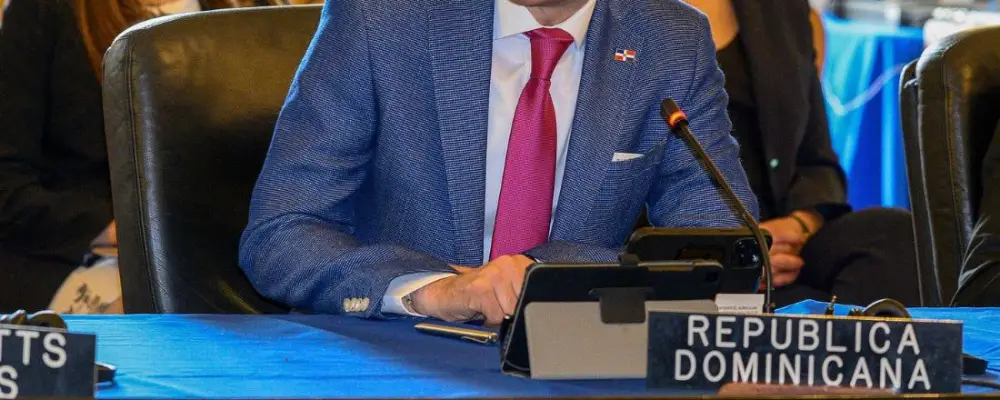
The Permanent Council of the Organization of American States (OAS) met on May 30, 2023, to address the Inter-American Democratic Charter (IADC). For many, the IADC, adopted in Peru on September 11, 2001, warrants a political reflection oriented towards transformation, after years of academic conversation.
The principles and standards contained in the IADC are the evolutionary result of decades of learning, and the historical collective commitment of our region to strengthen and preserve democracy. What we have experienced in the region leads us to be critical, but also optimistic and constructive looking ahead.
However, what are some of the challenges that the Charter presents today?
- Conceptual imprecision: States may have divergent interpretations of the criteria to define when and to what extent a country’s democratic institutions have been altered. The IADC does not define or provide the necessary guidelines to interpret what type of events could fit the concept of alteration or unconstitutional interruption of the democratic order.
- Apparent tension between the principle of non-intervention and the possibility of protecting democracy through collective mechanisms. The sovereignty of States may be an obstacle to the implementation of the IADC. For some, it may seem that there is a clash between pro-democracy norms and established norms of sovereignty.
- Procedural deficit: There are no automatic sanctions or coercive mechanisms established in the IADC apart from the suspension of the State from the OAS. There is a need for further development on when an infraction is committed, what is the correlative sanction? and, through what procedure will it be applied? This contradicts the principle of gradualism since there are no intermediate sanctions that can pressure the subject in crisis to seek a solution. Therefore, States that want to implement another type of penalty are forced to do so outside the collective sphere. As for the procedure, it is noted that the sanction of suspension will be applied when diplomatic efforts have been fruitless, however, it is not specified under what parameters this can be interpreted. That is, is a diplomatic effort considered fruitless according to a parameter of time? or results? or the number of times it was attempted to be applied?
- Reactive and exclusive character: the IADC does not contain mechanisms that allow the international community to act in a preventive manner and limits access to its activation to certain actors. By not foreseeing an early warning mechanism, its function is merely reactive. It highlights the inability to systematically follow up on the commitments made by States. Without this, it is not possible to establish gradualism in the analysis of collective action to prevent the discretionary application of the democratic clause, especially to discern between constitutional crises and de facto institutional breakdowns.
These challenges highlight the importance of addressing the political, legal, and practical aspects of the implementation of the IADC collaboratively and constructively among member states, to strengthen democracy in the region. From the foregoing, the reasoning can be drawn that the next evolutionary step would be to enshrine in an international treaty the guarantee of defense of democracy linked to the protection of human rights or to propose that the OAS Charter be modified and an article establishing this relationship be included. For others, it is imperative to create institutional mechanisms such as an “Ombudsperson” for democracy, the creation of special rapporteurships by country, or even to attribute competence to the Inter-American Commission on Human Rights (IACHR) to remedy some of the weaknesses.
It does not seem that today the political conditions are given for discussions of this magnitude. In the meantime, I think that we must lay the foundations for the progressive development of the concept of democratic solidarity among the American States that guarantees a balance between collective action and the principle of non-intervention according to the political and practical possibilities of the moment.
(I acknowledge the use of ChatGPT 4 (OpenAI, https://chat.openai.com) to translate the original text from Spanish to English.)