Chronicle of a Counterattack: Jazz or Symphony?
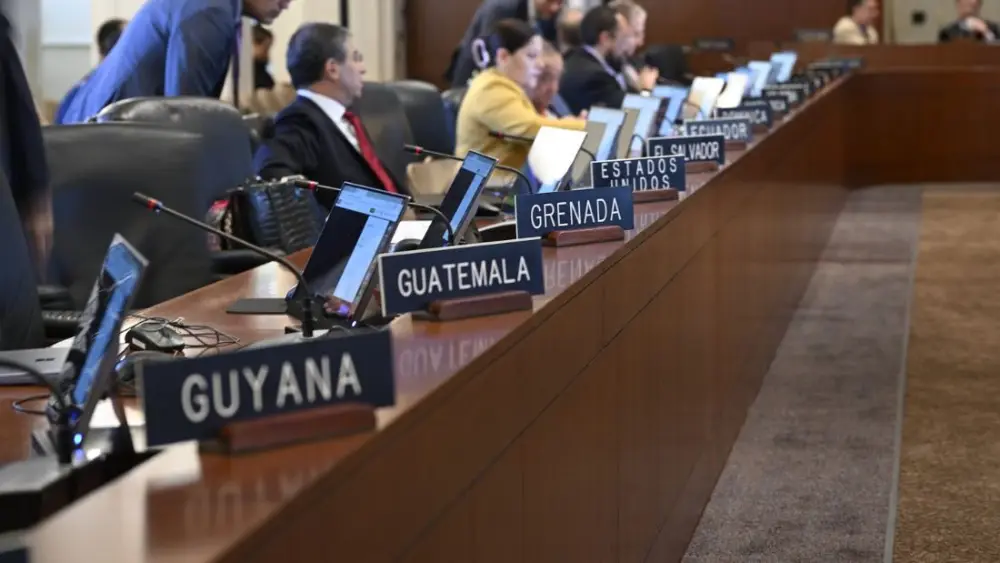
The Simón Bolívar Room at the headquarters of the Organization of American States (OAS) in Washington, with its dark wooden walls and history-laden atmosphere, was filled with ambassadors and representatives from the countries of the Americas and the Caribbean, all with the same expectation.
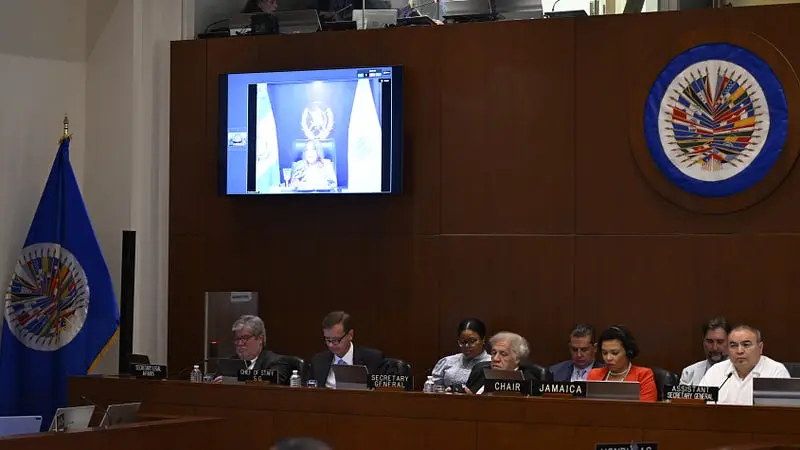
This former reading room of the Pan American Union Library, now converted into a meeting room, housed a U-shaped table. The board is located in the south wing, the country representatives sit along the east and west sides, and at the back, in the north wing, are the observers, the press, and other bodies. The OAS flag and seal are framed above the board table, and above it, the interpretation booths rise, facilitating communication in the four official languages.
Presiding over the session was the Ambassador of Jamaica, Audrey Marks, an experienced diplomat known for her elegant, refined, and always rule-abiding demeanor. With her presence, the room maintained an air of formality and respect, reflecting the seriousness of the issues to be addressed.
In the days leading up to it, there had been intense diplomatic activity and a negotiation process to approve a resolution condemning the events in Guatemala and calling for institutional order within the framework of the Inter-American Democratic Charter.
The extraordinary session of the Permanent Council, convened at the request of Colombia, Antigua and Barbuda, Canada, Chile and the United States, was scheduled for July 26, 2023 at 10:30 a.m. Upon receiving the note, Guatemala also requested a meeting on the same day, complaining about being excluded from the negotiations of the resolution text.
On the eve of the meeting, the Guatemalan government made a brilliant diplomatic move: it announced an invitation to the Secretary-General, Luis Almagro, to visit Guatemala.
This strategic move aimed to disarm the countries’ spirits, derail the resolution negotiation, and buy time, introducing a new dynamic into the discussions. The news spread quickly, and upon arriving early at the OAS headquarters the next day, the uncertainty in the air was palpable.
The representative of Guatemala was the first to speak. With a firm and measured voice, Rita Claveríe Díaz de Sciolli announced the official invitation to Almagro, highlighting the president’s willingness to receive the Secretary-General and facilitate meetings with government authorities and presidential candidates.
The strategy was clear: to project an image of openness and cooperation while trying to control the international narrative.
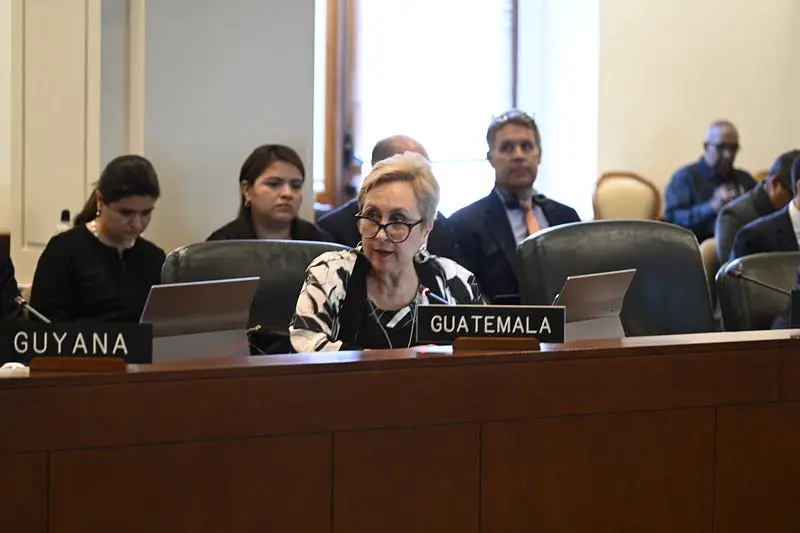
Reflecting on Rita, I can’t help but feel deep admiration for her extraordinary qualities and talents as a diplomat and woman. It was she who, with her innate elegance and unshakeable calm, welcomed me as Council President when I arrived at the OAS in 2019. The bond we developed on a personal level is one of my most cherished, a connection forged in mutual understanding and shared respect. I learned a lot from her; her serenity amid diplomatic storms and her ability to weave relationships with almost magical skill helped me navigate the always turbulent waters of diplomacy. Her presence is a beacon of peace, love, wisdom, and stability, illuminating the path with a soft but penetrating light that guides all who are fortunate to work with her.
Shortly after, the representative of Antigua and Barbuda, Ronald Sanders, backed the proposal, emphasizing the need for Almagro to visit Guatemala to gather first-hand information and ensure the integrity of the electoral process. His intervention reinforced the Guatemalan message but also made it clear that the international community was vigilant.
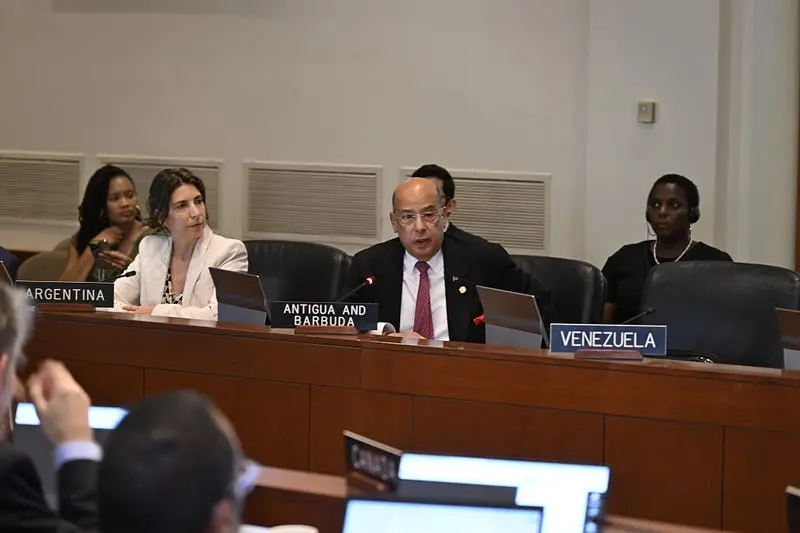
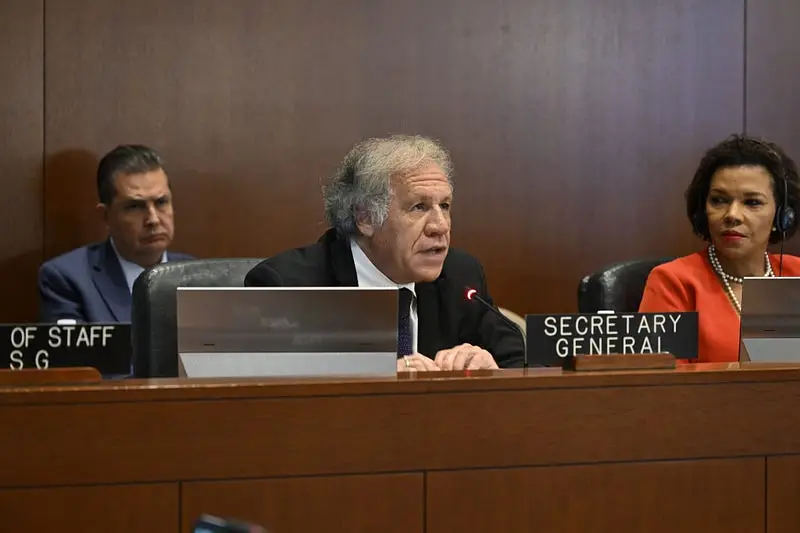
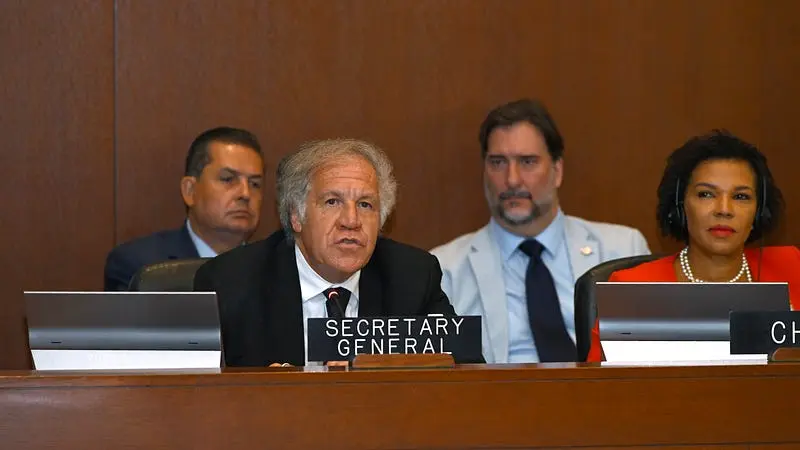
Then, the Secretary-General took the floor. Almagro confirmed receiving the invitation and detailed phone contacts with the Guatemalan Foreign Minister. He read the official invitation letter and announced his intention to travel to Guatemala the following week to meet with candidates Sandra Torres and Bernardo Arévalo, as well as other relevant actors.
His willingness to accept the invitation immediately and to report later to the Permanent Council was a maneuver to show the OAS’s commitment to transparency and democracy.
The agenda then resumed to hear from the invited speakers. The atmosphere was tense when the President of the Supreme Electoral Tribunal of Guatemala, Irma Elizabeth Palencia, began her speech via videoconference from her office in Guatemala. She thanked the OAS Permanent Council and the governments of the Americas for their solidarity and willingness to address the crucial issues affecting her country. Her voice, strong and clear but at times interrupted by a poor connection, resonated in the room, capturing everyone’s attention.
Palencia described the June 25 electoral day as an exemplary civic exercise. The 61% voter turnout, along with the decentralization of the vote by 38% through the creation of new rural voting centers, was a remarkable achievement. She highlighted the voluntary participation of nearly half a million citizens in the electoral process, including inclusive measures such as braille ballots and special booths for people with disabilities. The atmosphere in the hall was one of admiration and respect for the achievements made under difficult conditions.
However, the tone of her speech changed when describing the challenges faced after the election. Palencia recounted with concern how some political parties’ refusal to accept the results led to a series of judicial actions and arbitrary raids against the Supreme Electoral Tribunal. These actions, carried out with disproportionate use of force, included holding workers for over 10 hours, creating an environment of instability and fear.
The tension in the room intensified as we listened carefully to Palencia’s words. We looked at each other in disbelief; it seemed incredible that something as described was actually happening. Her description of the events conveyed a sense of urgency and seriousness. She pointed out that these actions not only violated constitutional norms but also undermined the integrity of the democratic process.
Despite these obstacles, Palencia reaffirmed the Supreme Electoral Tribunal’s commitment to preparing for the second round of elections, scheduled for August 20. She emphasized that elections must be won at the polls and not in the courts, urging citizens to remain calm and trust the electoral authority. Her words resonated with determination and hope, generating a sense of solidarity among all of us present.
As the room still echoed with Palencia’s words, the screens lit up again, revealing the image of Margarette May Macaulay, connected from Jamaica. The President of the Inter-American Commission on Human Rights (IACHR) wore a black mask, reflecting the pandemic times, and her expression was serious and determined. The representatives in the hall remained silent, attentive to every word Macaulay would utter.
With a subdued voice that resonated in the hall thanks to the audio system, Macaulay began to detail the situation in Guatemala. She exposed the serious irregularities in the electoral process, highlighting the interference of the Judiciary and the Public Prosecutor’s Office, as well as the controversial suspension of the Semilla Movement. Her words painted a disturbing picture, emphasizing how these actions violated Guatemala’s Electoral Law and endangered the right to political participation and the free expression of the people’s will.
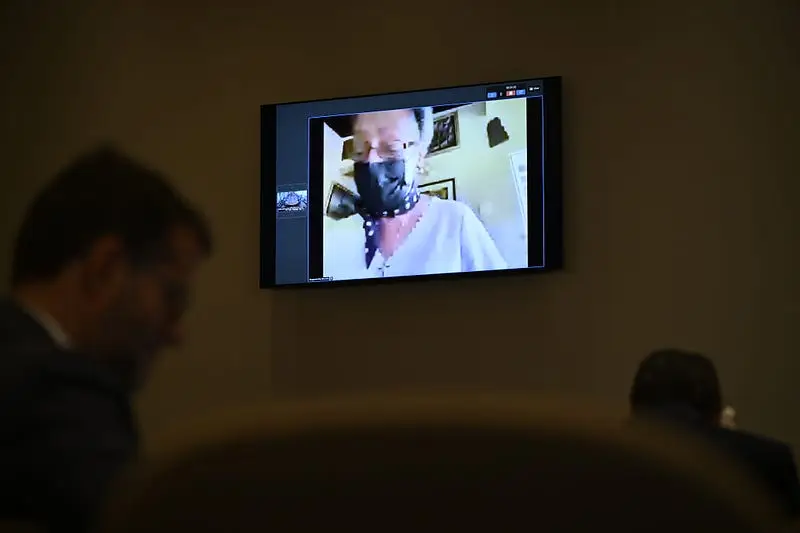
Macaulay continued, pointing out the deterioration of the rule of law and the lack of judicial independence in Guatemala, a topic that seemed to strike the conscience of all present. The commissioner also addressed restrictions on freedom of expression, highlighting the persecution of journalist José Rubén Zamora and the forced exile of several journalists. Her voice, though remote, had a profound impact in the hall.
Delegates exchanged looks of concern and seriousness, aware of the gravity of the situation. A colleague texted me saying, “Damn, we have problems at home, but this surpasses fiction.” I responded with an emoji 👀 and: “they say it can always get worse.”
Finally, Macaulay made an urgent call to the State of Guatemala to respect the separation of powers, guarantee political rights in accordance with national and international norms, and ensure that the popular will expressed at the polls was respected without undue interference. Her intervention, full of determination, left a lasting impression on everyone present.
The hall fell into reflective silence as we absorbed the magnitude of Palencia’s and Macaulay’s messages. The democratic integrity of a nation was at stake, and what happened next could define not only the future of Guatemala but also the course of democracy throughout the region.
This statement might seem exaggerated or dramatic, but if we analyze it closely, the reality is that a precedent of this type would undoubtedly serve as a basis for others to dare to challenge democratic norms and the principles of the Inter-American Democratic Charter. Impunity in situations of electoral interference and politicization of the judiciary could inspire other governments to follow a similar path, gradually eroding confidence in democratic institutions and electoral processes.
Moreover, the erosion of democracy in one country can have a domino effect in the region, fostering political and social instability in other countries. Allowing these interferences and arbitrary actions to go unpunished can increase levels of corruption and impunity, undermining the rule of law. If citizens perceive that elections can be manipulated without consequences, confidence in the democratic process decreases, which can lead to increased electoral abstention and weakened civic engagement.
Establishing a negative legal precedent also justifies other political actors using undemocratic tactics, exacerbating the situation. A country that allows interference in its democratic processes risks international isolation, and the resulting sanctions can have severe economic and political consequences. Furthermore, the international community has the responsibility to protect human rights, as interference in electoral processes and persecution of opponents are often accompanied by violations of these rights.
The OAS and its members are committed to promoting and defending democracy, human rights, and the rule of law. Acting firmly is essential to maintain the OAS’s credibility and effectiveness. Electoral manipulation and politicization of the judiciary can provoke internal tensions and conflicts, making it crucial to avoid this precedent for the peace and internal stability of affected countries.
For all these reasons, the reaction and decisions made in our forum were crucial, marking a turning point for the defense of democracy in the Americas, reaffirming our collective commitment to justice, equity, and respect for the popular will.
Meanwhile, the anticipation was palpable; most of us felt the responsibility and urgency of the moment, aware that we were at a crucial point in the history of the Americas. I knew this because constant communication on this topic was unusual, not only through our phones and computers but also through brief conversations in the hallway, informal consultations, regional coordinator meetings, among others.
When the hall was still vibrating with Macaulay’s words, the screens lit up once again, showing the image of Eladio Loizaga, Chief of the OAS Electoral Observation Mission (EOM) in Guatemala, also participating via videoconference.
With a serious and determined demeanor, Loizaga began his speech, thanking those present and highlighting the participation of Irma Palencia, President of the Supreme Electoral Tribunal of Guatemala. He emphasized the importance of Palencia’s direct exposition of the facts and recognized her commitment to the integrity of the electoral process, in accordance with Guatemala’s Constitution and laws. His words seemed to temporarily calm the room, but the calm was superficial, sustained by the expectation of what was to come.
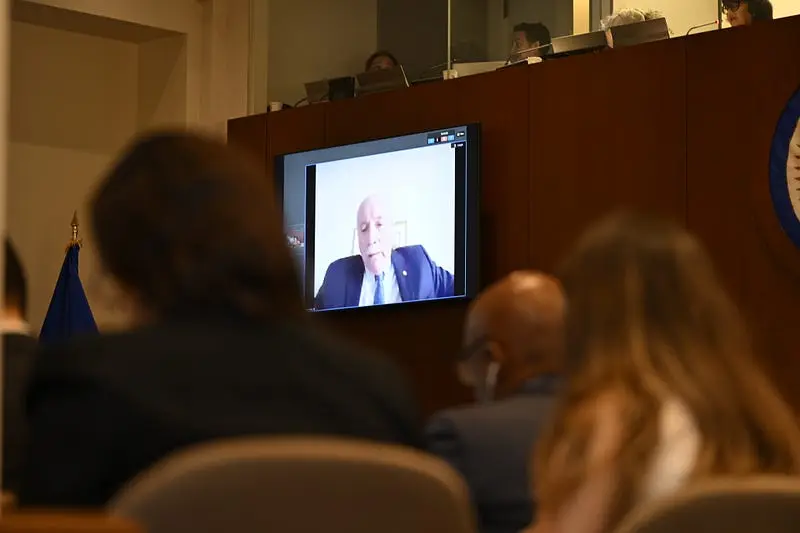
Loizaga detailed how the Electoral Observation Mission had worked in a technical and professional manner, holding meetings with high-ranking Guatemalan officials, including the President, the Foreign Minister, and various civil society organizations. As he described the difficulties faced by the Supreme Electoral Tribunal, the frustration among those present was evident. Some ambassadors murmured among themselves, others frowned and nodded in agreement. Several of us communicated via our phones, commenting on the interventions and reading reactions to anticipate the upcoming interventions.
I will never forget the face of the Brazilian ambassador, Benoni Belli. That very day, he had presented his credentials and was debuting in representing his country. I watched him as he processed and absorbed the information, occasionally consulting with Héctor, the Bolivian ambassador.
The head of the EOM continued, expressing his concern about the ongoing pressures on the Supreme Electoral Tribunal and condemning the intimidating measures, such as the raids on the Tribunal’s and the Semilla Movement’s premises. Each phrase from Loizaga was a blow against the intimidating and undemocratic actions carried out in Guatemala. He condemned the raids on the Supreme Electoral Tribunal and the Semilla Movement, describing them as obstacles to the democratic process. His words were firm and confident, his emphatic gestures underscored the seriousness of his statements. These actions, he noted, hindered the democratic process and harmed the citizens.
The reaction of those present to these denunciations was immediate. Some ambassadors shifted in their seats, others exchanged worried glances. Anxiety mixed with the determination to support democracy in Guatemala.
Meanwhile, behind the main table were the Secretary for Strengthening Democracy, Francisco Guerrero, and the Director of the Department for Electoral Cooperation (DECO), Gerardo de Icaza, both responsible for the OAS Missions.
Their faces reflected the same seriousness and commitment as Loizaga’s, at times looking at their phones, and sporadically commenting to Secretary Almagro, who was right in front of them. By their roles, both officials have delicate tasks that sometimes result in tension, controversies, and long closed-door negotiation sessions with member states.
On this occasion, they stood impassively, with the aura surrounding those who have the firm and serene conviction of being on the side of justice and truth.
In the Dominican Republic, we have a particular sensitivity and inclination for Electoral Observation Missions. Their work has been crucial in the evolution of our young and vibrant democracy. From 1978, when the clock marked the beginning of the democratic transition, to the electoral trauma of 1994 and later in the unfortunate municipal process of 2020, the OAS has been a reference, pointing out opportunities for improvement and, at times, being a wall of containment in dark moments that we managed to overcome thanks to its accompaniment.
We will never forget the role played by Ambassador John W. Graham during those dark nights for our democracy in the summer of 1994. It is not an exaggeration to acknowledge that the OAS’s stellar role in 1994 helped us as a society to unleash a series of substantial transformations in regulations and institutions, allowing us to mature politically and progress with peace and stability.
Loizaga reiterated the call to respect the popular will and to ensure that the second round of the presidential election is held under conditions of fairness and equality. He emphasized the importance of legal certainty in the rule of law and acknowledged the efforts of civil society and the people who actively participated in the elections. The mission, Loizaga assured, would continue to observe the process, from the printing of ballots to the distribution of electoral materials. His words resonated strongly in the hall, making it clear that the integrity of the electoral process was a non-negotiable priority.
The recognition of the efforts of civil society and Guatemalan citizens who participated as electoral board members was met with nods of approval in the room. Finally, Loizaga called on political forces, national authorities, and civil society to foster an environment of peace and tolerance, emphasizing that Guatemala’s democratic future can only be defined at the polls.
To conclude, Loizaga called for peace and tolerance, emphasizing the need for August 20 to become an authentic celebration of Guatemalan democracy. His final words, underscoring that Guatemala’s democratic destiny could only be decided at the polls, resonated in the hall, instilling a sense of urgency and responsibility in everyone.
It was a moment of collective reflection, where the gravity of his words settled in each of the attendees, highlighting the importance of the mission and the need for coordinated action to protect democracy in Guatemala.
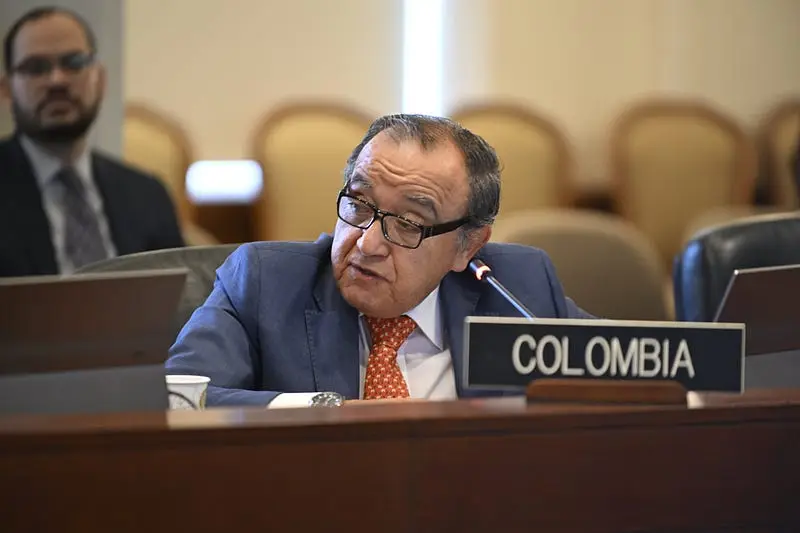
As the speeches progressed, the heat in the room intensified, a strange occurrence since the air conditioners were always appropriately regulated. Each representative emphasized their concern for the situation in Guatemala, and some made explicit references to the judicial actions and deepening polarization. The representative of Colombia, Don Luis, for example, highlighted the “extreme judicialization” of the electoral process and expressed deep concern about the actions of the Guatemalan judiciary and Public Prosecutor’s Office.
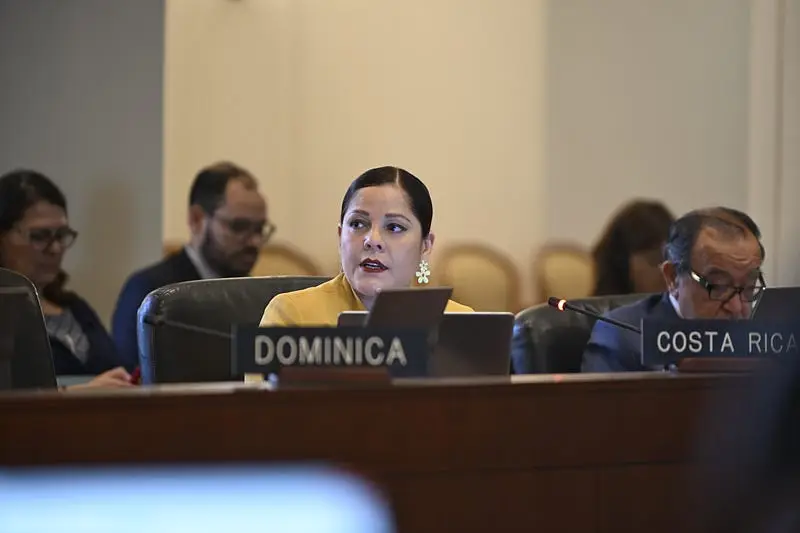
My friend, Ambassador Alejandra Solano of Costa Rica, also expressed her concern, emphasizing the need for the Supreme Electoral Tribunal to have all legal guarantees to carry out its mandate. She made a forceful call for the popular will expressed at the polls to be respected and for conditions of transparency and pluralism to be ensured.
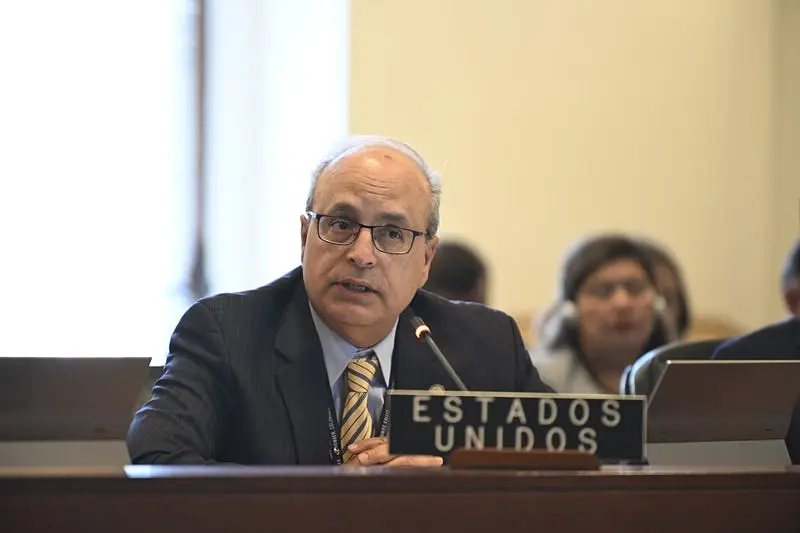
It was particularly impactful to hear the intervention of Francisco Mora, the Ambassador of the United States of America. With a firm voice, he emphasized the importance of maintaining the integrity of the electoral process and condemned judicial intimidation and threats. Mora stressed that “the United States does not support any candidate, any party, any particular candidate in these elections. The elections are an opportunity for Guatemala to choose the future of its own country.”
He pointed out that any interference with the electoral process was a direct threat to democracy, not only in Guatemala but throughout the region. He reminded us of the need to remain united in support of democracy and the people of Guatemala and noted that the situation in Guatemala was a test for the OAS Democratic Charter, which must be firmly defended.
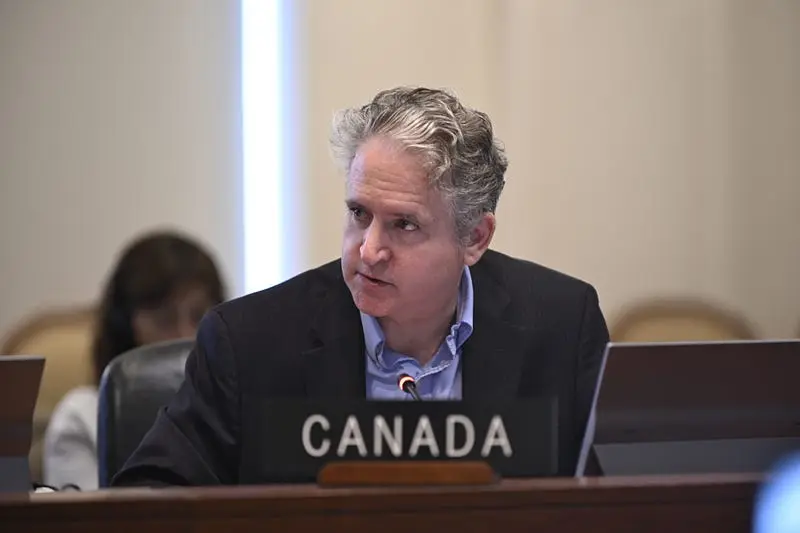
The intervention of Canada, represented by the great ambassador and professor Hugh Adsett, was also forceful. Adsett described the actions in Guatemala as “illegal and unacceptable,” warning that they directly threatened democracy and the electoral process in the country. He made an urgent call to respect the rule of law and emphasized the importance of the Supreme Electoral Tribunal operating without intimidation or coercion.
Canada’s voice resonated clearly, insisting that the international community must remain firm and vigilant to ensure that the rights of Guatemalan voters are protected.
Then, my turn came. Moments earlier, I had spoken with our Minister Counselor Erika Álvarez (our country’s current ambassador in South Africa), and we both agreed that given the changing situation and the collective mood following the announcement of the Secretary-General’s visit, it was appropriate to limit ourselves to reading the official statement issued a few days earlier by our Ministry of Foreign Affairs and save “ammunition” for the next session. With a firm and clear voice, I read:
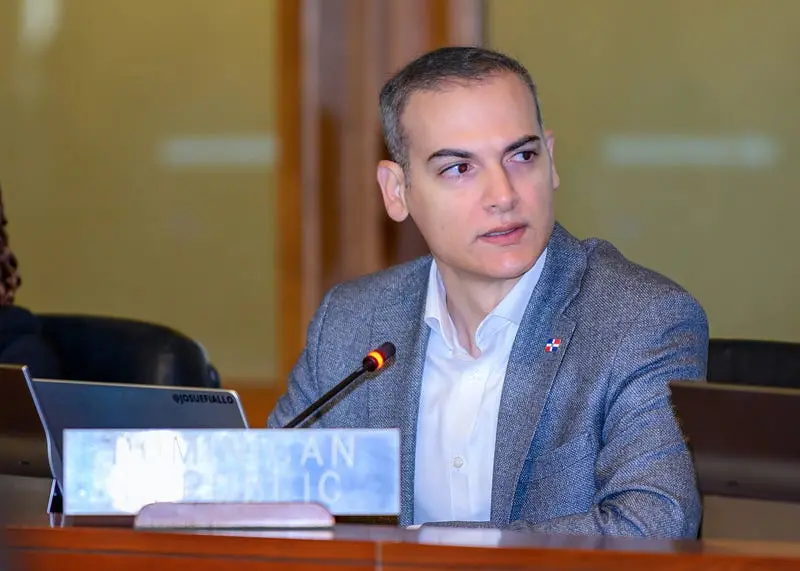
“Thank you very much, Madam President. We wish to thank the convening of this meeting, as well as the reports presented by the President of the Supreme Electoral Tribunal of Guatemala, the President of the Inter-American Commission on Human Rights, the Chief of the Electoral Observation Mission, and the Secretary-General, Luis Almagro. We also thank the permanent mission of Guatemala for the new information provided today. I will proceed to read an official statement from the Government of the Dominican Republic on this situation: The Government of the Dominican Republic expresses its concern about the judicialization of the electoral process in the sister Republic of Guatemala, as well as attempts to disrespect the popular will expressed at the polls on Sunday, June 25. Every electoral process must be conducted under the authority of a supreme electoral body that enjoys autonomy and independence, as is the case of the Supreme Electoral Tribunal of Guatemala. These conditions are necessary for the Supreme Electoral Tribunal to fulfill its constitutional functions and thus ensure the transparency, independence, and credibility of the electoral process. We call for the Guatemalan democratic institutionality, with strict adherence to legal norms, to provide the necessary guarantees so that both candidates can participate on equal terms in the second round and that citizens can freely express their sovereign will. We reiterate that only through the vote, respect for the Constitution, and existing regulations can the democratic stability of the Republic of Guatemala be achieved. Given in Santo Domingo, July 13, 2023. Thank you very much, Madam President.”
The atmosphere in the OAS Permanent Council hall was no longer as tense and expectant when Washington Abdala of Uruguay took the floor. From the first moment, his presence was felt. With a firm posture and a confident look, he captured everyone’s attention.
He is a master of oratory, and he knew it. Every word was carefully selected, every pause measured with precision.
“Thank you, President,” he began, his voice resonating with authority. “Someone might think that we are tautological, that the Permanent Council has a kind of capacity to repeat itself and would be wrong. If anyone warned that we are repeating ourselves, they would be completely wrong because what we are basically doing is worrying, and when one is worried, what they do is deal with the issue they are supposedly worried about, which is precisely this.”
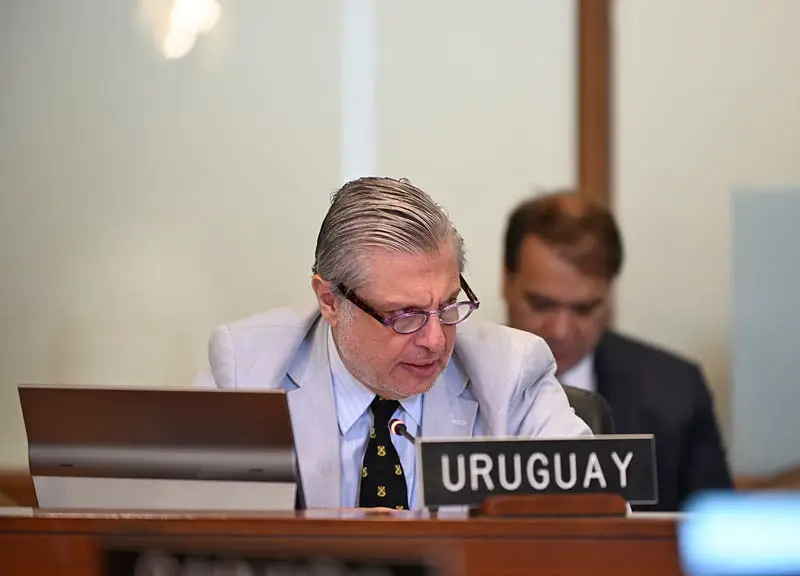
The room fell silent, with each delegate hanging on his words. Abdala has a special talent for connecting with his audience. He knows when to pause to let his words sink in deeply. His voice, soft, firm, choreographed each inflection to maximize the impact of his message.
“It is not very common,” he continued, “that all the members of the Permanent Council have a degree of convergence like the one we are having at this hour. And, boy, do we have different temperaments, styles, forms of government. However, for the second time in a row, we are finding ourselves here at a turning point where, in one way or another, we are all saying the same thing.”
His ability to address differences while uniting those present under a common cause was admirable. With a broad gesture, he paused and acknowledged the Guatemalan Ambassador, Rita Claverie de Sciolli, praising her effort and dedication amid the crisis.
“I give a huge salute to the representation that the Permanent Representative of Guatemala is doing in this hall. She is doing it very well, she is making a gigantic effort.”
The use of the word “gigantic” was no coincidence. Abdala knew he needed to convey the magnitude of Rita’s effort, and he did so with the elegance of an accomplished speaker. He paused again, letting his words resonate in the minds of the delegates before continuing.
“What we have to do is this: what other instrument do we have as a Permanent Council but the word? And the word for what? To fight for persuasion. And persuasion for what? To defend democracy. Period.”
His tone became more serious, more intense, as he explained the importance of defending democracy. He addressed the “extreme judicialization” of the electoral process in Guatemala, highlighting the statements of the President of the Supreme Electoral Tribunal and the seriousness of the situation.
“There is no preclusion of an instance that is operational. An electoral act is a sequence in time. There is no way to intercept it. There is no legal and democratic way to intercept it.”
Abdala dominated the stage. Every gesture, every movement, was carefully measured to emphasize his points. “Many times it is said: ‘Well, but what can be done beyond words?’ Insist. Raise the voice respectfully so that it is heard at the level of the international community and defend the will of the Guatemalan citizens.”
With a tone of warning, he concluded his intervention, comparing the situation to surgery: “This is like surgery: it either goes well, or it goes badly. And if it goes well, it is by the democratic path, and if it does not go well, then we will all have failed.”
The auditorium was silent, impressed by the brilliance and passion of his speech. Washington Abdala had demonstrated once again his mastery of communication, making it clear that the fight for democracy in Guatemala was a shared responsibility among all present.
In the end, it was evident that Guatemala had slowed down our previous momentum.
The session ended, and I hurried out. I didn’t want to talk to anyone. I sat in my vehicle, parked in the southeast wing, while observing the George Washington monument through the rearview mirror, towering over Constitution Avenue with its more than 150 meters in height. For a moment, I worriedly reflected on what I had heard moments earlier. I visualized the responsible actors there reacting emotionally instead of rationally, like capricious teenagers who, when organizing a game, demand it be on their terms and, if they don’t win, they ruin it.
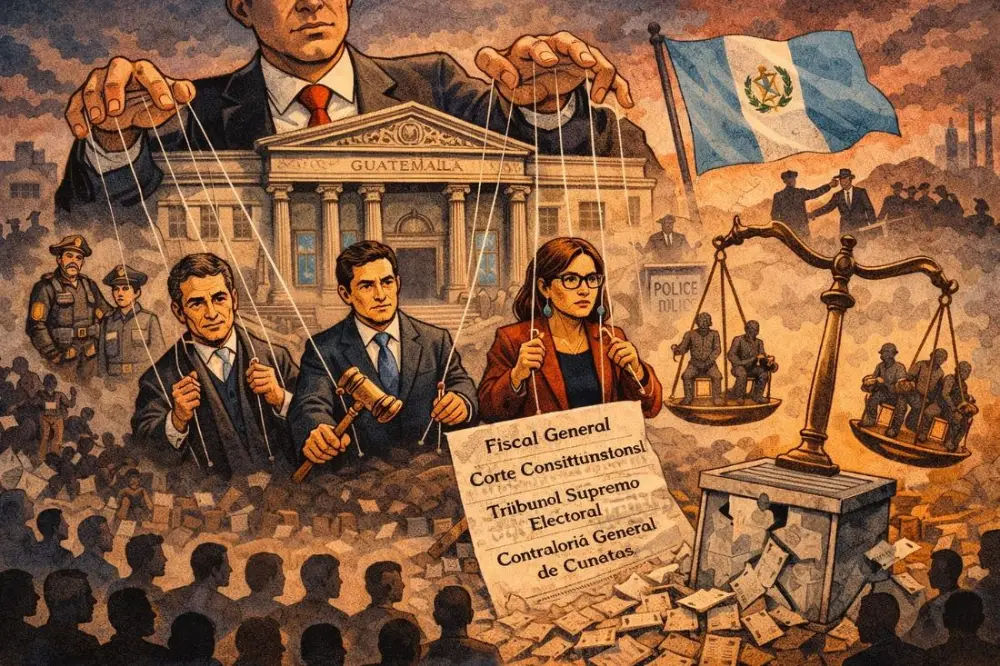
It was difficult for me to conceive that all those seemingly disconnected actions could be orchestrated in a sinister and coordinated manner. It was excessive. However, I considered it possible that many, with similar interests, acted like a jazz band, playing their instruments at different times to perform the same melody: bypassing the popular will to preserve privileges and control power spaces.
The meeting served as a strong reminder of the tactics employed in the diplomatic arena to divert attention and buy time. The strategy implemented by the Guatemalan government proved effective in calming the spirits of member countries and stalling the momentum that had been building. As a result, the resolution in process was stalled for weeks.
This experience would prove valuable months later, when we would face another turning point, which I will address in a subsequent articles.
(I acknowledge the use of ChatGPT 4 (OpenAI, https://chat.openai.com) to translate the original text from Spanish to English.)
Full video: