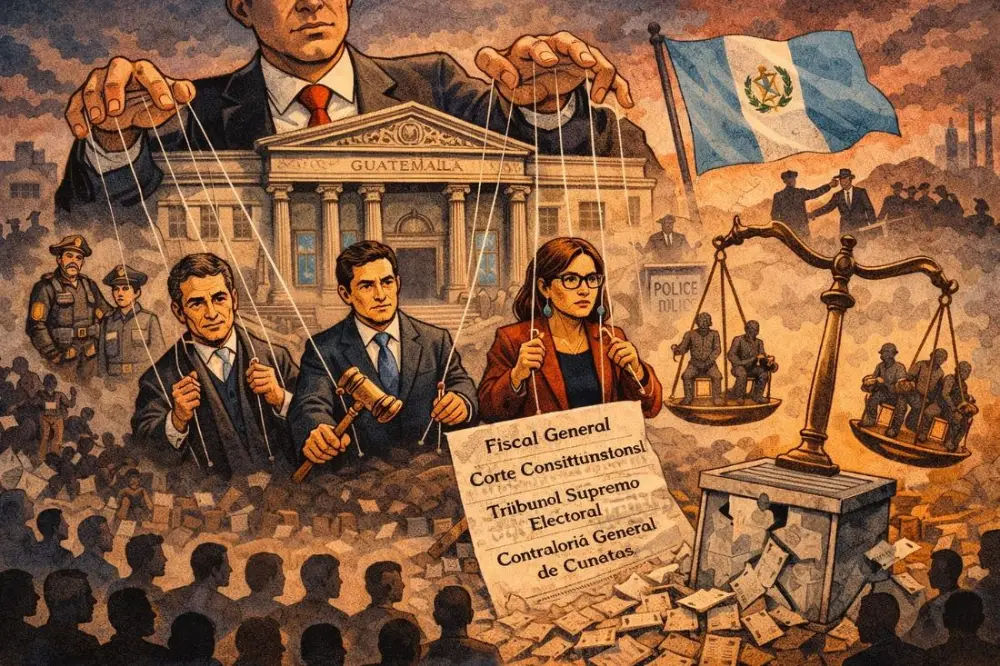
Under the shadow of crime: The fight for electoral integrity in Guatemala
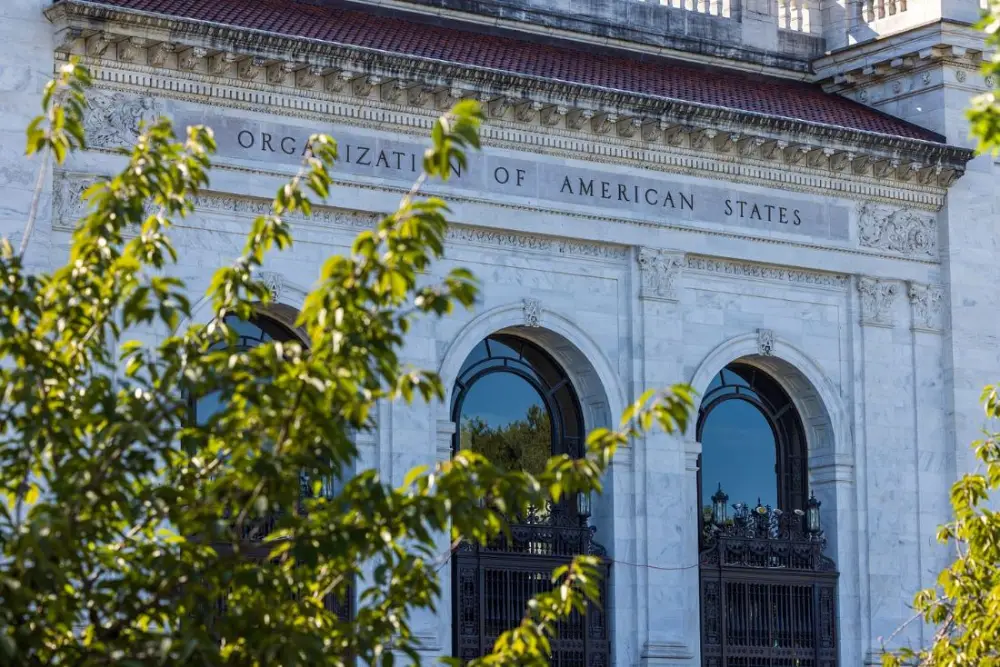
On August 10, 2023, I headed early to the headquarters of the Organization of American States (OAS) in Washington D.C. The imposing building on 17th Street and Constitution Avenue seemed more solemn than ever under the gray sky of that day.
Its design, deeply influenced by the rich heritage of Mexican architecture, materialized in a bold and visionary project that masterfully intertwines functionality with aesthetics, the artificial with the natural, and classical architecture with Latin American architectural traditions. This harmonious dialogue manifests in every detail of the building, from the selection of indigenous materials to the incorporation of ornamental elements that pay homage to characteristic motifs and patterns of Latin America.
This fusion of styles creates a captivating visual experience that evokes a sense of identity and belonging and serves as a bridge between the past and the present. The structure not only fulfills its utilitarian purpose but also stands as a work of art that celebrates the symbiosis between human ingenuity and the beauty of nature, creating an environment that invites contemplation and serenity.
The entrance is adorned with two large pilasters separated by three round arches, which in relief represent the emancipation of the Americas from colonial rule.
With a single push and four strides, I climbed the thirteen white marble steps with blue veins as I had done many times before. I lunged at the copper handle of the Van Kannel revolving door and pushed hard. The slight resistance generated by the door’s rotation due to the change in air pressure was highly satisfying to me. In an instant, I crossed the threshold and was in the lobby with such momentum that I barely managed to dodge Monsignor Juan Antonio Cruz Serrano, ambassador of the Holy See and permanent observer at the OAS.
I exchanged greetings with him and, as was my custom, tested the priest’s patience. Walking briskly, I murmured, “Monsignor, tell Pope Francis that I need his help with something.” With the characteristic smile of someone anticipating a joke, he replied, “Of course, what do you need, ambassador?” “There is a very troublesome bishop who is running a negative campaign against me in my country, blatantly lying…” I quickened my pace and left the Monsignor behind, laughing.
Our interactions were always fluid; Monsignor Cruz is an extraordinary human being with a sense of humor uncommon among the priests I have met, who at all times radiates peace, wisdom, and caution. I made a habit of greeting him by reciting portions of biblical quotes from memory for him to finish them. When his memory failed or he deliberately remained silent, I would complete them and question him. We laughed at every opportunity as if it were the first time.

With the same momentum, I crossed the lobby that resembles a colonial plaza with an ornate fountain over Aztec tiles, surrounded by native plants from the Americas growing in the corners of the lobby. To my left, I left behind the “Tree of Peace,” a hybrid of fig and rubber planted a century ago by U.S. President William Taft. I descended some stairs and entered the Simón Bolívar Hall, where the session of the Permanent Council would be held.
That day, the door seemed heavier than usual. The atmosphere was already tense, and my smile from a few seconds earlier turned into a gesture of sorrow.
I realized that we were arriving with the weight of a tragedy on our shoulders: the previous day, Fernando Villavicencio, a presidential candidate in Ecuador, had been brutally assassinated. This terrible event further darkened the already delicate political landscape in Ecuador, a country undergoing a tense electoral process and significant social destabilization due to irregular armed groups of organized crime.
As I greeted other ambassadors, I caught a glimpse of Ambassador Ronald Sanders of Antigua and Barbuda, president of the Permanent Council. He entered the room with a firm step but with an expression that denoted the gravity of the moment. At 10:00 a.m. sharp, he gently tapped the gavel on the table, starting the session.
The silence was so dense it could almost be cut with a knife.
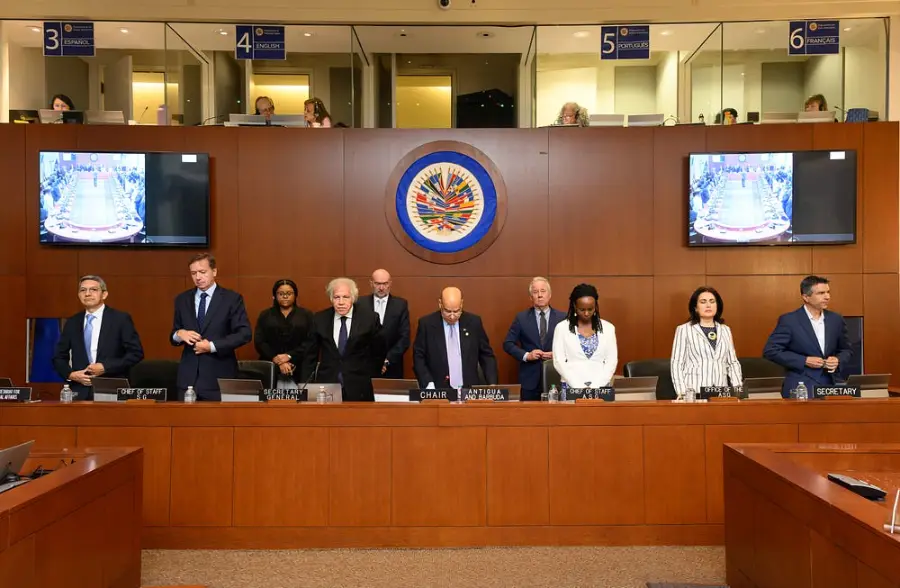
I hadn’t reached my seat yet when, with his deep voice reflecting the unanimous sentiment of those present, he said, “I think we all know that this meeting begins with a shadow cast over us. On behalf of the Permanent Council of the Organization of American States, my delegation and I express our sincerest feelings of solidarity with the delegation and the people of Ecuador.”
Sanders called for a minute of silence in memory of Villavicencio. As we bowed our heads, I felt the union of all present in a moment of shared respect and solidarity. The weight of the tragedy seemed to squeeze our hearts, reminding us of the fragility of peace and democracy in our region.
In those brief moments, I often think of many things: the pain of the families, the collective uncertainty that engulfs an entire nation, and how fortunate we are in our country not to have crises like these lurking. I cherished our imperfect Dominican peaceful coexistence.
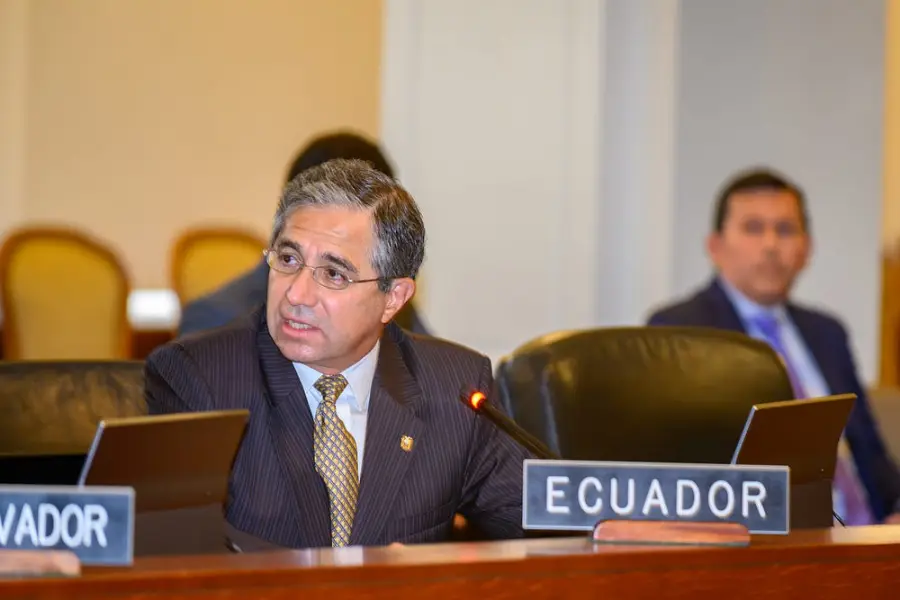
Ambassador Mauricio Montalvo of Ecuador took the floor. He stood in front of me; I could see the bewilderment on his face. Mauricio, former foreign minister of Ecuador, a diplomat with a long career and well-deserved recognitions, looked dazed, and it was no wonder. His words, filled with emotion, reflected the pain of an entire country. With a furrowed brow and a voice laden with emotion, he declared:
“Ecuador is in mourning, shocked, devastated.” His words were imbued with deep sadness.
I couldn’t help but feel a pang of pain and solidarity as he spoke. Mauricio highlighted the hope and strength of the Ecuadorian people amidst the tragedy, reminding us of the importance of unity and justice in these difficult times. With firm determination, he concluded: “We trust that justice will be served and that this deplorable political and hate crime will not go unpunished. Thank you very much.”
Sitting in my seat, I watched as the room, usually vibrant with the energy of diplomacy, was filled with palpable sadness and reflective silence. It was as if a heavy cloud had descended upon us, extinguishing any spark of optimism that might have been present.
I turned to my left to say something to the ambassador of Peru, Gustavo Adrianzén, but refrained when I saw that his face reflected a mixture of disbelief and pain; we were all trying to process the brutality of the act that had taken Villavicencio’s life. It was very sad and desolate.
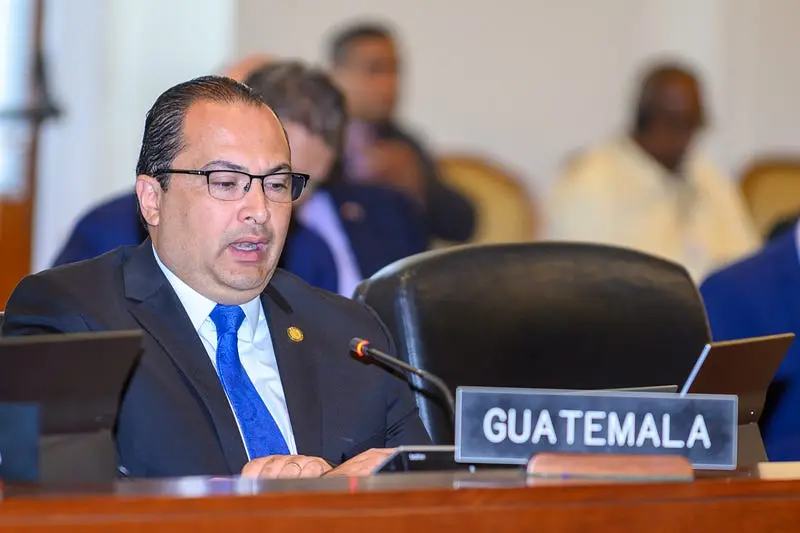
But the attention soon shifted to the case of Guatemala. The presence of Foreign Minister Mario Búcaro Flores underscored the importance of the moment. The report by Secretary General Luis Almagro on his recent visit to Guatemala was eagerly awaited.
Sanders, with his impeccable demeanor and characteristic air of sophistication, reviewed his script with Néstor Méndez, the assistant secretary-general, for a few seconds. Then, with a slight nod, he resumed speaking in his own style, with that marked British accent that evoked the elegant locutions of the BBC of London. Every word that came out of his mouth seemed carefully modulated, with a clarity and precision that only an old-school Brit could achieve. It was as if in each syllable lay the very essence of British oratory, with a cadence and intonation that gave his words undeniable weight and authority. I couldn’t help but imagine him in an old radio booth, announcing the news with that mixture of seriousness and calm that so characterizes British broadcasters.
The air in the room grew heavy as Luis Almagro began to speak. He didn’t mince words in warning about the threat organized crime and drug trafficking pose to democracy: “Thank you, Mr. President. As mentioned, Mr. President, it is impossible to start today without referring to the assassination of Fernando Villavicencio and how the enemy of democracy, organized crime, and drug trafficking, are willing to do anything to maintain power, areas of power, and their economic interests. The importance today of defending democracy with all the means we have is paramount. Focusing our efforts on the national and international instruments we have to ensure the rule of law and the fullest validity of our democratic systems is crucial.”
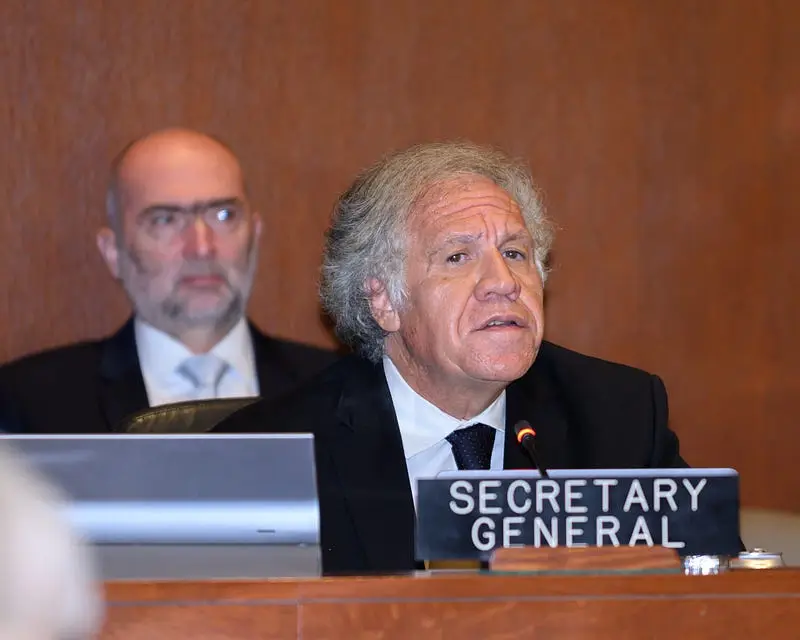
Almagro continued with heartfelt gratitude, not just a diplomatic formality but a genuine acknowledgment to all who collaborated on the mission to Guatemala. “We would like to express our gratitude to all those who met with us: branches of the state, political actors, indigenous movements, indigenous women, churches, different religions, civil society, human rights, and electoral observation. All have made extraordinary contributions to this report.” Each sector of Guatemalan society had contributed to a report that would be crucial for the second round of elections.
The secretary-general left no doubt about the seriousness of the situation: “It is no secret that we are very concerned about a worrisome situation regarding the electoral process and the functioning of the institutions of a democratic state.”
Almagro’s words were like a call to arms, a reminder of the fragility of democracy and the need for a collective effort to protect it.
He highlighted the essential commitments achieved with the Guatemalan government: “This mission achieved the commitment of all branches of the state that the second round will be held on August 20 between the tickets headed by Sandra Torres and Bernardo Arévalo.” For some, the president’s commitment to ensuring an orderly and fair transition was a light of hope in the darkness. However, for others, it was a ploy to contain pressure and better organize the strategy to derail the democratic process.
Almagro delved into the issue of excessive judicialization in Guatemala, describing it as a tool of intimidation and attack: “This mission took place in a context of excessive judicialization during the electoral processes, something common in Guatemala. It has been used in many cases to attack and intimidate.”
His words painted a worrying picture, where democratic institutions were under siege. On this occasion, Almagro handled his words with utmost care, precisely delineating the boundaries that limit the attribution of responsibilities.
However, it was evident that he exercised caution, a stance that contrasted markedly with his usual swiftness to condemn and his tendency to use severe language in other scenarios and with other actors.
The importance of maintaining the independence and autonomy of the Supreme Electoral Tribunal could not be underestimated: “The situation is delicate, and it is important that the Supreme Electoral Tribunal maintains its independence and autonomy. Anything that threatens that independence and autonomy must be avoided.” Continuous and rigorous electoral observation would be the guardian of the transparency and credibility of the electoral process.
In his conclusion, Almagro called on the international community to remain vigilant and provide constant support to strengthen democratic institutions in Guatemala: “The electoral process in Guatemala must be respected, and the institutions must guarantee a transparent and credible process.” He made it clear that the defense of democracy is a shared responsibility, a duty we cannot shirk.
Luis Almagro, with his intervention, painted a vivid and urgent picture of the reality we faced. It could be said that his call to action was not just a demand; it was a reminder that democracy is a fragile garden we must protect and nurture constantly, especially in times of adversity.
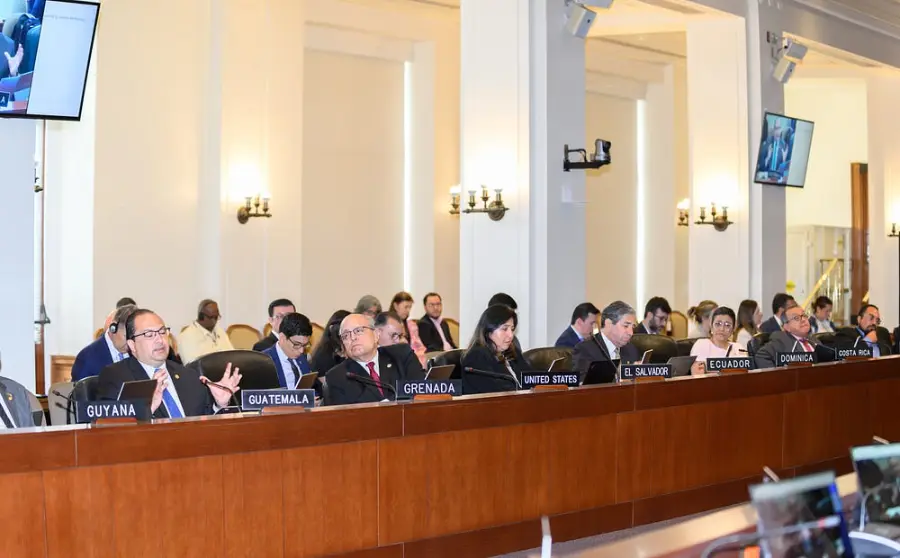
Sitting almost at the front, I watched the Guatemalan Foreign Minister prepare for his intervention. There was something different in his posture, a tension that was not usual for him. His hands were crossed at wrist height, resting on the table.
His previous interventions always had a particular shine, almost like a sermon from the ecclesial pulpit. But that day, he seemed nervous, less relaxed.
The minister began by greeting the president of the Permanent Council and the OAS secretary-general, as well as the honorable members of the delegations and permanent observers. His tone was formal but lacked the usual fervor. As he expressed his condolences to the people of Ecuador, his voice had a forced tone, almost as if trying to convince himself of his words.
He continued by conveying greetings from Guatemala and highlighting the dismay over the events in Ecuador, but also mentioned his motivation upon hearing the secretary-general’s report. He emphasized the great importance his government placed on Almagro’s visit, which took place from August 1 to 4, at the express invitation of the president of the Republic.
As he spoke, I couldn’t help but be immersed in a storm of questions.
The minister began detailing the meetings held by Secretary-General Almagro with various authorities and sectors of Guatemalan society, including the president, state institutions, and civil society organizations. He seemed to be trying to present a façade of unity and cooperation, but his usual shine had faded. Every word was carefully calculated but lacked the usual enthusiasm.
He highlighted that the president of Guatemala had reiterated to the secretary-general the importance of formalizing the results of the first round of elections and providing the necessary security to both candidates. I noticed a slight hesitation in his voice, as if the promises of security and transparency were crucial, but the way he presented them did not inspire confidence.
The minister added that the executive branch had the necessary resources for the second round of elections and offered unrestricted support to the electoral authorities to ensure a peaceful and secure process. The minister tried to project an image of total control over the electoral process, but his tension was evident. His words, though detailed, seemed laden with underlying incredulity.
Raising his hands and clenching his fists, he emphatically asserted that the actions of the Guatemalan state were guarantees of a second round of elections. This statement, which at another time would have sounded like an unbreakable promise, now sounded more like a desperate attempt to reaffirm control.
Finally, the minister reiterated Guatemala’s support for the work of the OAS Secretary-General and the Electoral Observation Mission, calling on the international community to trust in Guatemala’s democratic commitment. However, sitting in front of him, I couldn’t help but notice the lack of conviction in his tone.
In the Permanent Council room, the tension was palpable. “Thank you very much, Mr. Minister,” said Sanders with a solemn tone. “We are very grateful that you have reaffirmed your government’s commitments, as expressed by the secretary-general in his report, to defend the principles of democracy and the rule of law, to ensure that these elections are peaceful, fair, and transparent, and that the transfer of power on January 14 will have the full support of the authorities.”
Sanders spoke carefully, measuring each word. The room was filled with an expectant silence, everyone attentive. “Now, colleagues,” he continued, “having heard the secretary-general’s report and taking advantage of the presence of the Guatemalan minister, I would like to open the floor to member states wishing to offer comments.” He paused, his firm gaze seeking the approval of those present. Then he stated, “With that in mind, I offer the floor to the delegations. I see that the delegation of Antigua and Barbuda has requested to speak. Please proceed.”
The representative of Antigua and Barbuda, dressed in a white jacket, turned on her microphone with a serious expression and furrowed brows in concentration. For Antigua and Barbuda, the delegate Joy-Dee Davis-Lake, a seasoned, precise, and disciplined diplomat who works alongside Ronald Sanders in his mission, spoke.
“Thank you, Mr. President,” she began with a serene tone. “Our delegation expresses its condolences to the people of Ecuador and the family of Mr. Fernando Villavicencio following the terrible acts of last night.” Her words were filled with sadness and empathy. Her eyes reflected the shared pain of the tragedy in Ecuador.
“Mr. President,” she continued, “we thank the secretary-general for his visit to Guatemala and for engaging in conversations with the authorities and other actors about the integrity of the electoral process and the steps being taken to defend democracy and the rule of law.”
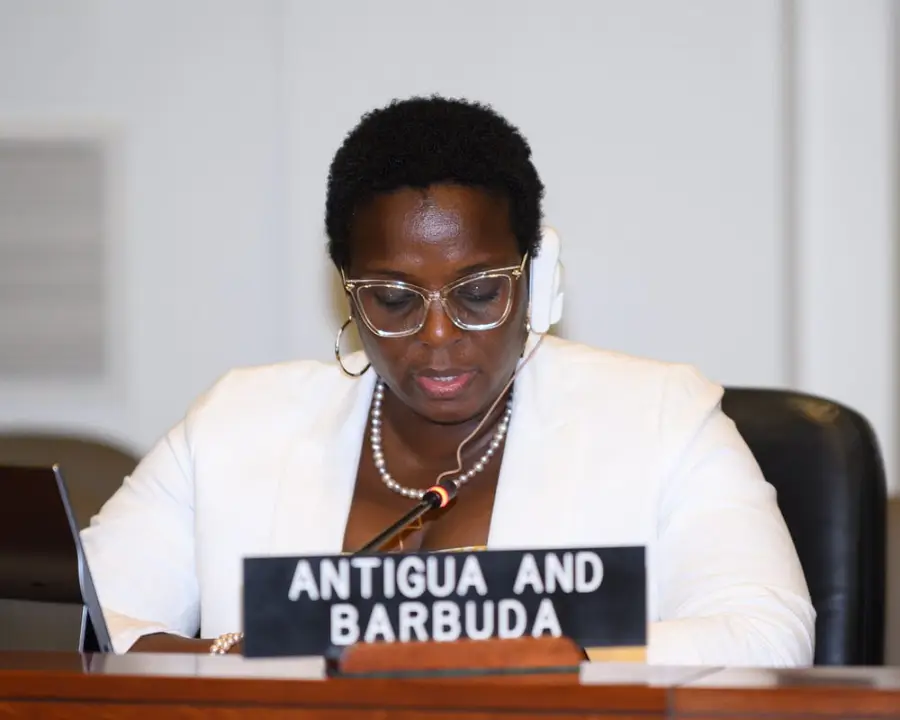
“We appreciate the report presented today, especially on the meetings with various actors, particularly with the president of Guatemala and the two presidential candidates,” Davis-Lake noted before pausing. Her tone became more critical. “We encourage this council to accept the invitation of the president of Guatemala and authorize the secretary-general to make the necessary arrangements to deploy the mission until the installation of the new president.”
The atmosphere grew denser with each word. “In particular, we urge that the observation mission receive full support to ensure free, fair, and transparent elections. At the same time, we want to express our deep concern about the actions of the Public Ministry attacking the electoral process, instituting 13 cases against its validity. These actions seem aimed at creating fear and may affect the willingness to participate and the decisions of the tribunal.”
Almost imperceptible whispers indicated the growing unease. Our gazes crossed, reflecting the concern over the situation in Guatemala.
“Despite these observations,” the delegate concluded, “we are prepared to give the government of Guatemala an opportunity to fulfill its obligations and responsibilities, not only to ensure free and fair elections but also to follow the principles of the Inter-American Democratic Charter that they signed.”
She turned off the microphone, her eyes revealing a mix of hope and caution. President Sanders thanked her intervention and gave the floor to Paraguay.
The interim representative of Paraguay, Raúl Martínez, spoke firmly. His condolences to Ecuador were a balm amidst the tension. He thanked the secretary-general for his report, acknowledging its importance for keeping informed about the situation but with an undertone of concern and vigilance.
He expressed his wish for success for the August 20 elections in Guatemala, stressing that free and transparent elections are essential for strengthening democracy, trusting that the Guatemalan people would vote responsibly and wisely.
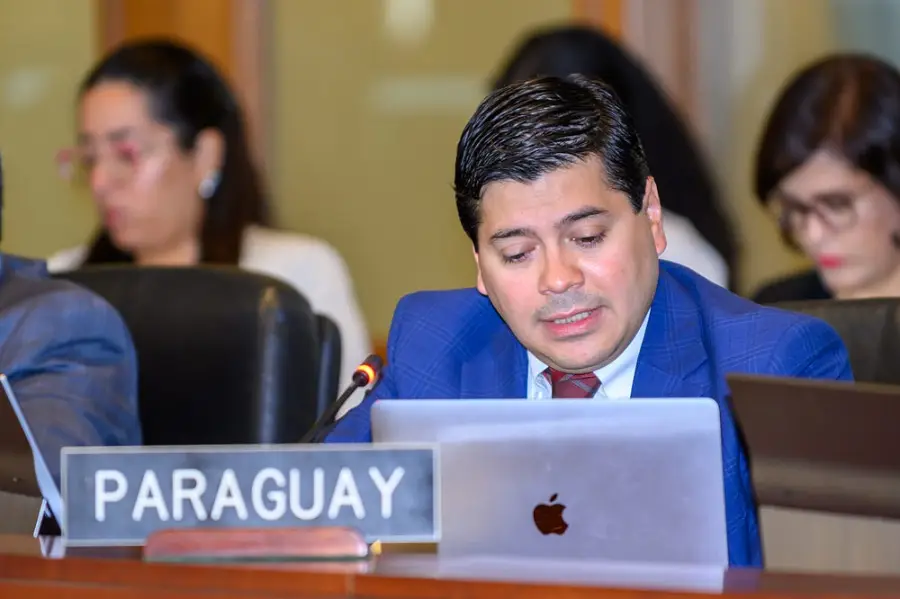
He highlighted the importance of OAS electoral observation missions as support for the continent’s democracies, hoping this deployment would also be successful. With a look of approval toward the president, he concluded, leaving an echo of commitment.
Paraguay and Guatemala had worked closely at the OAS in recent years, pushing forward issues of common interest related to gender equality and abortion. I always found it striking to see topics with agreed language at the United Nations level return to the negotiating table, but for some reason, they became controversial in subregional forums like the OAS.
Then, the ambassador of Canada, Hugh Adsett, took the microphone. His posture was serene, and his movements were very measured, reflecting his calm, thoughtful, and kind character. With a firm voice and penetrating gaze, he thanked the secretary-general for his detailed report on the situation in Guatemala.
Adsett reaffirmed, with emphatic words in English and French, Canada’s unwavering commitment to promoting and defending democracy worldwide, especially in the Central American nation at a crucial moment in its history.
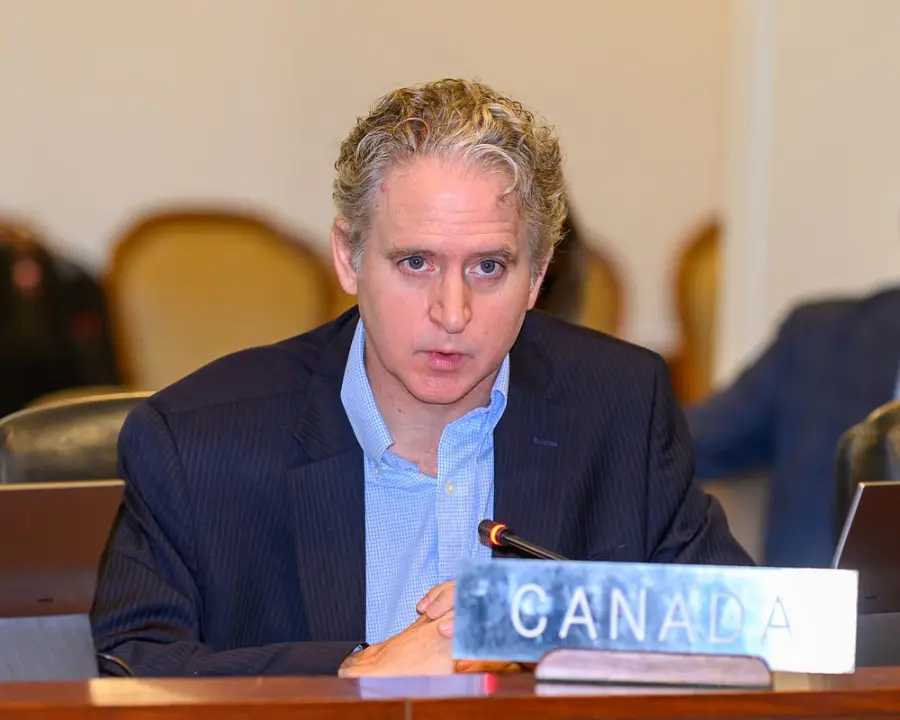
The Canadian diplomat welcomed the invitation extended by the Guatemalan government for the OAS electoral observation mission to remain in the country in the coming weeks until the process’s conclusion. He emphasized, with emphasis on each syllable, the fundamental importance of Guatemalan authorities providing all their support and fully guaranteeing the independence and security of international observers. The integrity of their work, Adsett stressed, was essential to ensure the transparency and credibility of the elections.
However, the ambassador could not hide his deep concern about reports of illegal and unacceptable actions directly threatening democracy and the electoral process in Guatemala. Focusing on his notepad and with a grave tone of voice, he referenced attempts to suspend legitimately registered candidates, particularly from the Semilla party, as well as questioning the first-round results and maneuvers to obstruct the observation mission’s work. These actions, Adsett emphasized, seemed aimed at undermining the popular will and manipulating the election results.
The Canadian representative was categorical in stating that the voices of Guatemalan citizens must be heard and respected without undue interference or interference of any kind. It was imperative, he declared vehemently, that the electoral process be conducted completely freely, fairly, and transparently, without pressure or intimidation. Only then, he reiterated, could it be ensured that the result faithfully reflected the sovereign will of the Guatemalan people.
The ambassador Adsett’s words echoed strongly in the Permanent Council room, generating an echo that seemed to amplify his message. His statements left a palpable sense of urgency and determination in the already tense atmosphere. Representatives from other countries listened attentively, some nodding in agreement, others exchanging worried glances.
It was evident that the situation in Guatemala had captured the international community’s attention and that all eyes would be on the unfolding events in the crucial weeks ahead.
The fate of Guatemalan democracy, the Canadian ambassador’s speech suggested, was at stake. The international community, particularly the OAS, had a responsibility to ensure that the electoral process was conducted with integrity and that the people’s will was respected.
Canada, Adsett made clear, would be vigilant and ready to take the necessary measures to support and defend democratic principles in Guatemala and the region.
“Thank you very much to the distinguished ambassador of Canada. I would like to give the floor now to the ambassador of the United States, Francisco Mora. Mr. Ambassador, you have the floor,” said Sanders.
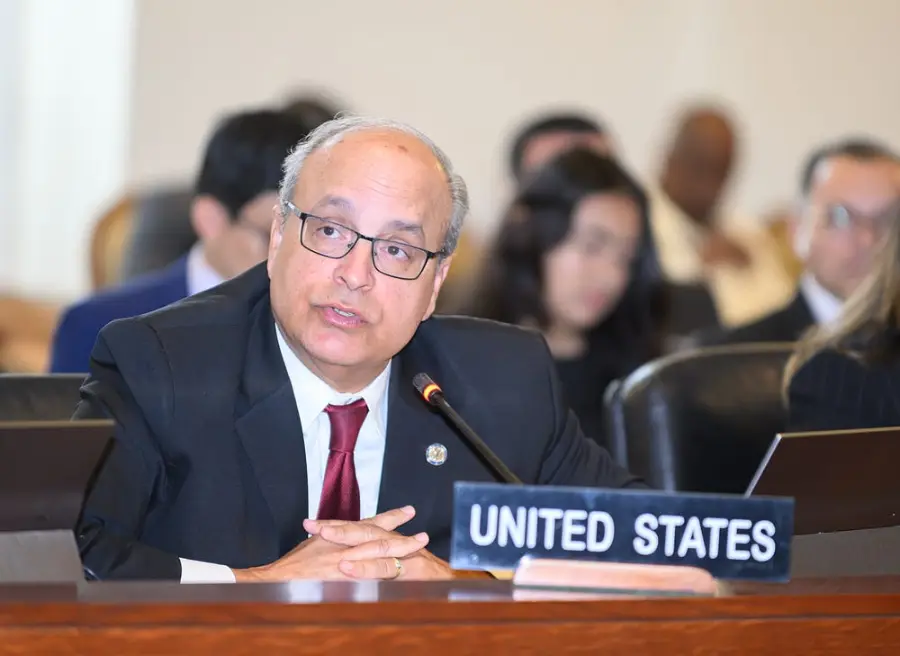
Ambassador Francisco Mora, seated, leaned into the microphone with a serious expression and determination on his face, fingers intertwined and both elbows on the table. He wore a dark suit, a pristine white shirt, and a purple tie evoking mourning and sorrow. On his left lapel, he wore a gold pin identifying him as a permanent representative, and in his right hand, he held a blue pen with a stainless steel tip.
“Thank you very much, Mr. President. First, Mr. President, the United States wants to join your words, those of the secretary-general, and also those of my colleagues, strongly condemning the murder of Ecuadorian presidential candidate Fernando Villavicencio, a critic of crime and corruption. We offer our condolences to his family, the people, and the government of Ecuador. The United States is willing and ready to support local authorities to bring those who committed these terrible acts to justice.”
Mora paused, separated his hands, and looked at the attendees with a penetrating gaze, emphasizing the seriousness of the situation. “An attack on democracy and the rule of law. Mr. President, this is just one of the most recent examples of how democracy is threatened by these terrible forces trying to undermine the great achievements of democracy and human rights we have seen in the hemisphere for over 30 years. These tragedies, like the one we are experiencing, make it imperative that we stand together as a region to express our solidarity with the people, the government, and the democracy of Ecuador.”
Each word was a dart to the heart, reflecting the vulnerability of democracy in the region.
“Mr. President, the United States wants to thank the secretary-general for his report on the current political situation in Guatemala. We defended from the beginning the secretary-general’s visit at Guatemala’s request and invitation. We thank Guatemala for welcoming the secretary-general and facilitating his visit. Following the spirit of the Inter-American Democratic Charter, transparency and democracy are fundamental characteristics in our hemisphere.”
Mora continued, emphasizing the importance of the commitments made by the Guatemalan government. “The report, Mr. President, the United States wants to highlight that the secretary-general secured commitments from the Guatemalan government and that the second round will take place on August 20 between Sandra Torres and Bernardo Arévalo, without interference. The respect for the results of that election and also ensuring a timely and smooth transition in January next year. These commitments are very positive outcomes from the secretary-general’s visit, and for that, we want to thank both the secretary-general and the Guatemalan government for participating constructively and achieving this result.”
The room was in absolute silence, every member concentrating on the ambassador’s words. “Mr. President, it will be very important for the OAS and all member states to continue serving as a follow-up mechanism for these commitments, as eloquently expressed by the delegate of Antigua and Barbuda. Now, we remain concerned with the reports shared by the secretary-general regarding judicial intimidation and threats. We agree that the OAS should continue to participate and monitor through a mechanism deployed on the ground until the new administration takes office in January 2024.”
In an atmosphere charged with conspiracy theories and persistent rumors about U.S. control behind the scenes in the region, Mora tried to dispel the suspicions with a firm gaze and clear voice, emphasizing his country’s impartiality in the electoral process. “To be very clear, the United States does not support any specific candidate in these elections. The elections are an opportunity for Guatemala to choose its own future. The United States supports the integrity of the process authorized by the Constitution of Guatemala.”
When the Americans speak on these issues, the tension rises, and every word carries significant weight.
“Now, as we all know, on June 25, Sandra Torres and Bernardo Arévalo received the most votes and are participating in the second round for the presidential seat in the second round on August 20. As we have said, the United States defends the Guatemalans’ right to decide in this second round. Any act of interfering with these elections and the second round on August 20 is a threat to the electoral process in Guatemala and its adherence to the terms of the Inter-American Democratic Charter.”
Mora took a breath and looked to his left with mastery and command of the stage, preparing for the final blow of his speech. “We want to highlight that various voices from Guatemala, including the private sector and civil society, have expressed their concern that the actions of the Public Ministry violate electoral laws and fundamental constitutional protections. The intimidation of Supreme Electoral Tribunal workers, who have made these elections possible, must stop. This is the Guatemalans’ right to vote for the candidate they want, something essential in this second round, also for the future and the integrity of the elections in Guatemala.”
The room’s atmosphere became increasingly tense, with each member of the Council feeling the pressure of the situation. “Democracy, as we all know very well, is in a very fragile situation in the Americas. We are in a critical situation regarding the future of democracy in our countries. It is no secret that we all need to continue working. We are seeing attacks on democracy in recent years.”
Frank concluded his intervention with a note loaded with warning and hope. “Esteemed colleagues, let there be no doubt that the situation in Guatemala is a test for this body and the Democratic Charter. A test that transcends August 20 and will take us until the power transition in January 2024. We must continue participating and be ready to adhere to the Charter in the crucial months that will follow the second electoral round.”
These words, coming from the U.S. representative, carried additional weight. Historically seen as a key player in hemispheric affairs, the United States has considerable influence in the region. Mora’s statements not only reflected his country’s official stance but also sent a clear message about the vigilance and commitment expected from the international community.
The implication that the situation in Guatemala was a “test” underscored the gravity of the political crisis. It was not just an isolated event but a challenge to the fundamental principles of democracy throughout the region. By emphasizing the need to “continue participating,” Mora highlighted the importance of continuous observation and monitoring, suggesting that any deviation from the democratic process would be unacceptable and have broader repercussions.
The reference to the Democratic Charter as an essential framework was also significant. This charter, adopted by the OAS, establishes the standards of democratic governance that member states commit to maintaining. By citing the Charter, Mora was reminding everyone present that the situation in Guatemala was not just an internal matter but a collective concern affecting the entire region.
In the context of recent unrest and political turmoil in Guatemala, Mora’s words were a call to action and vigilance. They reflected a mix of anxiety and determination, a clear indication that the international community, led by the United States, would not allow democracy in Guatemala to be undermined without a firm response.
The room was filled with a deafening silence, each of Mora’s words resonating in the hearts and minds of those present like an unsettling echo. “With that, we want to urge the Guatemalan government to continue protecting its electoral process and allow the voices of the Guatemalan people to be heard in the elections. It is vital, not only for the Guatemalan people but also for all OAS member states, that we continue working to ensure that our democracies, all our democracies, continue to serve the people and our societies in the Americas.”
The air was charged with tension as Mora emphasized firmly, “Once again, we agree with the secretary-general that there is an urgent need to continue monitoring and evaluating the situation until January 2024 to ensure that the will of the Guatemalan people is not silenced by the government’s actions. We also believe that the Permanent Council should continue to receive constant information about the electoral process in Guatemala.”
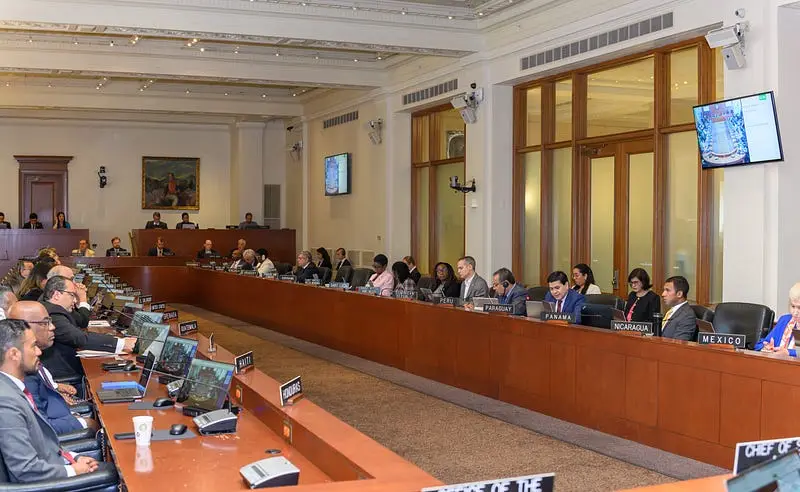
In the room, it was evident that when the Americans speak, everyone listens.
The United States’ reputation for backing its words with actions was well-established. For months, the U.S. government had imposed individual sanctions on those considered anti-democratic actors in Guatemala, targeting officials and influential people deemed to undermine the rule of law and democracy. These sanctions were more than mere warnings; they were tangible manifestations of the U.S. commitment to protecting democratic principles.
The decisive actions taken by the United States demonstrated that they were not merely observing the situation from afar but were actively willing to ensure that democracy in Guatemala was not eroded by corrupt interests. This firmness added a layer of seriousness and urgency to Mora’s words, reinforcing that the warnings and hopes expressed were not mere diplomatic formalities but a prelude to concrete measures in defense of democracy in the region.
Mora took on the leadership of the issue at the OAS with determination and skill. This academic turned diplomat had joined the organization only a few months earlier, but with the expertise of a seasoned professional and the grace of an actor, he took on the role like a character to be portrayed. If there were a prize for the most outstanding new ambassador, Frank should win first place.
His astuteness, intelligence, determination, and ability to analyze complex scenarios and situations, read the actors, and anticipate events is simply brilliant, admirable, and a delight to watch.
With Frank, one always learns something new. He has his radar on with a 360-degree range of action all the time. His presence at the OAS was a breath of fresh air, bringing a unique perspective and a strategic approach to the region’s challenges. His ability to navigate the turbulent waters of international diplomacy, always maintaining calm and composure, is a testament to his experience and dedication, forged in a short time in the heat of crises.
Watching Mora in action is like witnessing a masterpiece on the international stage, where every move is calculated, and every word is loaded with meaning. With leadership like this, the OAS has the opportunity to face the challenges of democracy in the Americas with renewed energy and determination.
“Thank you, Ambassador Mora. I would like to give the floor now to the delegation of Brazil. I believe we have Ambassador Belli from Brazil present,” said President Sanders.
Ambassador Belli, dressed in a khaki suit, white shirt, and orange tie, began his intervention by expressing his strong condemnation of the tragic murder of presidential candidate Fernando Villavicencio in Ecuador and offering condolences to his family, the delegation of Ecuador at the OAS, the government, and the people of Ecuador.
He congratulated Foreign Minister Mario Búcaro of Guatemala and thanked Secretary-General Luis Almagro for the detailed report on his recent visit to Guatemala. He emphasized the importance of renewed guarantees for the two qualified candidates to participate in the second round under safe conditions. He underscored that it is essential for the Guatemalan people to exercise their right to vote with all guarantees of security, tranquility, and peace.
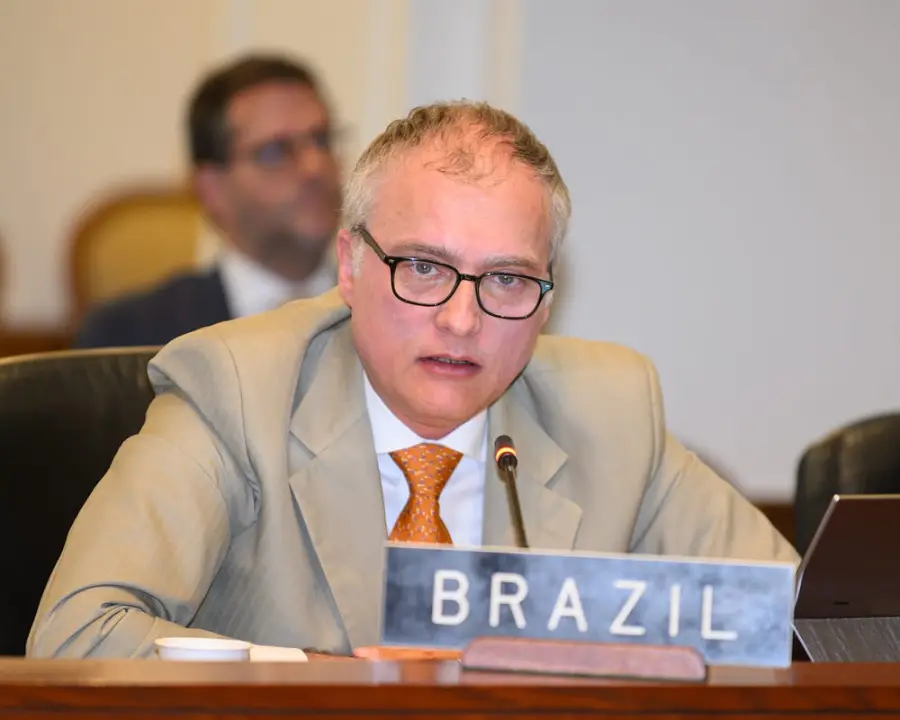
Belli emphasized the need for the Supreme Electoral Tribunal to continue its work with complete autonomy and in accordance with Guatemalan laws and the Constitution. He highlighted the crucial role of the OAS Electoral Observation Mission, not only until the second round but also until the new government takes office in January 2024, as a concrete gesture in favor of the electoral process’s transparency.
The ambassador expressed confidence that, despite the observed problems, the sovereign will of the people would prevail and that the electoral process would conclude successfully, respecting Guatemala’s laws and Constitution. He underscored the need to ensure the legal security of the electoral process and the unconditional respect for the electoral authorities’ prerogatives.
He concluded his intervention by highlighting the importance of strengthening political parties and organizations for democracy. He expressed hopes that the positive signs presented would consolidate to ensure a peaceful, transparent, and fair process in Guatemala’s second round, respecting the popular will expressed at the polls.
Brazil’s optimistic stance, though surprising given the evident violations of the electoral process, brought a hopeful focus to the tense atmosphere in the Permanent Council room, where all eyes turned to the next speaker.
Uruguayan ambassador Washington Abdala leaned toward the microphone with a solemn gesture and a look reflecting the moment’s gravity. Impeccably dressed in a dark pinstripe suit, white shirt, and a deep blue tie, his appearance conveyed the seriousness and respect the occasion required. To his left, his cell phone rested on a small tripod, ready to capture every word of his intervention, a testament to the session’s historical significance.
Washington began his intervention with a firm voice laden with emotion, thanking the president and highlighting the tragic loss of Fernando Villavicencio. He mentioned the moving words of Ambassador Mauricio Montalvo, whose expressions of pain deeply resonated with everyone present. Abdala emphasized that the impact of this brutal event in Ecuador was not limited to Montalvo but affected everyone, shaking their deepest fibers.
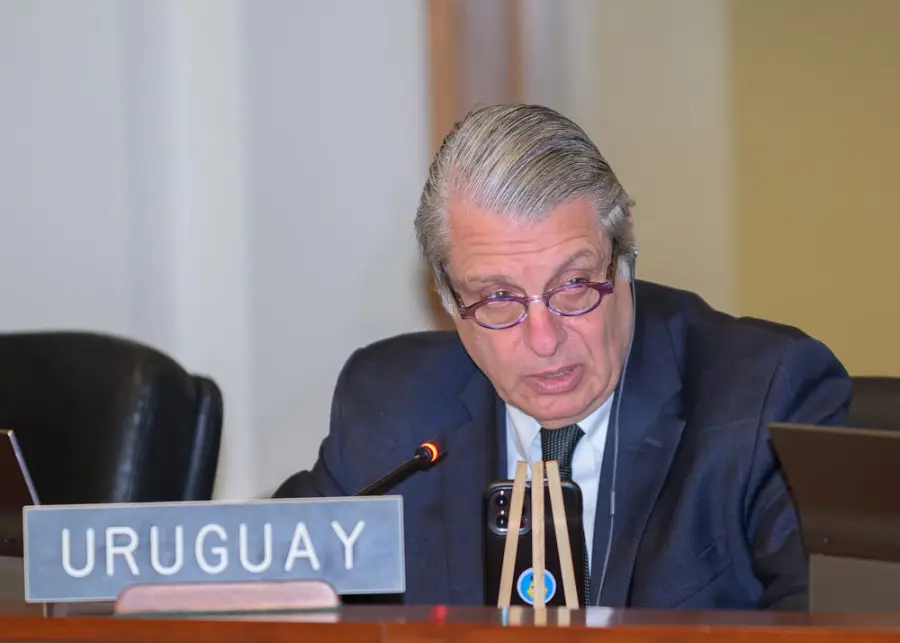
He paused to allow his words to settle into the consciousness of those present. Then, with a voice laden with sorrow and determination, he continued highlighting the “inhuman acts” and noting that it was no coincidence that the continent exhibited such alarming indicators of violence. He concluded that this terrible event was a “phenomenal wake-up call, an urgent reminder of the challenges we face and the imperative need to act.”
Ambassador Abdala spoke with a contained passion, every word imbued with the moment’s gravity. His eyes, though shadowed by sadness, shone with unwavering determination. It was evident that he was not only expressing his pain and concern but also giving voice to the collective feeling of the entire room.
His words resonated with crystal clarity, an unequivocal call to action and solidarity in a moment of profound shock. The silence that followed his statement was deafening, a testament to the impact of his words and the magnitude of the tragedy that had shaken Ecuador and the entire region.
At that moment, the Uruguayan ambassador was not just fulfilling his diplomatic duty but also assuming the role of a moral voice, a firm reminder of the fundamental values that should guide nations in times of crisis. His intervention, captured by his cell phone’s camera, would be recorded as a testament to the international community’s unwavering determination to confront violence and defend democracy, even in the darkest moments.
The room was in sepulchral silence, still reeling from the terrible murder. In that atmosphere charged with sorrow, the Uruguayan ambassador continued his intervention, his firm voice reverberating in the hall. “My chancellery spoke out about this tragic event during the day, expressing our deepest solidarity with the Ecuadorian people.”
Then, turning his attention to the session’s central topic, he continued: “Regarding the Secretary-General’s report on the situation in Guatemala, I have followed it with great interest and noticed that it emphasizes key concepts such as governance, strengthening the electoral process, and extending the mandate of those carrying out this crucial task.”
The ambassador highlighted a fundamental legal principle: the notion of non-innovation.
He emphasized the importance of not altering established rules and valued the presence of Chancellor Búcaro as a gesture of great significance that demonstrates Guatemala’s firm commitment to the democratic process. He assured that once the second round of elections was concluded, a six-month transition would begin, culminating on January 14 at 2:00 p.m., as established by the constitucion.
Abdala concluded by emphasizing that it is the international community’s duty to accompany this process, ensure respect for the principle of non-innovation, and guarantee that the democratic path is traveled peacefully. His intervention highlighted the international community’s responsibility at crucial moments to ensure that the Guatemalan people’s will is respected and the electoral process is conducted with integrity and transparency.
His words hung in the air, permeating the room with a sense of determination and hope. Amidst the shock and pain over the tragedy in Ecuador, the ambassador had managed to focus attention on the importance of safeguarding democracy and the rule of law in Guatemala. His intervention served as a powerful reminder of the responsibility that lay upon the international community at such crucial moments.
The silence following his words was a testament to their impact. Each of those present seemed to reflect on the significance of what was at stake and the imperative need to act firmly and coherently to ensure that the Guatemalan people’s will was respected and the electoral process conducted with integrity and transparency.
Then, Peru requested the floor. In a formal tone, with an undertone of tension, Peruvian ambassador Gustavo Adrianzén began by expressing Peru’s regret over the murder of Ecuadorian presidential candidate Fernando Villavicencio, strongly condemning the act of violence.
He thanked the secretary-general for his report on his visit to Guatemala, highlighting the importance of his presence on-site at the Guatemalan government’s invitation. He mentioned with satisfaction that Guatemala had committed to respecting the electoral schedule and results and to transferring power on January 14.
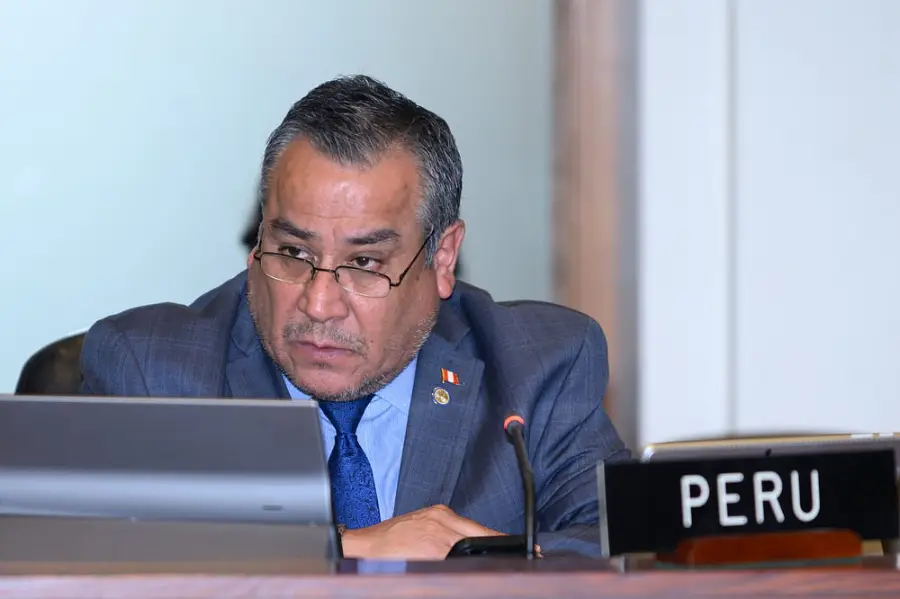
However, Ambassador Adrianzén also referenced the “grave scourge of corruption facing our nations,” generating some ambiguity about his position regarding the integrity of the Guatemalan electoral process. He said: “Naturally, we have a duty to respect institutions and their autonomy, but we also have a duty to ensure that these acts of corruption are investigated and those responsible are determined promptly, without lynchings and with due process.”
Nonetheless, he praised Guatemala’s commitment to transparency and the implementation of the recommendations from the secretary-general’s report. Addressing Chancellor Búcaro, he stated: “You, Chancellor, representing the state, offer guarantees to this Permanent Council of compliance and strict respect for the electoral results and the transition process that must be carried out afterward.”
With his words, it seemed clear to some that the Peruvian ambassador sought to give space and support to the Guatemalan government to conduct a transparent and democratic electoral process. His message was one of support and confidence in Guatemalan institutions, despite the general concerns about corruption in the region.
The ambassador’s intervention left me with doubts about his exact position regarding the integrity of Guatemalan institutions and the ongoing electoral process. Was he hinting at possible irregularities or merely making a general reflection on corruption in the region? His statements’ ambiguity generated some confusion in me, who was sitting beside him.
At the same time, the ambassador echoed the argument previously presented by Guatemala by recalling the importance of respecting states’ sovereignty and the principle of non-interference. “And all this, Mr. President, also recalling what the Democratic Charter tells us: respecting states and their internal decisions, strictly adhering to the principle of non-interference.”
By echoing this fundamental principle, Ambassador Adrianzén reinforced his stance of support and respect for the Guatemalan electoral process, making it clear that his intention was not to interfere or question Guatemala’s internal decisions but rather to provide respectful and constructive accompaniment.
With this conclusion, Ambassador Adrianzén’s intervention dispelled any doubts about his position and demonstrated alignment with Guatemala’s arguments in defense of its sovereignty and self-determination. His final words reaffirmed confidence in Guatemalan institutions’ ability to conduct free and transparent elections while emphasizing the importance of international cooperation within the limits established by the Inter-American Democratic Charter.
Thus, Ambassador Adrianzén’s intervention sought to balance concerns about corruption and respect for Guatemala’s sovereignty. His words aimed to strengthen confidence in Guatemalan institutions and reaffirm the OAS’s commitment to accompanying the process respectfully and following fundamental democratic principles.
The president of the Permanent Council, with a firm and measured voice, thanked the Peruvian ambassador for his intervention and gave the floor to the Chilean ambassador. The room remained expectantly silent.
Sebastián Kraljevich, the Chilean ambassador, leaned slightly toward the microphone, his presence radiating a combination of empathy and firmness that had already become his hallmark. A seasoned political strategist and academic, Kraljevich has extensive experience in electoral campaigns in many countries in the region, reflected in each of his interventions.
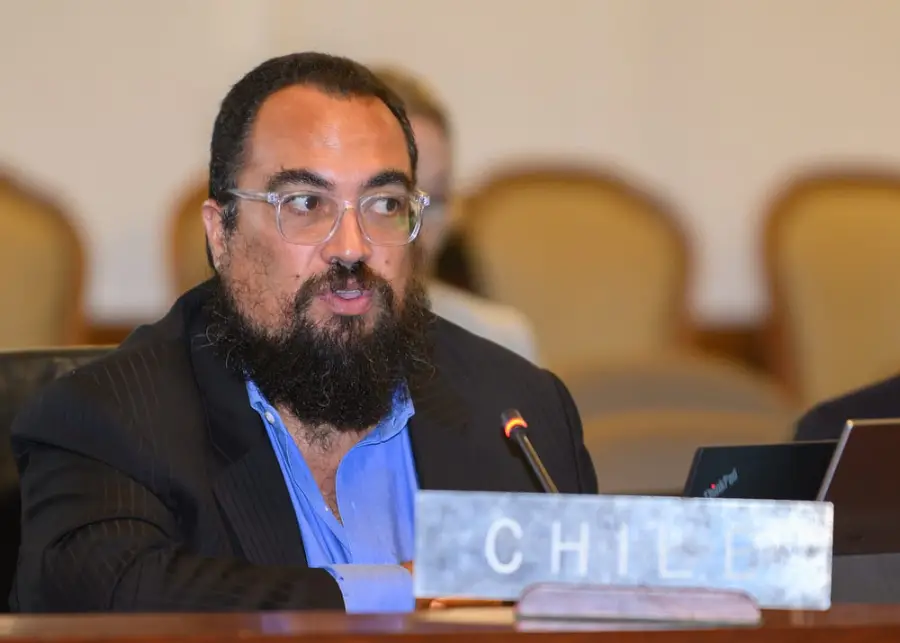
With a measured voice and melodious cadence, he began condemning the murder of presidential candidate Fernando Villavicencio in Ecuador, expressing deep condolences to the government and people of Ecuador, and showing profound empathy and solidarity.
As he progressed, he highlighted the guarantees expressed by Minister Mario Búcaro and Secretary-General Luis Almagro’s report, acknowledging their efforts with a collaborative attitude.
Ambassador Kraljevich paused strategically before addressing a crucial point. With a firm voice and penetrating gaze, he emphasized the need for electoral observation missions to remain strictly within the scope of the elections. “It is essential that electoral observation missions can stay focused on their specific task of ensuring the integrity and transparency of the elections without becoming compromised or distracted during the post-electoral transition process.”
The speech reflected his characteristic style: formal and respectful language, carefully structured to convey clarity and commitment. However, he did not hesitate to highlight the urgent need to strengthen democracy and institutions, insisting that democracy’s problems could only be addressed with more democracy, clearly reflecting his unwavering commitment to democratic values. His tone was one of recognition and balance, but also cautious. It was evident that the Chilean ambassador sought to emphasize the importance of safeguarding democratic principles in a regional context marked by challenges and threats.
“We must seek alternative institutional formulas that allow OAS accompaniment during the transition and transfer of power without jeopardizing the technical, professional, and specific nature of electoral observation missions,” emphasized Ambassador Kraljevich. His intervention reflected the need to find an adequate balance between international accompaniment and respecting states’ sovereignty, a topic that has been subject to internal debate within the organization.
His words generated a whisper in the room, with some nodding in agreement and others exchanging worried glances.
It was evident that the Chilean ambassador was raising a delicate but necessary point, echoing concerns expressed by other countries such as Bolivia, Mexico, and Argentina about the composition, responsibilities, and scope of action of electoral observation missions.
His statement was met with a brief silence, followed by almost unanimous assent. Those present understood the importance of maintaining the integrity and independence of observation missions while seeking complementary mechanisms to support the democratic transition process. The Chilean ambassador’s intervention added to the voices advocating for a review and improvement of these missions, endorsing their role as impartial guarantors of the popular will.
The ambassador concluded his intervention with a call for unity and commitment from all member states. “As a hemispheric organization, we have the responsibility to uphold democracy and the rule of law in every corner of the Americas. Together, we must find the right balance between international accompaniment and respecting states’ sovereignty.”
Sebastián demonstrated his ability to combine empathy, clarity, and firmness in a single speech, an indelible mark of his character and diplomatic style.
His final words resonated strongly in the room, leaving a sense of shared determination and purpose. Representatives from different countries looked at each other, aware of the significance of the task and the challenge that lay ahead.
Post-dictatorship Chilean foreign policy has been characterized by a firm defense and promotion of human rights, consolidating Chile as a bastion of democracy in the region. President Gabriel Boric’s administration has defended freedom, social justice, and democracy with conviction, decisively confronting authoritarian positions and blatant human rights violations.
In line with this, Ambassador Kraljevich managed to convey a clear and forceful message: defending democracy requires concerted effort and unwavering commitment from all actors involved. Only through dialogue, cooperation, and the pursuit of consensus can regional challenges be addressed, ensuring a future of peace, stability, and progress for the peoples of the Americas. Chile has emphasized the importance of multilateral cooperation, solidarity among nations, and dialogue as indispensable tools for addressing global challenges.
This proactive approach has allowed Chile to remain a reference in defending democratic values and human rights in the hemisphere and beyond.
Upon Sebastián’s conclusion, the Council president gave me the floor.
This session found me in a personal process of reflection and introspection. Days earlier, I had been notified that my duties as ambassador would soon end. With a mix of confusion and disheartenment, I understood it was prudent to keep a low profile in those days. In reality, I wanted to disappear until my formal farewell day on August 23. I had been packing for days, preparing for that farewell, and other topics were neither on my mind nor on my radar.
However, the atmosphere in the OAS Permanent Council room was charged when I took the floor on behalf of the Dominican government and people.
My heart pounded, thinking that these would indeed be my last words in a formal meeting of this forum.
Despite the mix of emotions that overwhelmed me, a ray of light illuminated my thoughts: Eduardo, my son, would arrive in a few days to accompany me at the formal farewell and help organize the move. This news gave me strength and cheered me amid the confusion.
I addressed my colleagues, especially Don Mauricio sitting in front of me, with a deep sense of responsibility and determination. “Thank you very much, Mr. President,” I began, ensuring my voice was clear. “First, I want to express our indignation and condemnation for this atrocious act,” I continued, feeling the gaze of my fellow ambassadors on me.
“We extend a fraternal and solidary hand to the Government of the Republic of Ecuador and its worthy people.”
“Our deepest condolences also go to Mr. Villavicencio’s family, his friends, collaborators, and all the Ecuadorian people,” I added, leaving a brief silence to give my words the proper weight.
Then, I turned to the crucial topic of the session: the situation in Guatemala. “I want to thank the Secretary-General for presenting the report on his visit to Guatemala,” I said, acknowledging the effort and dedication put into this work. “His report reflects the complexity of the situation and the challenges Guatemalan society faces today,” I noted, aware of my colleagues’ attentive gazes.
I acknowledged the valuable work of the Secretary-General’s office and the Secretariat for the Strengthening of Democracy. “I also want to thank the presence and guarantees conveyed to this Council by the Guatemalan Foreign Minister, who is here today,” I added, lifting my eyes toward the minister.
“Guatemala is at a crucial crossroads,” I declared, emphasizing the gravity of the moment and turning my gaze back to Búcaro. “The Dominican government has already expressed its concern in a statement last month and in this very forum just a few weeks ago.” I knew these words would resonate deeply, reflecting the seriousness with which we took the situation.
The current situation, characterized by actions and judicial maneuvers undermining the electoral system, generated concern and serious doubts. “This troubling scenario requires our attention,” I said with determination. “The international community, particularly a group of states from this OAS Permanent Council, had assumed a firm and decisive stance in defense of democratic values and principles.”
“We respectfully call on all branches of the state and social actors to avoid undermining, intimidating, or coercing the electoral authority,” I continued, my voice resonating with the strength of our convictions. “This is a fundamental democratic principle that we must all respect and protect.”
My speech culminated with a message of unity and commitment. “The attention this organization has given to the case in question is a clear manifestation of a determined and renewed commitment from our hemisphere to democracy,” I affirmed, feeling the room’s energy. “The situation in Guatemala demands it, and we cannot remain indifferent.”
I concluded with a powerful reflection. “To conclude, we want to remember that democracy is not an inheritance taken for granted; it is a conquest we must protect and preserve together at every moment.” I looked at my colleagues with determination. “We remain confident that the Guatemalans’ will shall prevail.”
“Thank you,” I finished, leaving my words to buzz in the air like arrows loaded with anticipation and hope. Despite the uncertainty surrounding my personal future, I knew I had fulfilled my duty as my country’s representative and defender of the democratic values we all shared in that room. With my head held high, I prepared to face the coming days, knowing I had contributed to the fight for democracy in our region.
The chair of the Permanent Council thanked me and gave the floor to the Colombian ambassador. With a firm voice and determined look, he also expressed his rejection of the attack in Ecuador and his solidarity with the Ecuadorian people. “Unfortunately, Colombia has already walked this path.”
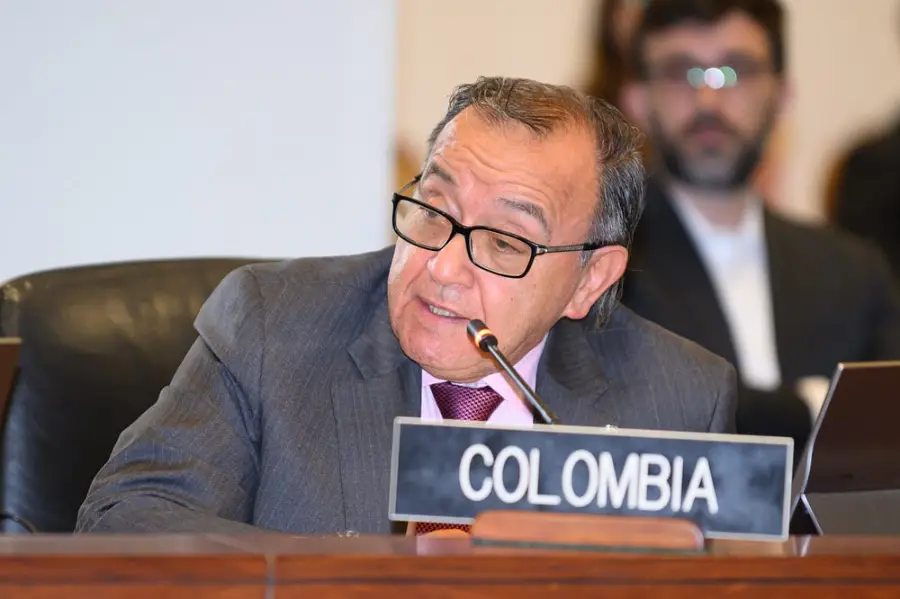
Luis emphasized the importance of supporting the Electoral Tribunal and rejecting the excessive judicialization of the electoral process in Guatemala. “The work of the MOE must be respected. Democracy is in a very fragile situation in the Americas.”
He concluded his intervention by highlighting the need to accompany Guatemala throughout the electoral process and transition, ensuring the legitimacy of the electoral results was respected. “We remain vigilant, Mr. President, and let’s hope everything proceeds in the best possible way.”
The atmosphere in the room was one of reflection and determination. We all knew that words had to turn into actions and that the international community had to remain vigilant and committed to defending democracy in Guatemala and the region.
Sanders thanked Don Luis and gave the floor to Argentina.
Argentine ambassador Carlos Raimundi took the floor with a studied calm, reflecting the seriousness and commitment characterizing his diplomatic approach. “Argentina joins, on behalf of the Argentine Republic, the grief, concern, and condemnation for the events in dear Ecuador,” he began, with a firm voice resonating in the OAS Permanent Council room. His tone was solemn, capturing the attention of those present while expressing his condolences.
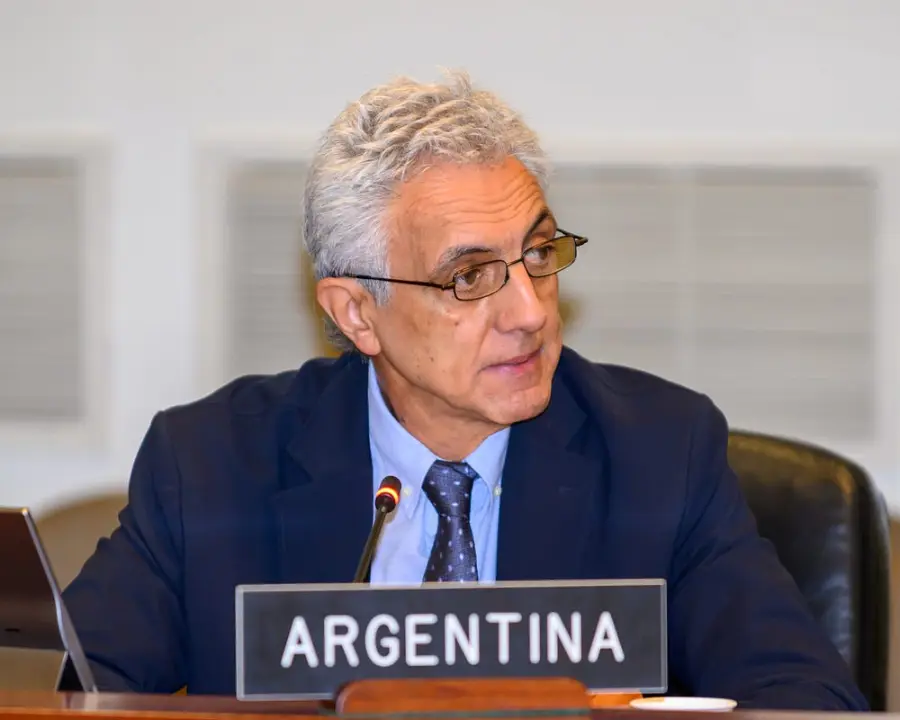
“I believe this session is more significant than merely approving or endorsing the Secretary-General’s report,” he continued, establishing the moment’s importance. “This session expresses an unwavering commitment of this Permanent Council to the independence of the Supreme Electoral Tribunal of Guatemala and, as its chancellor pointed out, to the absolute preservation of judicial accusations regarding the supreme plane of democracy, which is the free expression of the popular will. That cannot be altered or interfered with by any circumstance.” Raimundi emphasized these words, underscoring the inviolability of the democratic process.
The ambassador paused, allowing his words to settle. Then he continued: “This independence must not only be carried out institutionally but also in terms of concrete facts.” Raimundi spoke with conviction, warning about the dangers of informational and social climates that could intimidate voters and electoral authorities. “It must be guaranteed not only institutionally but also in the concrete reality of those involved in this process.”
Moving forward in his speech, Raimundi highlighted the commitment’s continuity beyond the electoral act.
“You know that we do not have the same appreciation as other states regarding the electoral missions of this organization, especially after what happened in Bolivia in 2019,” he said, his voice loaded with frankness, acknowledging the differences of opinion within the council.
Despite this, he emphasized the need to maintain the mission requested by the protagonists of the electoral process in Guatemala, mentioning that it would include specialized individuals in the transition process.
“Finally, I join that preview of the Colombian ambassador,” said Raimundi, his tone acquiring particular gravity as he addressed a delicate topic. “At some point, we will have to address the toxic relationship that some sectors of the judiciary have with democracy. My country is an example of that.” With these words, Raimundi pointed to a shared concern, making it clear that defending democracy requires addressing these internal challenges. With a firm look, he concluded: “That was what I wanted to express. Thank you very much.”
“Thank you very much, Ambassador of Argentina,” responded the Permanent Council president, acknowledging Raimundi’s intervention with respect and consideration, while the room absorbed the implications of his words.
The atmosphere was relaxed when Mexican ambassador Luz Elena Baños began her intervention. Her voice, with a distinctive timbre, reflected the moment’s seriousness. “We express our heartfelt condolences and deep sorrow to the family of candidate Fernando Villavicencio and to the government and people of Ecuador, as well as to our dear colleagues from Ecuador’s permanent mission, especially their distinguished and highly esteemed ambassador Mauricio Montalvo. We condemn any violent act that threatens the will of the Ecuadorian people and hope for peace to be restored within the democratic electoral process of that brotherly country.”
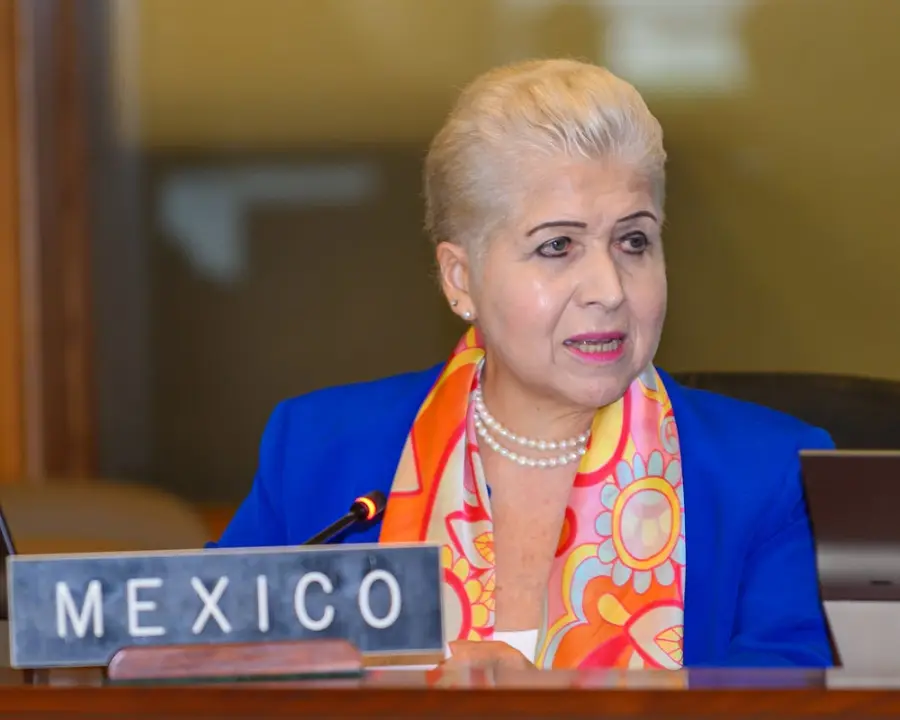
The ambassador continued, emphasizing Mexico’s confidence that democratic institutions and the rule of law would prevail in Guatemala, ensuring the integrity and human rights of all political actors involved.
Her words were a balm, reaffirming her country’s commitment to democracy and justice.
The president continued: “Thank you very much, Mexico. I offer the floor to the distinguished ambassador of Bolivia. You have the floor.”
Bolivian ambassador Héctor Arce took the floor with a grave and solemn voice. “I want to start, as everyone else has, by offering the condolences of the Plurinational State of Bolivia, President Luis Arce Catacora, and the Ministry of Foreign Affairs, to the family of candidate Fernando Villavicencio, cruelly murdered yesterday.”
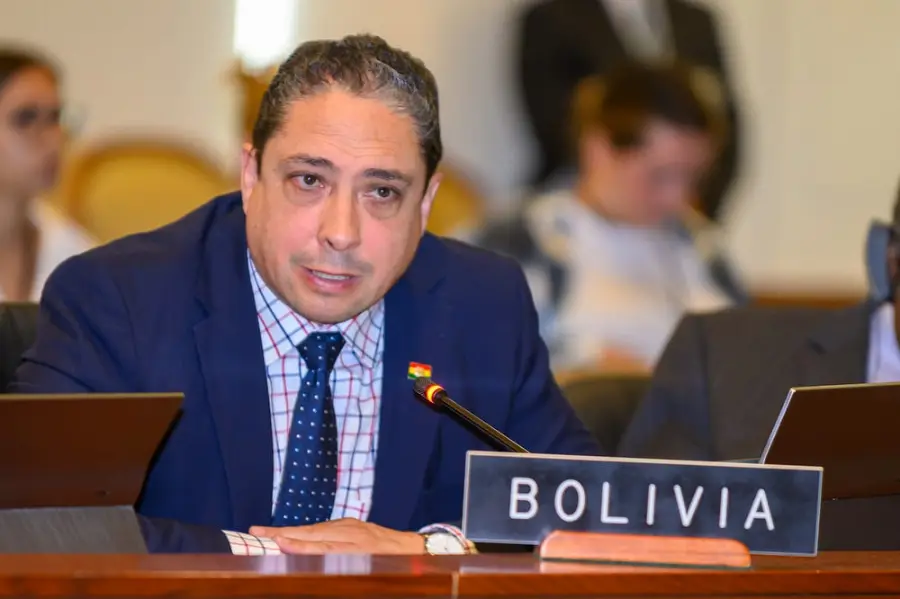
The room was in absolute silence, each word laden with deep sorrow and vehement rejection of violence. “We hope that our organization, in the future, can address an issue we raised and approved at the General Assembly last July, regarding messages and hate speech that often generate this degree of violence and disregard for human life in politics,” he continued, calling for reflection and joint action against the hate speech that so often leads to tragedy.
Arce had referred to a highly relevant topic not addressed in the Organization’s context during crises like the one we faced. Addressing hate speech is especially relevant in current times marked by misinformation, great polarization, and social media influence. We live in an era where information spreads rapidly, often without filter, and polarization has become a ubiquitous feature in our societies.
Social media, while powerful communication tools, can also be double-edged swords, amplifying hate speech and misinformation.
Many of us shared Bolivia’s concern, as these hate speeches not only divide our societies but also endanger democratic stability and people’s security. It is crucial that, as an international community, we take firm and coordinated measures to counter these phenomena. We must foster an environment of dialogue and respect, where differences are resolved through mutual understanding and tolerance.
In retrospect, that call for reflection and joint action against hate speech, which often leads to tragedies like in Ecuador, was missed in Guatemala’s context.
Democracy cannot flourish in an environment poisoned by hate and misinformation.
Clear policies and robust international cooperation are needed to address these challenges, ensuring democratic coexistence is strengthened and everyone’s human rights are protected.
Sanders continued, giving the floor to Costa Rica.
Samy Araya, Costa Rica’s alternate representative, expressed solidarity with the people and government of Ecuador for the murder of presidential candidate Fernando Villavicencio. He condemned this tragic act of violence and extended sincere condolences to Villavicencio’s family.
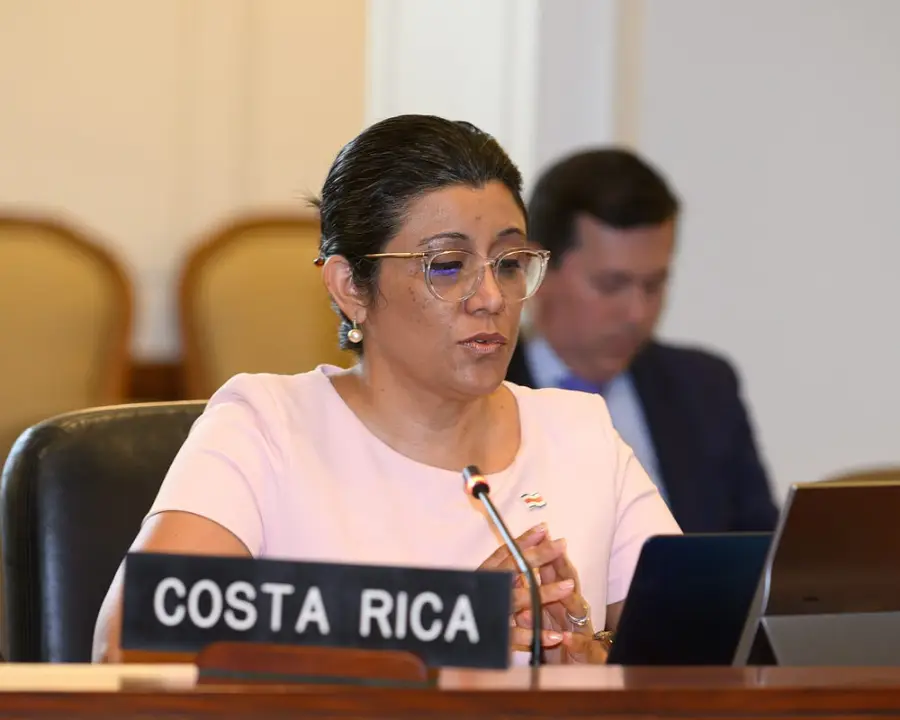
She thanked and valued the presence of Guatemalan Foreign Minister Mario Búcaro and the information received from Secretary-General Luis Almagro. “The electoral observation mission deployed for Guatemala and the recent visit of the secretary-general demonstrate not only the commitment of the Organization of American States but also Guatemala’s commitment to strengthening democracy, with inter-American instruments, and the principles contained in the Inter-American Democratic Charter that we all defend, such as electoral integrity, the rule of law, and democracy.”
Her words reflected cautious hope and a call to action, urging that the necessary conditions be guaranteed to ensure the rigor of the electoral process in Guatemala.
The chair gave the floor again to Ambassador Montalvo of Ecuador, who, with a solemn and reflective tone, thanked once again all the expressions of sorrow and solidarity from the permanent delegates and the secretary-general for the terrible murder of Fernando Villavicencio. His heartfelt words, condemning this horrible act and supporting peace, democratic institutions, and the fight against corruption and organized crime, would be duly transmitted to his country.
Regarding the session’s main topic, he thanked the detailed report presented by Secretary-General Almagro on his significant visit to Guatemala and the comments of Chancellor Búcaro, whose presence was appreciated. The report provided valid elements to better understand Guatemalan reality, encouraging hopes that the electoral process was on the right track, ratified by the participation of observation missions.
The ambassador highlighted the importance of the commitments and guarantees conveyed by Chancellor Búcaro on behalf of his government, especially regarding respecting the electoral results and the transition process until the new authorities took office. These aspects, duly recorded by the Council, had great significance for the democratic institutionality’s validity and compliance with inter-American instruments.
He concluded by highlighting the special attention this forum gave to the process experienced by Guatemalan brothers, within strict respect for sovereignty and non-interference in internal affairs, but also in a spirit of international cooperation. He considered it necessary to accompany the process in concert with Guatemalan authorities, strengthening democratic institutionality and absolutely respecting the people’s will.
After thanking the Ecuadorian ambassador, the president gave the floor to Chancellor Búcaro, who did not want to leave without thanking the delegates for taking note of the guarantees of an electoral process of which Guatemalans were proud. He extended special thanks to the secretary-general and his team, particularly the electoral observation mission, as the guarantees presented reflected the peace experienced in the nation and the commitment of all Guatemalans to freely, sovereignly, and independently go to the polls on August 20.
He reaffirmed the president’s clarity in his commitment to an orderly transition, recalling that Guatemala is a free, sovereign, and independent nation.
The Council president, having no more requests to speak, thanked the delegations for their contributions, noting all the relevant words to be recorded in the minutes. Without official documents beyond the secretary-general’s report and Chancellor Búcaro’s comments, the president prepared to summarize the meeting based on his notes and the consensuses from the discussions.
He recapped that the Council met to consider Secretary-General Almagro’s report on his mission to evaluate the integrity of the Guatemalan electoral process, especially the second round on August 20, and the commitments to democratic principles assumed by the country’s institutions and actors. He acknowledged the secretary-general’s engagement with various sectors of society, including the presidential candidates, and the guarantees received from the government and other actors on the transparency and fairness of the second round, acceptance of the results, and an open and transparent transition.
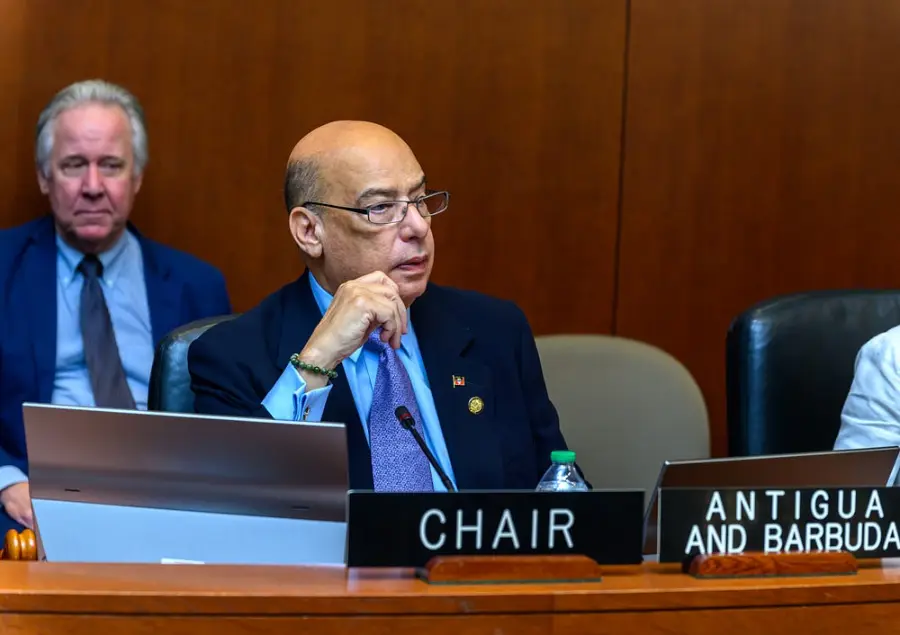
Aware of the proximity of the second round and eager to continue participating in a free, fair, and transparent process, the Council agreed that the OAS, through its electoral observation missions, would accompany the process until the new president’s inauguration, with vigilance and great attention. Additionally, the Council would meet as soon as possible after the second round to receive a report on its development and results, once again reviewing Guatemala’s situation in the context of the OAS Charter and the Inter-American Democratic Charter.
Without objections, the president confirmed that this summary reflected the Council’s consensus. He thanked everyone again for their participation in the session, which had unfortunately begun under the shadow of the Ecuador event. From the Council, he extended solidarity and condolences to the murdered candidate’s family.
With no more matters to address, the president adjourned the session, leaving an atmosphere of reflection, commitment, and hope for Guatemala’s democratic future and the region.
(I acknowledge the use of ChatGPT 4 (OpenAI, https://chat.openai.com) to translate the original text from Spanish to English.)
Complete video: