- “The Office of Ambassador in the Middle Ages” de Donald E. Queller
- “What Diplomats Do” de Sir Brian Barder
- "Diplomatic Tenses: A Social Evolutionary Perspective on Diplomacy" de Iver Neumann
- "Diplomatic sites: a critical enquiry" de Iver B. Newmann
- "Democracy from Above: Regional Organizations and Democratization" by Jon C. Pevehouse (2005)
- “Democracy from Above: Regional Organizations and Democratization” de Jon C. Pevehouse (2005)
Transforming International Institutions: How Money Quietly Sidelined Multilateralism at The United…
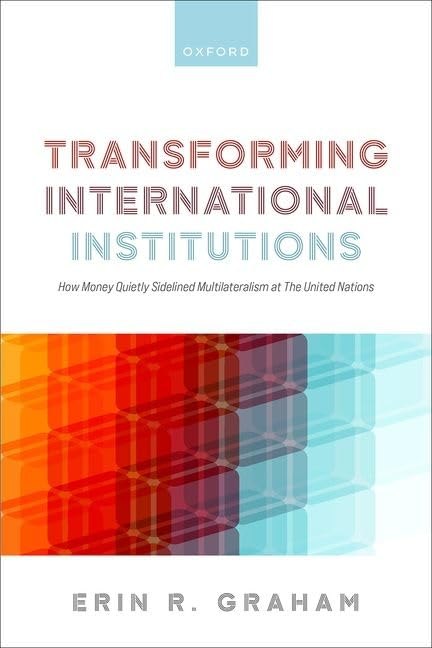
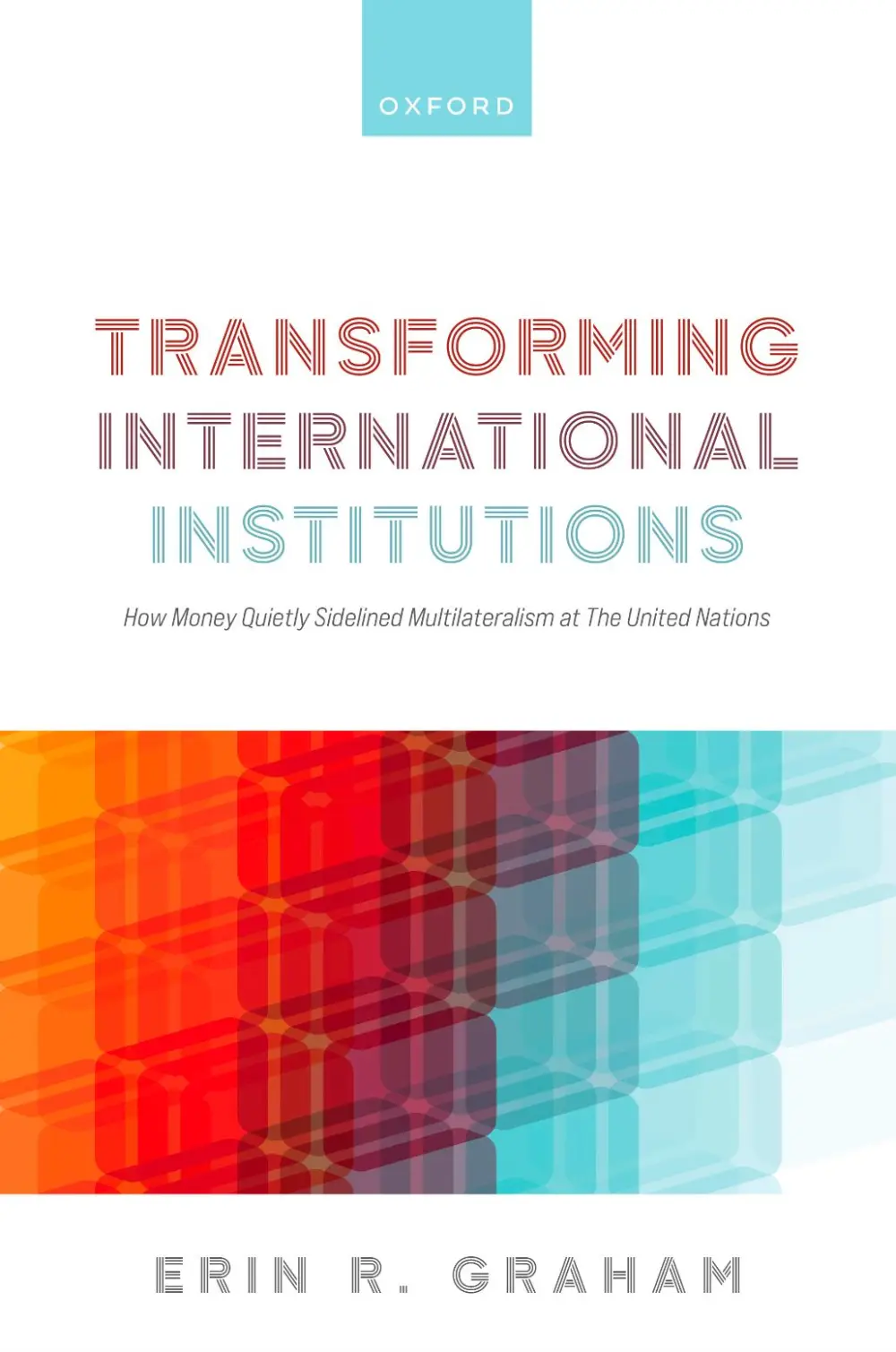
The book “Transforming International Institutions: How Money Quietly Sidelined Multilateralism at The United Nations” by Dr. Erin R. Graham focuses on the subtle but profound influence of financial contributions on the governance and decision-making processes within the UN. Graham argues that the shift from mandatory contributions to voluntary and earmarked contributions has significantly undermined the multilateral character of the United Nations, turning it into an organization that increasingly reflects the interests of wealthy donor countries rather than upholding the egalitarian principles enshrined in its founding Charter.
The key themes explored in the book include:
1. Financial control and earmarked contributions: The proportion of voluntary, earmarked contributions has increased dramatically. This funding method allows donors to dictate how their contributions are used, bypassing the multilateral decision-making processes that historically governed the allocation of resources within the UN. By allowing donors to specify how their money should be used, this system has eroded the collective nature of decision-making and weakened the influence of smaller and developing countries within the organization.
2. Evolution of UN governance: The book examines how, during the 1960s and 1970s, funding rules were reinterpreted to allow the acceptance of earmarked funds. Although initially a technical change, it laid the groundwork for broader structural changes that have since altered the relationship between member states and the UN. This transition allowed wealthier countries to exert disproportionate influence through direct financial control, a phenomenon that was neither anticipated nor fully understood by the institution’s architects.
3. Impact on multilateralism: The core argument is that earmarked funding has displaced the egalitarian multilateralism that was central to the UN’s identity. Instead, bilateral contracts between donors and UN agencies have become the norm, shifting decision-making power away from collective governing bodies toward individual donor countries. This has had profound implications for how the UN operates, allowing large donors to align the organization’s activities with their own foreign policy objectives.
4. Implications for developing countries: Developing nations, which once relied on the UN’s multilateral framework to amplify their voices, now find themselves marginalized. Their ability to influence the UN’s agenda has diminished as wealthier states increasingly shape the organization’s priorities through their financial leverage.