- “The Office of Ambassador in the Middle Ages” de Donald E. Queller
- “What Diplomats Do” de Sir Brian Barder
- "Diplomatic Tenses: A Social Evolutionary Perspective on Diplomacy" de Iver Neumann
- "Diplomatic sites: a critical enquiry" de Iver B. Newmann
- "Democracy from Above: Regional Organizations and Democratization" by Jon C. Pevehouse (2005)
- “Democracy from Above: Regional Organizations and Democratization” de Jon C. Pevehouse (2005)
“Regionalism versus Multilateralism: The Organization of American States in a Global Changing…
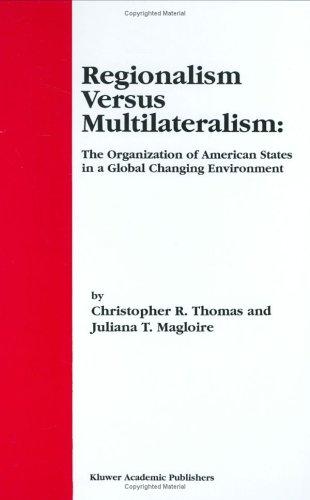
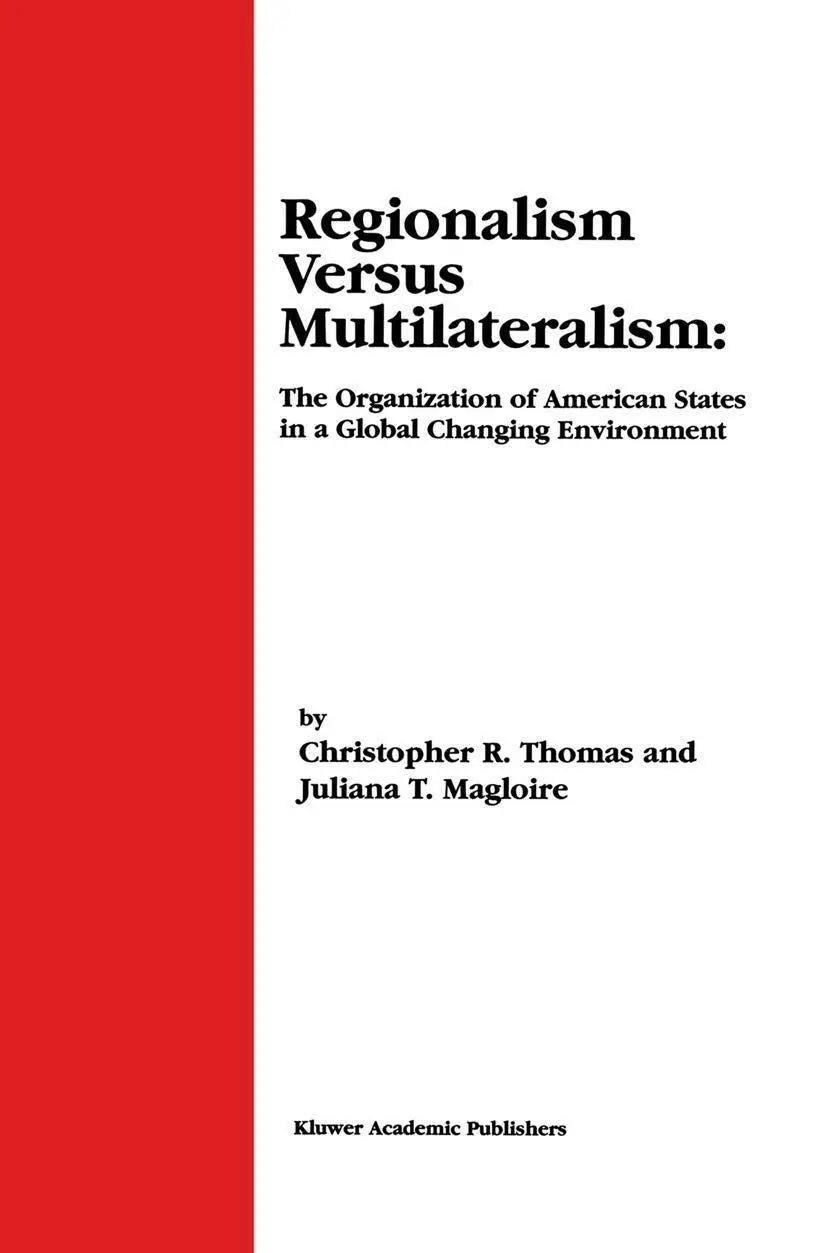
The book “Regionalism versus Multilateralism: The Organization of American States in a Global Changing Environment” (2000), written by Christopher R. Thomas and Juliana T. Magloire, analyzes the evolution and relevance of the OAS in the context of global and hemispheric changes. Divided into three parts, the authors explore the history, challenges, and future prospects of the organization.
The work begins by exploring the foundational objectives of the OAS, highlighting its origins as a promoter of Pan-Americanism and cooperation among member states. The authors detail how historical circumstances, such as decolonization and the Cold War, influenced its initial mission of hemispheric peace and security.
In the second part, the book examines how the OAS has adapted to contemporary changes. The organization has faced challenges such as the rise of subregionalism (MERCOSUR, CARICOM) and the need for dynamism and flexibility to address complex problems like poverty, inequality, and democratic consolidation in the region. Here, regionalism emerges as a key tool for strengthening cooperation in a globalized world.
In the final section, the authors discuss the OAS’s future challenges, emphasizing the need to modernize its structures to confront global threats such as drug trafficking, terrorism, and corruption. The OAS must continue to promote democracy and human rights, adapting to the changing needs of its member states and assuming a more active role in global governance.
The book argues that the OAS must continue to evolve and adapt to remain relevant, balancing regionalism and multilateralism in an increasingly interconnected world. The key to its future lies in its ability to be flexible and proactive in the face of the political, economic, and social challenges of the 21st century.