- Panamá: Dignidad y Soberanía en los Tratados Torrijos-Carter
- Panama: Dignity and Sovereignty in the Torrijos-Carter Treaties
- Telenovelas de sangre: la ilusión fatal del cambio de régimen
- Telenovelas of Blood: The Fatal Illusion of Regime Change
- Cuando el «realismo» se vuelve excusa
- El Regreso de Monroe: República Dominicana ante la Estrategia de Seguridad Nacional 2025 de Trump
When ‘Realism’ Becomes an Excuse
The Case for Ethical Pragmatism in Dominican Foreign Policy
In Dominican debates on international affairs, a notion as comfortable as it is dangerous has been gaining ground: the belief that in the real world only force matters, that ethics is mere rhetorical ornament, and that a small country’s foreign policy must inevitably bow to whoever holds power. This stance is often called “realism.” But let us be clear from the outset: more often than not, this is not realism at all. It is moral resignation dressed up as lucidity.
This discourse resurfaces with predictable regularity whenever the use of force, military interventions, or selective violations of international law are discussed. It presents itself as strategic maturity, as a superior understanding of “the world as it is.” And it is precisely here where the great confusion begins: mistaking cynicism for clairvoyance, and chosen impotence for intellectual sophistication.
Classical realism — that of thinkers like Hans Morgenthau, Reinhold Niebuhr, or George Kennan — never held that foreign policy was exempt from ethical responsibility. It held, rather, that it must be exercised with prudence: that cardinal virtue enabling us to distinguish between vital interests and ideological obsessions, between what is strictly necessary and what is merely convenient, between the exceptional use of force and its normalization as a first resort. When this fundamental distinction disappears, foreign policy does not become more realistic; it becomes impulsive, erratic, and blind to its own consequences.
Recent history has left us lessons written in blood that we should not forget. Iraq in 2003 showed us how an intervention justified as inevitable produced a fragmented state, a power vacuum that incubated ISIS, and more than half a million dead. Libya in 2011 revealed how humanitarian protection devolved into regime change without a transition plan, leaving a country that still bleeds fifteen years later. And Afghanistan (2001–2021) reminded us, after two trillion dollars and twenty years, how ephemeral force without political roots can be, collapsing in eighteen days before the very Taliban it had set out to defeat.
The problem in these cases was not merely moral; it was profoundly strategic. Force applied without clear limits, without a defined political horizon, ends up weakening even the interests it sought to protect. Reducing realism to the logic of the strongest empties it of intellectual content. It is like confusing medicine with the scalpel: the instrument exists, but its use demands diagnosis, proportion, and therapeutic purpose. One who operates without criteria is not a surgeon; he is a butcher.
For the Dominican Republic, this discussion is not academic. It is not parlor philosophy or an exercise for idle intellectuals. It is, in the strictest sense, a matter of national survival. We are a small nation — barely 48,000 square kilometers — open to the world and profoundly dependent on regional stability and respect for common rules. We have no armies that intimidate, no arsenals that deter. What we have, the only thing we can wield with legitimacy in the concert of nations, is the strength of our coherence, the credibility of our word, and the weight of our commitment to international law. In a profoundly unequal international system, these qualities function as shields. They are the capital that allows us to sit at the table, to be heard, and to protect what is ours.
To applaud naked force — even when it comes from allies, even when it comes wrapped in flags dear to us — is to accept a world where the very rules that today protect others will cease to protect us when we need them most. The precedent we celebrate today may well be the sentence that condemns us tomorrow. To accept the narrative of power without question is not pragmatism. It is to abdicate our own strategic thinking and renounce the dignity of thinking for ourselves.
The question, then, is not whether ethics has a place in foreign policy. Ethics is always present, even when denied — especially when denied. The true question is what kind of ethics guides our decisions and by what criteria we evaluate the extreme resort to force.
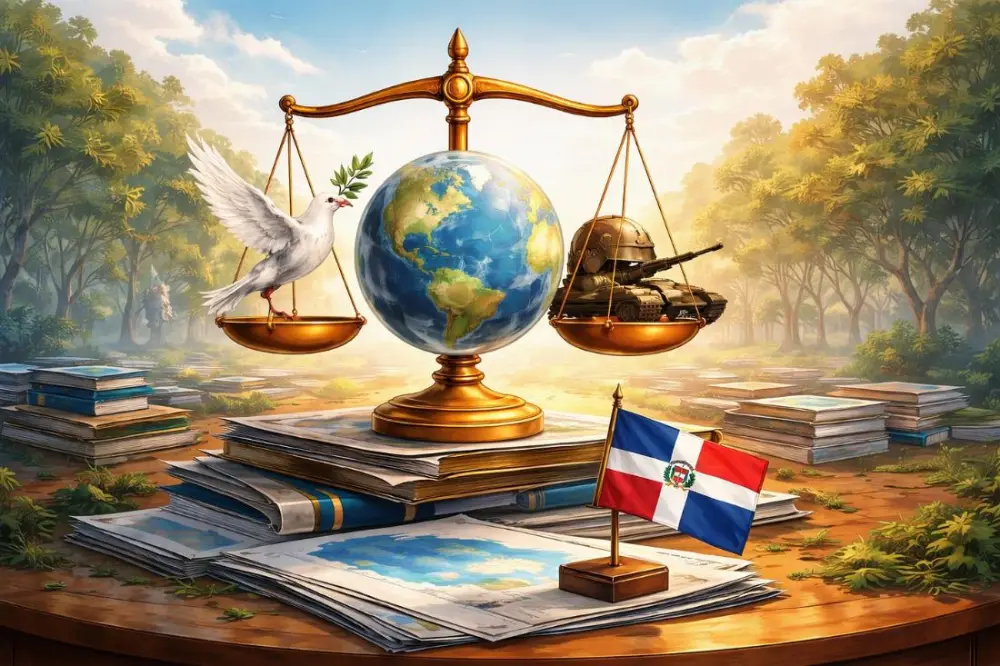
Ethical pragmatism does not propose naive idealism or comfortable neutrality. It proposes something more demanding: decisions conscious of their limits and actions responsible for their consequences. It means evaluating each situation by considering three inseparable dimensions: the intention invoked, the means employed, and the real effects produced. Declaring noble causes is not enough; what matters is how one acts and what is left behind when the smoke clears. From this perspective, the use of force is not a normal instrument of international politics, but an exceptional resource requiring legality under the United Nations Charter, proportionality in means, and a clear political horizon. When these conditions do not exist, force ceases to be a solution and becomes accumulated debt that future generations will pay.
This demands that we assume positions that will not always be comfortable. It demands defending international legality even when those who violate it are close allies. It demands rejecting the easy notion that anything goes in the name of stability — because stability built upon injustice is always provisional. It demands betting on imperfect multilateralism, on preventive diplomacy, and on responsible restraint, rather than on military shortcuts that invariably exact their toll later.
True realism for countries like ours does not consist of surrendering to the language of power, repeating its mantras, or celebrating its victories as if they were our own. It consists of understanding — with absolute lucidity, without illusions but also without cowardice — that the normalization of force ends up eroding the only international order capable of protecting the most vulnerable. And we are among the vulnerable.
Ethics, properly understood, does not weaken foreign policy. It makes it sustainable. It gives it roots that withstand storms and foundations that endure beyond passing circumstances. In times of global uncertainty, ethical pragmatism is not a luxury for idealists nor a weakness of the naive. It is a strategic necessity. And for those with the courage to practice it, it is the highest form of national dignity.