- “The Office of Ambassador in the Middle Ages” de Donald E. Queller
- “What Diplomats Do” de Sir Brian Barder
- "Diplomatic Tenses: A Social Evolutionary Perspective on Diplomacy" de Iver Neumann
- "Diplomatic sites: a critical enquiry" de Iver B. Newmann
- “Democracy from Above: Regional Organizations and Democratization” de Jon C. Pevehouse (2005)
- "Outposts of Diplomacy: A History of the Embassy" by G.R. Berridge (2024)
"Democracy from Above: Regional Organizations and Democratization" by Jon C. Pevehouse (2005)
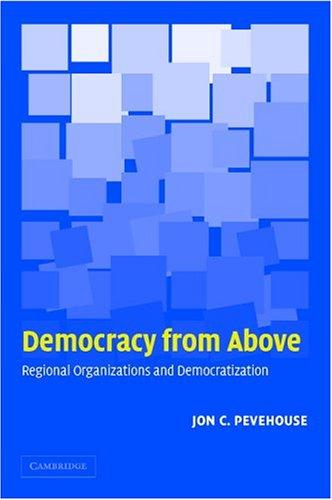
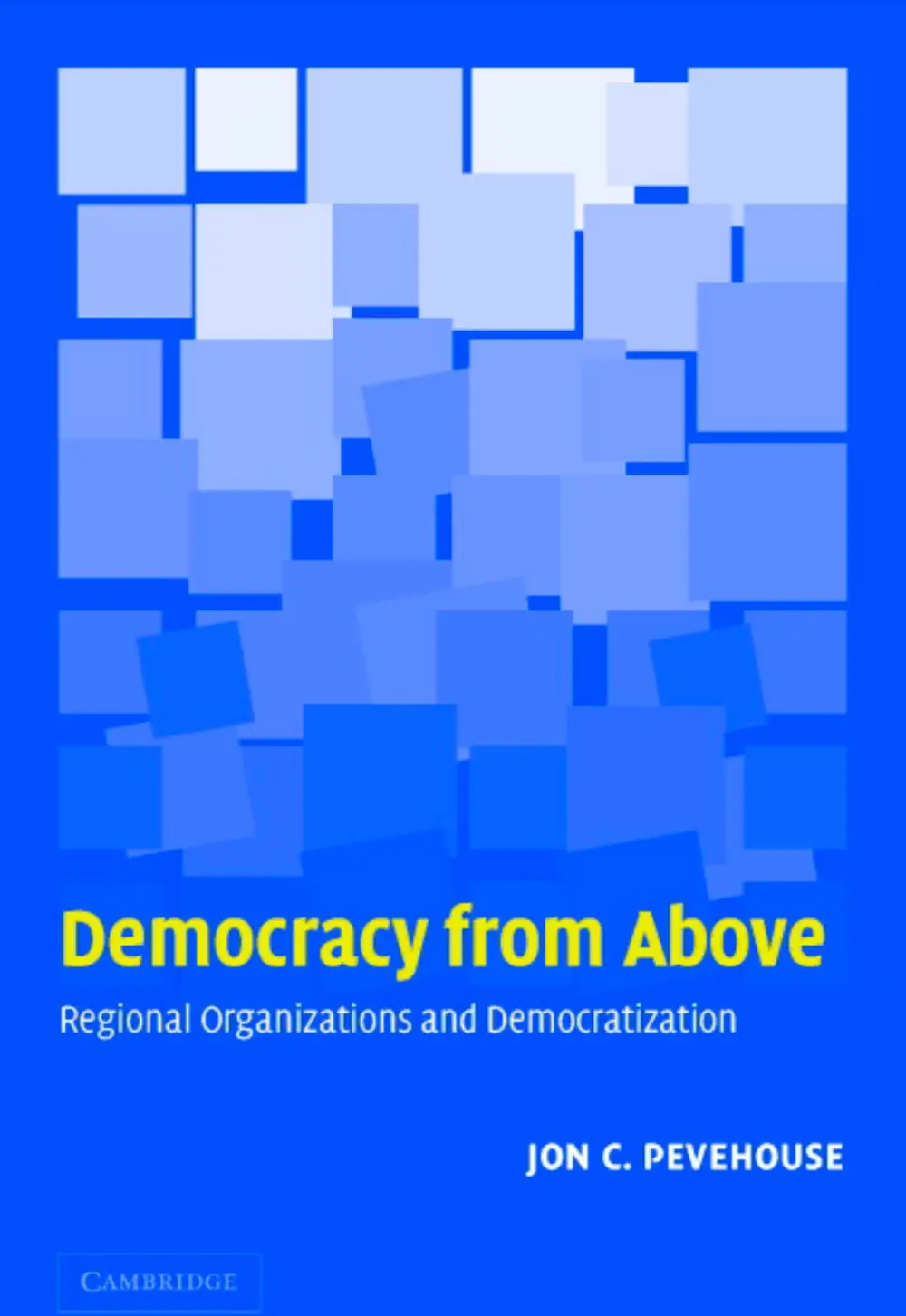
This book argues that regional organizations (ROs) play a crucial role in promoting and consolidating democracy, challenging the conventional belief that democratization is primarily driven by internal forces. Pevehouse’s central thesis is that international influences, particularly through ROs, are essential in shaping democratic transitions and helping fragile democracies endure. By examining six cases (Hungary, Peru, Greece, Paraguay, Guatemala, and Turkey), Pevehouse provides empirical evidence showing how regional organizations can be instrumental in both promoting and sustaining democratic governance.
Key Themes:
1. The Role of Regional Organizations: The author argues that regional organizations can assist democratization by offering incentives, creating external pressures, and manipulating the costs and benefits of democracy for local elites. For example, membership in organizations such as the European Union or the Organization of American States (OAS) can provide material and legitimacy benefits that foster democratization.
2. Democracy as a Collective Effort: Pevehouse emphasizes that, while democratization may begin “from above,” it requires the active participation of local elites and society. Regional organizations can exert external pressure, but the success of democratization depends on how local actors respond to these incentives.
3. Case Studies:
— Hungary: The country’s integration into the European community during the post-Soviet transition is analyzed as a successful case, where the appeal of EU membership facilitated the shift toward democracy.
— Paraguay: In contrast, Paraguay’s democratization process faced significant challenges, especially during the Stroessner dictatorship. Pevehouse shows how MERCOSUR helped deter anti-democratic forces from reversing fragile democratic gains.
4. Empirical Evidence and Mechanisms: Pevehouse identifies several mechanisms through which regional organizations can influence democratization, including “pressure from RO members,” “preference lock-in,” and the “legitimization of interim regimes.” These mechanisms work together to create an environment conducive to democratic transitions.
5. Democracy Promotion as a Policy Tool: Pevehouse offers policy recommendations on how regional organizations can effectively promote and consolidate democracy. He argues that these organizations must remain vigilant and continue applying pressure and providing resources to ensure the success of democratization.
Overall, "Democracy from Above" bridges the fields of international relations and comparative politics, showing that democratization is not just an internal process but one deeply influenced by international actors, especially regional organizations. This book provides insights for both scholars and policymakers interested in the role of international institutions in promoting democracy.