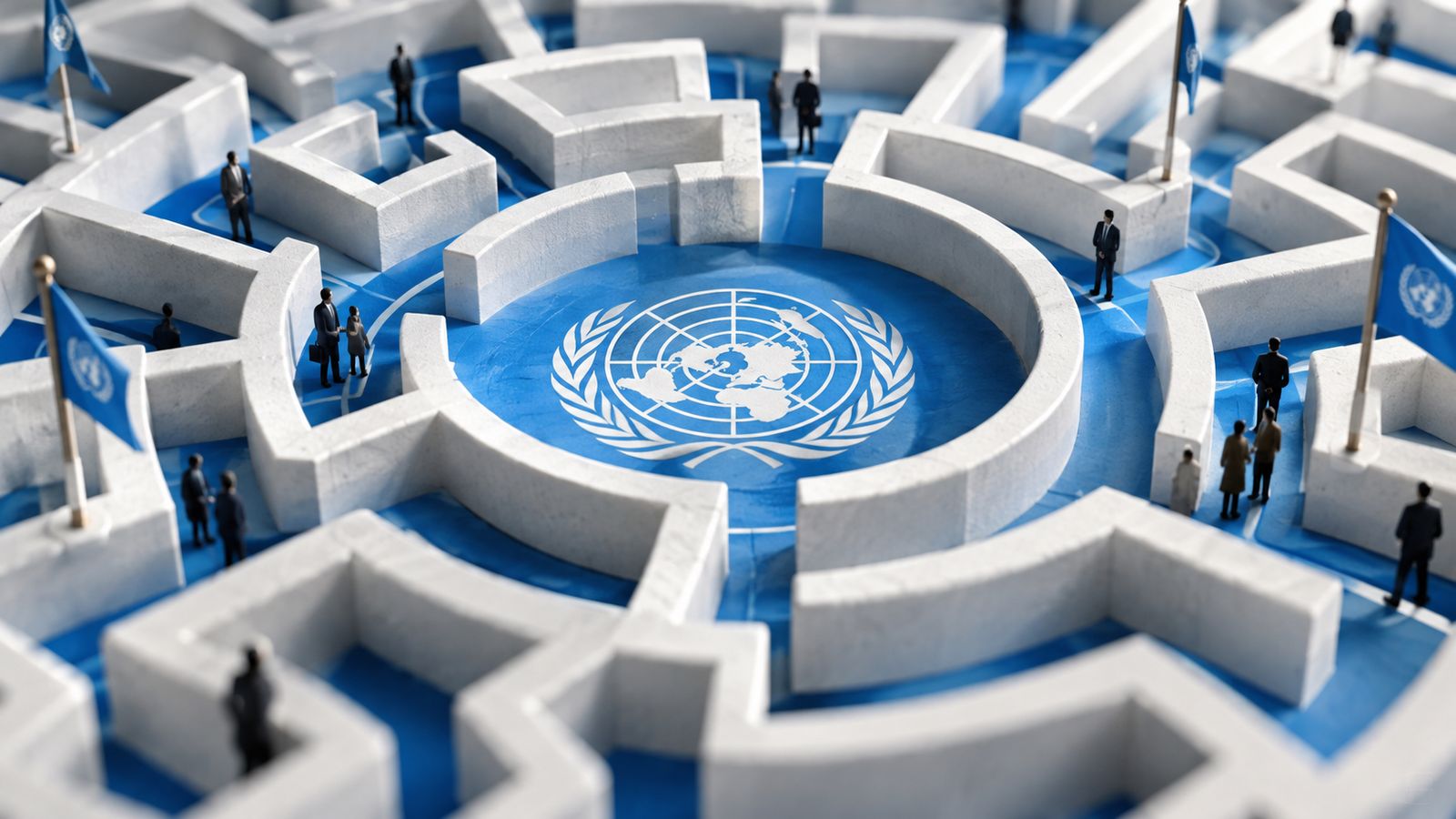
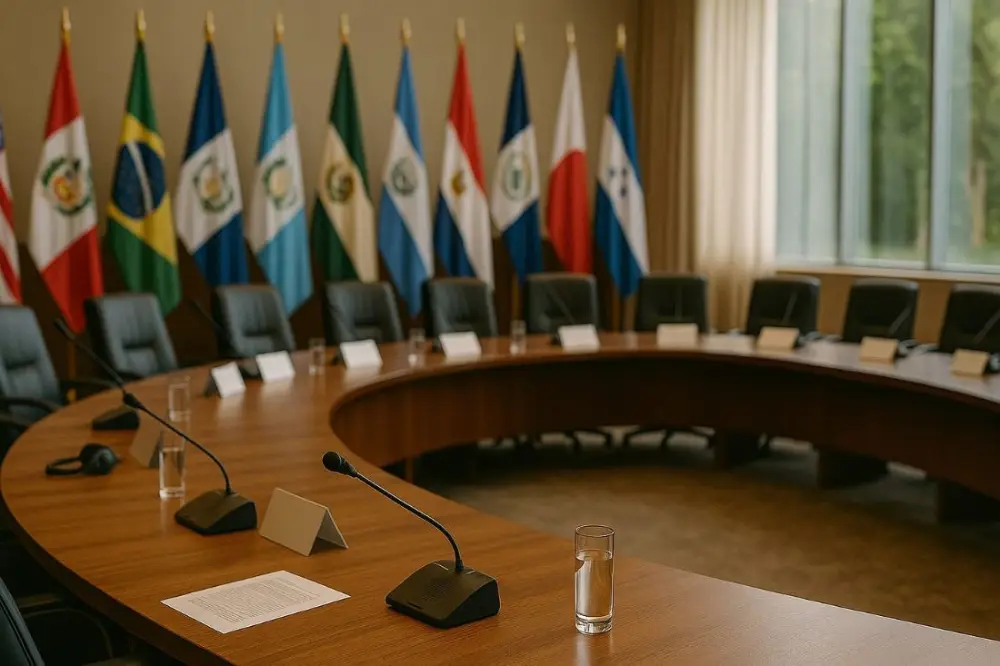
- De la Visión a la Acción: La Diplomacia Silenciosa de RD hacia la X Cumbre de las Américas
- From Vision to Action: The Quiet Diplomacy of the DR Toward the X Summit of the Americas
- Negociando el futuro de las Américas: De Santo Domingo 🇩🇴 a Los Ángeles 🇺🇸
- Negotiating the Future of the Americas: From Santo Domingo 🇩🇴 to Los Angeles 🇺🇸
- La Cumbre de las Américas: Evolución, Desafíos y Perspectivas
- The Summit of the Americas: Evolution, Challenges and Perspectives
The Thematic Challenge: Concreteness, Relevance, and Commitment in the Tenth Summit of the Americas

The Hemispheric Crossroads: Between Ambition and Feasibility
The Dominican Republic assumes a historic responsibility in organizing the X Summit of the Americas, facing not only logistical and diplomatic challenges, but a fundamental task: defining an agenda that transcends declarations and catalyzes concrete actions. This moment demands renewed hemispheric leadership, capable of revitalizing the inter-American system in times of profound geopolitical transformations and growing regional tensions.
The thematic proposal “Building a secure, sustainable hemisphere with shared prosperity” articulates four vital dimensions of human security: citizen, food, energy, and water security. This structure responds to cross-cutting challenges in our continent and establishes common ground for dialogue, with programmatic links to the Sustainable Development Goals.
The thematic selection offers a pragmatic platform that can overcome ideological polarizations, emulating the successful approach of Mar del Plata (2005), where employment and social cohesion served as articulating axes. However, accumulated experience warns us about the risks of an ambitious agenda without precise implementation mechanisms.
Structural Vulnerabilities in the Proposed Agenda
The current approach presents significant vulnerabilities that must be addressed. First, it shows a deficit in political focus by eluding a frank diagnosis of the hemispheric geopolitical context. Ideological tensions and controversies over democratic legitimacy cannot be ignored, as demonstrated by the experience of the VI Summit of Cartagena (2012).
Institutional erosion, restrictions on fundamental freedoms, and the antidemocratic concentration of power constitute phenomena that threaten continental stability. It is not possible to dissociate the narrative of human security from the unrestricted defense of democracy and human rights as pillars of the inter-American system.
Additionally, the proposal lacks verifiable indicators and specific timelines that guarantee accountability. The III Summit of Quebec (2001) established a valuable precedent in this aspect: its 254 mandates had institutional follow-up mechanisms that enhanced their effective implementation.
An agenda focused predominantly on containing threats is insufficient. It is necessary to incorporate transformative axes — education, culture, innovation, digital inclusion, and youth — that project an integral vision of development. Finally, the lack of definition regarding the differentiated responsibilities of the largest economies perpetuates structural asymmetries that hinder significant progress.
The Geopolitical Challenge: Multilateralism in Times of Retreat
The current context presents an additional challenge: the abrupt shift in United States foreign policy under the Trump administration, reinaugurated in January 2025. In a few weeks, Washington has formalized its withdrawal from the UN Human Rights Council and the Paris Agreement on Climate Change, signaling a radical distancing from multilateral commitments.
This retreat creates a critical vacuum for the environmental and human security agenda. The United States has historically been the main financier and articulator of multilateral initiatives on climate matters; its withdrawal erodes collective commitments, reduces green financing for developing countries, and fragments the environmental cooperation architecture. For our region, highly vulnerable to climate change, this decision represents a significant obstacle to advancing a just transition.
The situation raises fundamental questions: Can the Summit system sustain itself without the structural support of its most influential actor? What compensatory mechanisms can be activated from Latin America and the Caribbean? The Dominican Republic must preserve the legitimacy of the hemispheric process while rebalancing the leadership architecture, articulating new intraregional alliances, and promoting multilateralism resilient to the political cycles of the great powers.
Historical Lessons and Guiding Principles
The experience accumulated in nine previous summits offers valuable lessons. Thematic focus has been decisive in the most successful meetings: when topics have been limited to strategic priorities — as in Quebec (2001) or Mar del Plata (2005) — greater depth in debate and structured follow-up of commitments has been achieved.
Equally crucial has been the programmatic translation of political declarations into concrete actions, with measurable indicators, temporal goals, and specific budgetary frameworks. This technical dimension transforms discourse into action and prevents summits from degenerating into purely rhetorical exercises.
The institutionalization of follow-up constitutes another determining factor. The existence of permanent mechanisms such as SIRG has allowed continuity of decisions, ensuring technical monitoring and facilitating assistance in implementation. Strengthening these instances would decisively contribute to consolidating the credibility of the process.
Authentic multi-stakeholder participation — including civil society, private sector, and academia — has endowed initiatives arising from the Summit system with greater legitimacy and resilience, especially in the face of political cycle changes in governments. Finally, the differentiation of responsibilities according to national capacities has facilitated more just and effective commitments, as has been evidenced in environmental and health fields.
Emerging Topics for a Transformative Agenda
Faced with a context of accelerated transformation, the X Summit must incorporate emerging strategic topics. The governance of artificial intelligence represents a cross-cutting challenge that demands ethical frameworks to regulate emerging technologies, avoid algorithmic biases, and promote rights-centered innovation.
It is imperative to develop resilience to global crises — pandemics, armed conflicts, disruptions in supply chains — through strategies of productive integration, logistical strengthening, and cooperation for the supply of critical goods, taking advantage of trends such as nearshoring.
The balance between energy stability and just ecological transition demands policy coordination that mitigates volatility in hydrocarbon markets without compromising decarbonization objectives. Equally crucial is the strategic repositioning of Latin America in the face of the reconfiguration of the world order, affirming autonomy and building South-South alliances that allow influence in global debates from our own interests and values.
In a context of international fragmentation, the revitalization of multilateralism emerges as an urgent priority. Our continent can lead a new stage of cooperation based on rules, inclusion, and sustainability, contributing to recomposing the international architecture from a regional perspective.
Proposals for a Transformative Agenda
The X Summit can adopt an innovative approach through the following concrete proposals:
- Establish a cross-cutting axis of democracy, governance, and human rights as an indispensable basis for human security policies, including verifiable commitments regarding electoral integrity, press freedom, and protection of human rights defenders.
- Create a Hemispheric Observatory for Follow-up with an independent structure and multi-stakeholder representation, responsible for monitoring compliance with agreements, issuing periodic public reports, and providing technical assistance to countries in their implementation.
- Formulate a Hemispheric Pact for Social Inclusion that articulates actions in education, health, employment, and youth, projecting a positive and transformative vision of development that complements the emphasis on securities.
- Democratize the Summit process through effective spaces for citizen participation before, during, and after the event, strengthening the social appropriation of commitments and revitalizing the connection between the hemispheric forum and populations.
- Define precisely the differentiated contributions of countries with greater capacity — particularly the United States and Canada — establishing a model based on common but differentiated responsibilities as a necessary condition for more just and effective cooperation.
From Declaration to Hemispheric Transformation
The Dominican Republic faces a historic opportunity to promote a programmatic reformulation that overcomes the “declarative ritualism” characteristic of previous summits, advancing toward a model centered on verifiable results and tangible transformations.
This evolution requires balancing ambition and realism, recognizing the restrictions of the current hemispheric context without renouncing the transformative capacity of significant commitments. The key lies in identifying areas where the added value of cooperation is evident to all participants, regardless of their divergences in other fields.
The success of this effort will depend, ultimately, on the ability to link the hemispheric agenda with citizen priorities in each country. The commitments adopted in Punta Cana must resonate not only in foreign ministries and technical organizations but in the perceptions of populations that frequently question the practical relevance of multilateral mechanisms.
The X Summit thus offers an unprecedented opportunity to reimagine inter-American cooperation from a perspective centered on tangible results, oriented toward strengthening both democratic governance and sustainable and inclusive development. If it manages to overcome the identified limitations and capitalize on the potential of its thematic approach, the Punta Cana meeting will mark a turning point in the trajectory of the inter-American system, revitalizing its relevance in times of profound global transformation.
The moment is propitious for a diplomacy of principles and results that demonstrates that America can, from its diversity, build substantive consensus and advance toward a future of peace, justice, and shared prosperity.