Haiti’s New UN Mission: Hope, Risk, and the Lessons of History
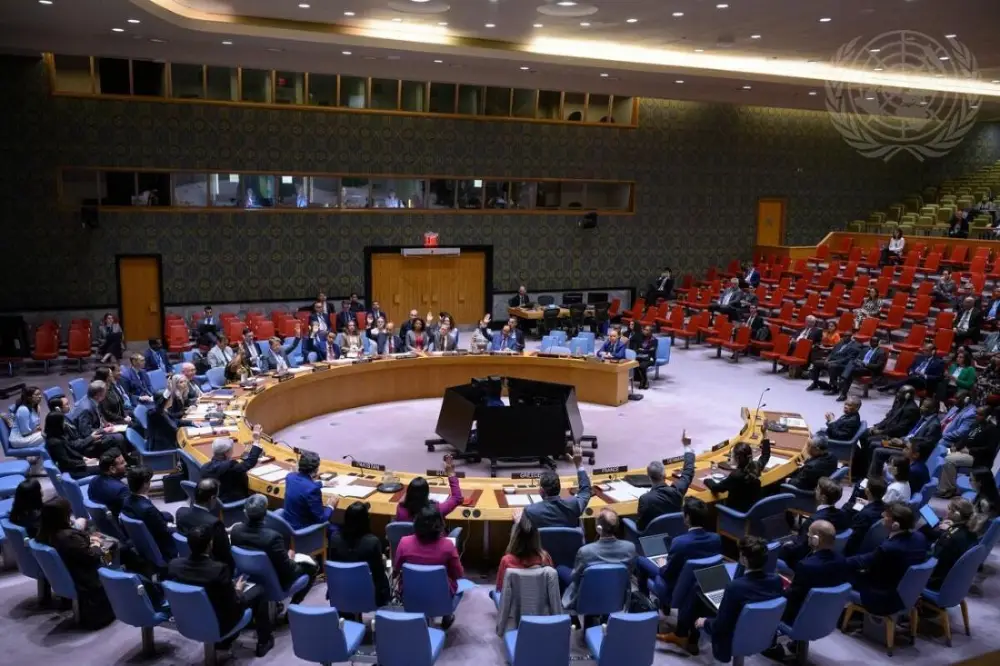
Credit: UN Photo/Loey Felipe | Unique Identifier: UN71121081
Today, 30 September, the UN Security Council adopted Resolution 2793, authorizing the transformation of the Multinational Security Support Mission (MSS) into a 5,550-strong Gang Suppression Force (GSF) with a Chapter VII mandate and a UN Support Office to provide logistical backing. It was a moment of unity: 12 votes in favor, none against, and only three abstentions. Haiti and the wider Caribbean welcomed the decision as a sign that the international community remains engaged.
This outcome deserves recognition. At a time of competing global crises, the Council demonstrated the ability to act on a situation that had been steadily deteriorating. If adequately resourced and well-coordinated, the GSF could help stabilize critical areas, support the Haitian National Police, and create the minimum conditions for political and economic recovery.
Yet honesty is also required. Calculations and history are clear: bold mandates without sustainable financing, effective disarmament, demobilization and reintegration (DDR), and robust accountability mechanisms tend to falter in Haiti.
If resources flow, the GSF could disrupt the dominance of heavily armed gangs, secure vital infrastructure, and give communities space to breathe. If aligned with humanitarian actors and regional partners, the Support Office could serve as a platform for coordination, allowing the mission to draw on UN expertise in logistics, communications, and medical support. And if political actors in Haiti seize the opening, this security umbrella could support a pathway toward credible governance and eventual elections.
For the Dominican Republic and other neighbors, success would bring tangible benefits: reduced cross-border pressure, fewer flows of displaced persons, and a diminished risk of criminal networks expanding into their territories.
The financial challenge remains daunting. Past missions have withered as voluntary contributions fell short. A 5,550-person force may cost over $3 billion annually. Without multi-year, binding commitments, the risk of underfunding is real.
DDR is again largely absent. Arrests and raids, without reintegration of fighters — especially the many minors — mean cycles of repression rather than durable peace.
Legal clarity is also thin. Rules of engagement in dense urban areas, the fate of detainees in a collapsed judicial system, and credible oversight to prevent abuses all remain unresolved. Haitians remember the consequences when such safeguards were lacking.
Calls for elections in 2025 or 2026 persist. Yet with 1.3 million people displaced, voter registries disrupted, and gangs in control of entire districts, rushing to the polls risks institutionalizing criminal influence. History suggests that sequencing is essential: security first, political normalization next, elections only when conditions allow.
The Dominican Republic has been a strong voice in the Security Council, emphasizing the urgency of action. This leadership now needs to translate into practical partnerships: facilitating humanitarian corridors, serving as a logistical platform, and preparing contingency plans for possible refugee flows or public health emergencies. By complementing diplomacy with operational contributions, Santo Domingo can position itself as a reliable and forward-looking partner in managing a shared regional challenge.
If the “planets align” — with adequate financing, a genuine DDR strategy, clear legal frameworks, and political will inside Haiti — Resolution 2793 could mark the beginning of a more stable chapter. But if these elements fail to materialize, history suggests the outcome will be familiar: a mission that begins with promise and ends with disappointment.
The Council has taken a necessary step. The task now is to turn words into resources, mandates into action, and good intentions into sustainable results. For Haiti, for its neighbors, and for the credibility of the multilateral system, the stakes could not be higher.