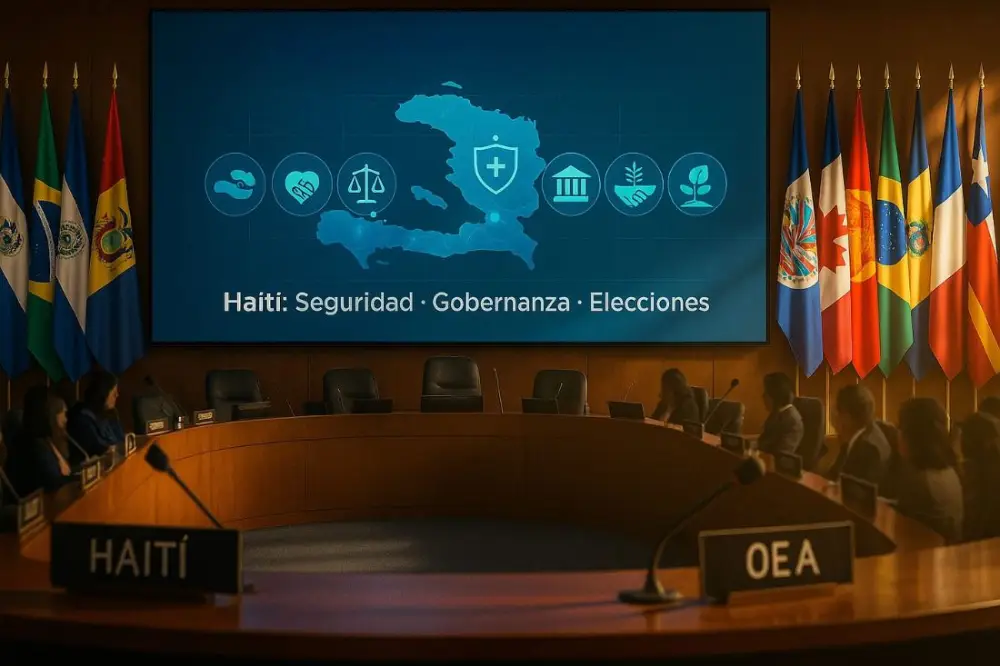
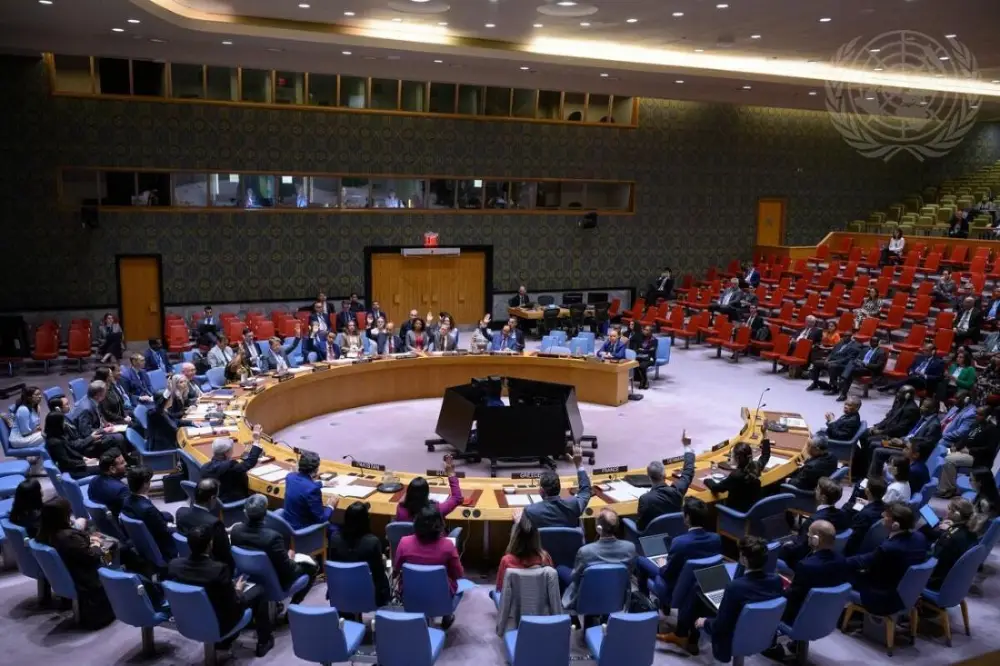
The OAS in Haiti: The mirage of american multilateralism
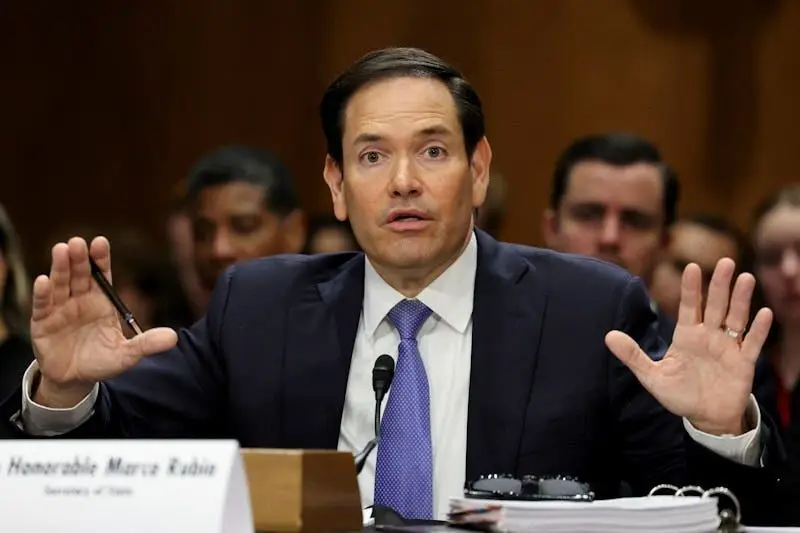
Secretary of State Marco Rubio today, May 20, launched a proposal that, under the mantle of regional concern, could reissue old chapters of intervention in our region. His words before the Senate Foreign Relations Committee — carefully calibrated but unequivocal in their intention — reveal the frustration of a power seeking to share the weight of a crisis that threatens to overflow its own borders.
“…What does the OAS exist for if it cannot respond collectively to such a serious catastrophe in our own hemisphere?” questioned Rubio with the vehemence of one who demands results from a structure that he himself knows is incapable of providing them. His rhetorical question contains a fundamental contradiction: it invokes the power of an organization that Washington has systematically contributed to weakening when its resolutions do not align with its strategic interests.
The proposal to revitalize the OAS as an instrument of collective intervention in Haiti ignores institutional realities that cannot be resolved with simple diplomatic voluntarism. The organization absolutely lacks operational capacity for complex security missions. It has no military command structures, intervention protocols, or logistical experience for sustained deployments in hostile territories. The last — and only — time the OAS led a mission of this nature was precisely in 1965, when it served as a multilateral façade for the military occupation of our country.
Can an organization that struggles to maintain its relevance in simple electoral observation missions suddenly transform itself into a manager of an operation against armed criminal gangs that control densely populated urban territories? The answer writes itself.
The ideological divisions that paralyze the OAS represent another insurmountable obstacle. A bloc will automatically reject any initiative perceived as aligned with U.S. interests. Mexico, under Claudia Sheinbaum’s government, maintains the distance that López Obrador established with inter-American mechanisms. Brazil, Colombia, and Chile — despite nuances in their positions — have repeatedly expressed their resistance to military interventions in the region, privileging approaches centered on development, poverty reduction, and institutional strengthening.
How to build consensus in an organization where votes on much less controversial issues end in diplomatic blockades and calculated abstentions? The current political arithmetic of the OAS makes it virtually impossible to articulate agile and effective collective responses.
More worrying is the evident lack of OAS experience in operations against transnational criminal structures. Confronting Haitian gangs — financed by drug trafficking, equipped with sophisticated weaponry, and rooted in territories they know perfectly — requires counterterrorist and counterinsurgency capabilities that no hemispheric mission has ever developed.
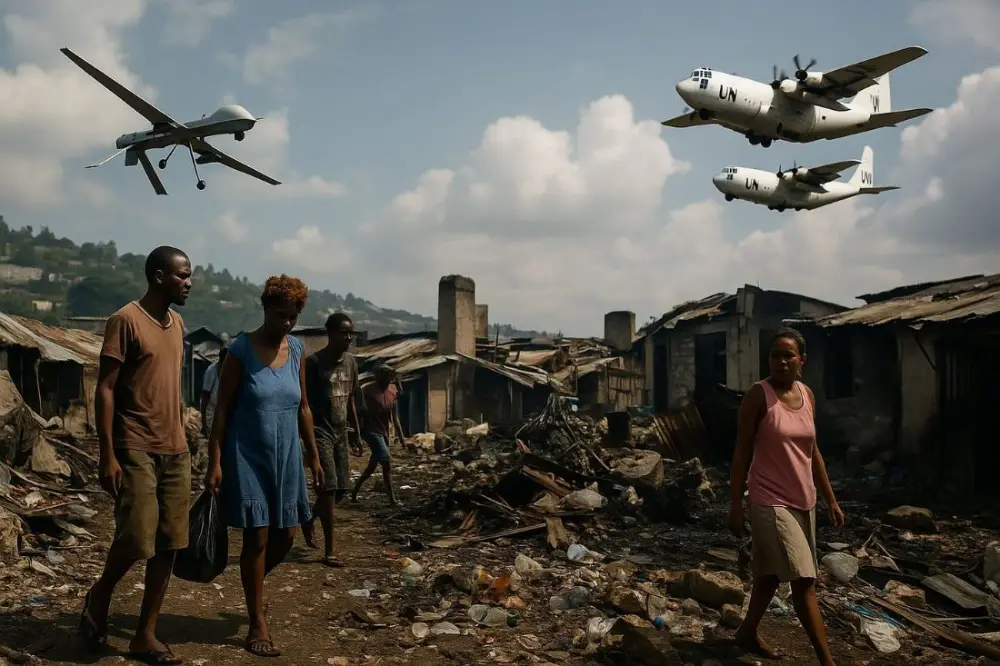
The Kenyan mission, despite its bravery recognized by Rubio himself, faces limitations precisely for these reasons. Its personnel, trained for conventional operations, find themselves on unfamiliar ground facing asymmetric enemies who control the local population through terror. What would an OAS mission do differently, predictably formed by contingents with similar or inferior experience?
For us Dominicans, the American proposal contains a historical irony impossible to ignore. The last time the OAS “led” a military intervention was on our own soil, leaving deep wounds in our collective memory. That operation, initially presented as a multilateral mission to protect lives, quickly transformed into a unilateral American occupation that remained until September 1966.
Should we believe that this time would be different? That U.S. geostrategic interests would not end up predominating over the initial humanitarian considerations? History teaches us to maintain a healthy skepticism toward proposals that present old recipes with new rhetorical packaging.
It is particularly revealing that Rubio mentions the flow of arms from Miami to the Caribbean as part of the problem. This belated recognition of American co-responsibility in arming Haitian gangs contrasts with decades of diplomatic pressure on our country to control a border impossible to seal unilaterally.
The American administration must understand that any sustainable solution for Haiti will require much more than security operations, regardless of which flag covers them. The deep roots of the Haitian crisis — structural poverty, historical absence of institutionality, environmental exhaustion, chronic dependence on external aid — will not be resolved with military interventions, however “multilateral” they may present themselves.
The Dominican Republic, as the country most affected by this crisis, has a legitimate right to question initiatives that ignore the lessons of previous efforts. Successive international missions in Haiti — MINUSTAH, BINUH, the current Kenyan mission — have demonstrated the futility of imposing external solutions without simultaneously building sustainable local institutional capacities.
The true test of U.S. commitment will not be in its ability to mobilize military contingents under new flags, but in its willingness to finance long-term development programs that attack the structural causes of the Haitian collapse. Until now, history shows a systematic preference for force solutions over sustained investments in institutional reconstruction.
The coming days will reveal whether Rubio’s words represent the beginning of coordinated pressure on hemispheric countries to form a new intervention, or simply constitute another rhetorical expression of concern without practical consequences. Meanwhile, Dominican diplomacy must maintain a position of prudent skepticism.
Our national priority will continue to be protecting our sovereignty, preserving our internal security, and defending Dominican interests before any regional initiative, however noble its declared intentions may seem. History has taught us that, when it comes to foreign interventions on our island, the consequences rarely match the initial promises.
The Haitian drama requires brave, sustainable solutions that respect local realities. None of these characteristics seems compatible with turning the OAS — a diplomatic organization without military capabilities, ideologically divided, without budget, and with an interventionist past in our own land — into an instrument for a new occupation with multilateral clothing.
The Rubio-Trump administration would do well to remember that the Caribbean has a long memory. And that imposed solutions, regardless of their diplomatic wrapping, inevitably engender resistance that transforms temporary interventions into permanent failures.