When Desperation Embraces Technological Barbarity in Haiti
A reflection on the normalization of automated death and the erosion of humanitarian principles in failed states
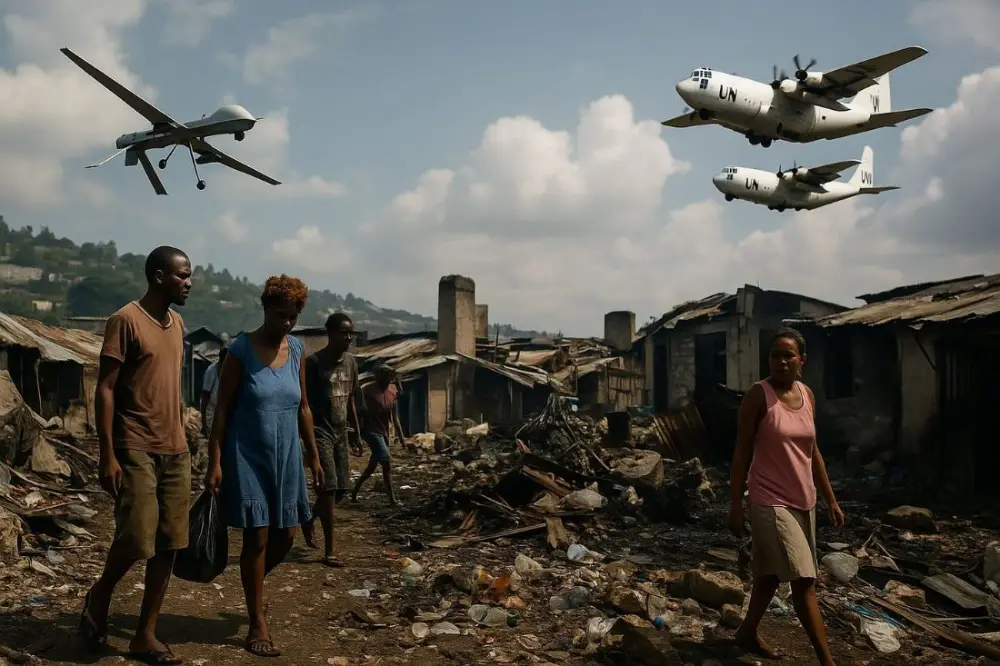
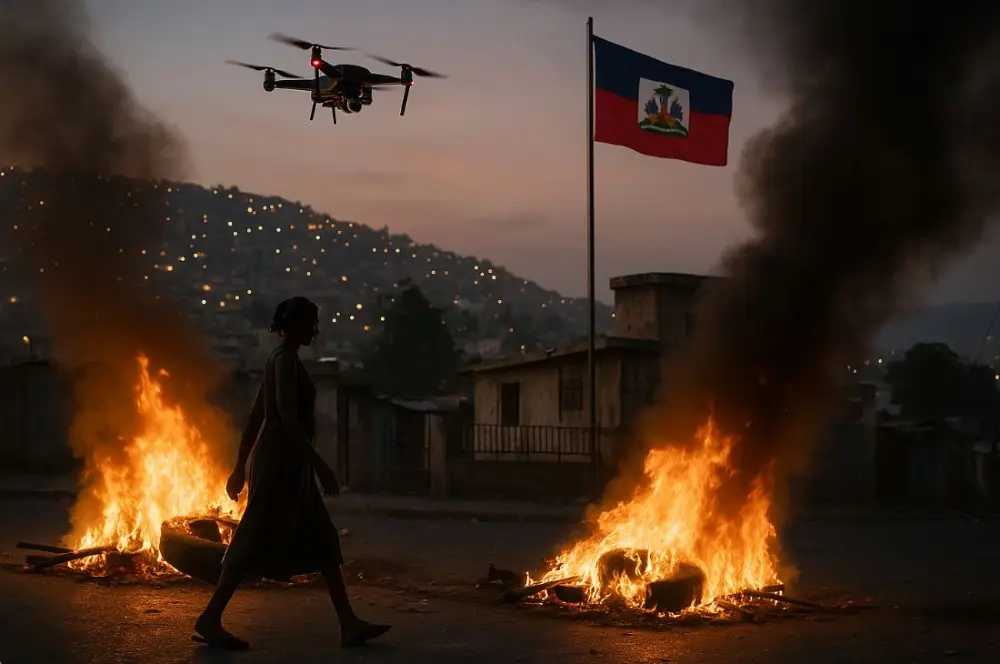
In the streets of Port-au-Prince, the buzz of a commercial drone turned airborne executioner heralds death from the sky.
Three hundred human lives, according to un-verifiable official figures. Four hundred wounded, tallied by organizations that admit they cannot reach the ground. A woman walks past burning barricades while the future of a nation is decided amid the roar of improvised explosions and the complicit silence of an international community that has chosen the convenience of indifference.
Haiti is facing more than a security crisis; it is spear-heading the normalization of a precedent that threatens the ethical foundations of our era: accepting that civilian technology can be transformed into an instrument of death — without oversight, legal framework, or accountability. We are witnessing the birth of a new breed of barbarity: sophisticated in means, primitive in principles.
The suspicious arithmetic of official triumphalism
Numbers arrive with the cold precision of an algorithm: 300 alleged gang members killed, 400 injured, more than 100 casualties in barely 48 hours after bombing an abandoned school turned criminal base. These figures impress on paper, yet behind every statistic lies an untold human story, an unverified identity, a death that may never have happened — or that may have taken an innocent life.
The director of Haiti’s National Network for the Defense of Human Rights, bluntly admits what authorities prefer to omit: they cannot physically verify the numbers. Investigators cannot access impact zones; testimony is filtered through fear, confusion, and political manipulation. The RNDDH presents data cautiously, referring to “alleged” gang members, yet the same numbers are cited globally as evidence of “great success.”
This paradox reveals a truth that transcends Haiti’s borders: we have learned to operate in an informational vacuum where absence of evidence becomes evidence of absence, where the inability to verify grants license to assume, where the forced silence of victims is interpreted as popular acquiescence.
No high-value gang leader has been neutralized. Jimmy “Barbecue” Chérizier escaped unharmed from an initial strike on his stronghold. Criminal chiefs keep reorganizing after each aerial blow, and security forces have failed to retake — permanently — the zones briefly liberated. Precise figures with no clear methodology suggest projections rather than verified counts, propaganda rather than information.
The technological mirage and the lure of an easy fix
Drones promise the illusion of clean war, surgical precision, and minimized collateral damage. Yet in Haiti they are commercial quadcopters refitted with improvised explosives, devoid of the safeguards of professional military systems. There is no facial-recognition algorithm, no dual-verification protocol, no redundant safety system to avert fatal error.
Technical analysis lays bare lethal precariousness: DJI- or Autel-type quadcopters converted into suicide projectiles with homemade plastic explosives (C-4) stored in 3-D-printed cylinders. Limited payload (1–2 kg) forces makeshift grenade-like devices whose questionable reliability is evident in munitions that “appear not to have detonated correctly,” according to experts reviewing leaked footage.
These FPV (First-Person View) drones require skilled operators guiding them manually in real time to the target, sacrificing the aircraft on impact. Their range is short (a few kilometres), endurance low (20–30 minutes), and accuracy depends entirely on human dexterity in maze-like urban terrain where blasts harm a broad radius indiscriminately.
Supply chains are opaque: alleged Haitian gang members arrested in the Dominican Republic while buying commercial drones “for warlike ends,” private contractors shipping “significant weapon consignments,” technical know-how imported from Ukraine’s conflict or Mexican cartel tactics adapted to Haiti.
A senior government official declared that civilian casualties are “inevitable” and “just a detail,” arguing that “if you’re in a gang-controlled area, collateral damage will occur.” Uttered as casually as small talk about the weather, the phrase exposes how technology can dehumanize not only victims but also those ordering lethal actions.
Privatized sovereignty and the marketplace of death
Erik Prince, architect of Blackwater, operates in Haiti with fewer than fifty contractors facing roughly 25,000 armed gang members. A 1:500 ratio is not only militarily untenable; it is ethically obscene, monetizing human suffering by outsourcing a nation’s duty to protect its citizens to the highest bidder.
Haiti’s government has subcontracted part of its “war” on crime to foreign mercenaries, forming a task force that has flown lethal drones since March, aiming for 150 armed contractors by summer. Prince ships weaponry and plans to deploy helicopters, recruiting U.S. ex-soldiers of Haitian descent and Salvadoran specialists.
The mercenaries do not speak Creole, do not grasp neighbourhood dynamics, cannot tell a community leader from a gang chief. They operate with faulty intelligence in a social context that takes decades to grasp even superficially. Veteran Haitian-American Rod Joseph, approached for the mission, warned: “If you don’t build your own capacity, all you’ll get is a pile of dead people.”
When security is privatized, accountability evaporates. No parliament questions contractors, no public budget stands to be justified, no democratic process oversees life-and-death decisions. Mercenaries occupy a responsibility void: neither UN nor state chains of command apply. If they kill civilians or commit abuses, to whom do they answer?
The human cost of a legal and ethical vacuum
In Port-au-Prince — home to over three million people crammed together — distinguishing combatant from civilian is nearly impossible. Population density exceeds 400,000 per km² in informal settlements such as Cité Soleil, Village de Dieu, and Gran Ravine, where every blast reverberates through households sheltering entire families in single-room spaces.
At least nine civilian injuries, including women and children with burns severe enough to require specialized care, have been confirmed. Health workers report victims frightened of government reprisals for speaking out. The constant sound of explosions terrifies a populace in which one million people are already displaced (a tenth of the nation).
Drone strikes constitute blatant violations of international humanitarian law. The total absence of legal frameworks, clear rules of engagement, and accountability mechanisms sets a perilous standard for automated lethal force. As Nathalye Cotrino of Human Rights Watch notes, “There is zero transparency, and no accountability has emerged.”
Residents live under permanent threat from the air, escape routes shrinking daily. Health workers fear reprisals, fostering self-censorship that erodes transparency further. The impossibility of distinguishing legitimate from illegitimate strikes spreads massive psychological terror.
Systemic failure of the international community
Armed drones are a stark emblem of the collapse of the Kenya-led Multinational Security Mission. Only 572 of the 2,500 promised troops have been deployed, operating with merely $110 million of the $600 million required annually.
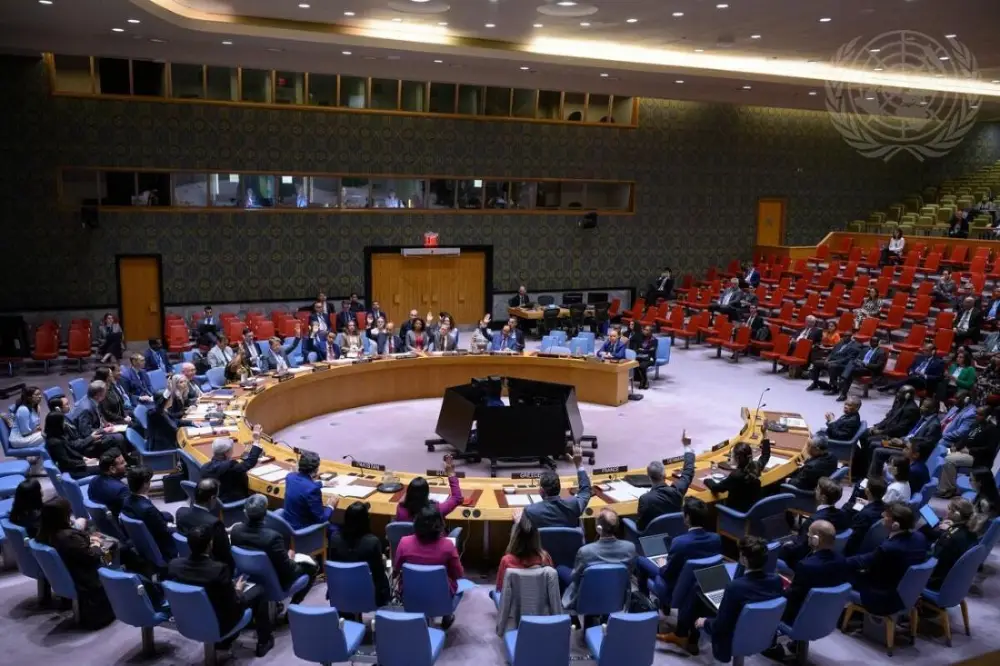
Paradoxically, more than 4,000 deaths occurred after the MSS’s 2024 deployment; at least 1,617 people were killed in the first quarter of 2025 alone. The global community has effectively abandoned Haiti: U.S. political will is exhausted, donor nations backtrack, and the UN is paralysed by geopolitical vetoes.
MINUSTAH’s failed legacy (2004–17) offers hard lessons: although violence dipped between 2004–10, structural failures — sexual-exploitation scandals, cholera that killed over 9,000 Haitians, no sustainable institution building — illustrate why purely military solutions break down.
A geography of dignity becomes evident: we have normalized the idea that some nations are doomed to perpetual suffering, that certain peoples are born to be victims of forces allegedly beyond control. Human rights turn into geographic privileges; humanitarian intervention obeys geopolitical calculus, not moral imperative.
Normalizing a precedent and its global ripples
We are witnessing a precedent that stretches far beyond Haiti. Accepting that failed states may wield civilian tech as lethal weaponry without oversight sets a dangerous template for future conflicts. Colombia logged sixty-plus drone attacks by FARC/ELN dissidents in 2025 — proof that technology democratizes violence for non-state actors.
Armed-drone proliferation demands urgent regulation of regional sales. Gangs will seek drones to level the field, as shown by the purchase attempt in the Dominican Republic. A bilateral tech-escalation risks turning urban territories into unprecedented aerial battlefields.
The Dominican Republic, serving as a critical buffer, faces unsustainable pressures: a 250-mile border wall, deportation of more than 276,000 Haitian migrants in 2024, its largest military-equipment purchase since 1961. Spill-over violence threatens stability across the Caribbean basin.
A call to conscience and collective responsibility
Questioning drone effectiveness is not advocating criminal impunity; it is demanding solutions that respect every side’s human dignity. Gangs themselves emerged from decades of systematic exclusion; armed youth are also victims of a system denying them education, jobs, and hope.
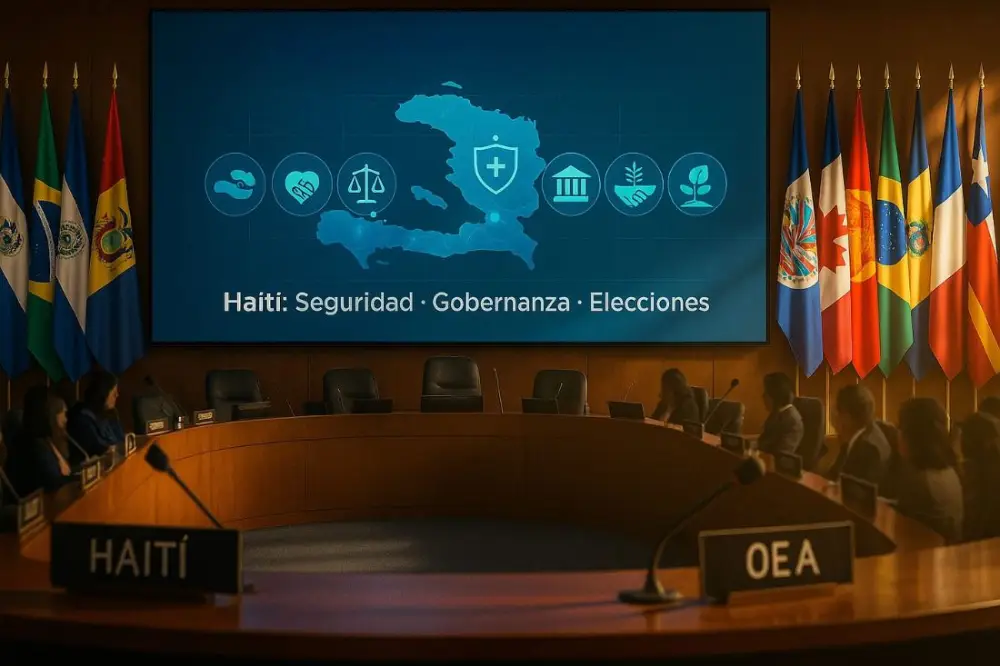
The only sustainable path requires a multidimensional UN-mandated intervention blending security with institutional reconstruction, justice with human development. Core components include: radical judicial reform under international supervision, large-scale employment programs and infrastructure investment, strengthened education, health, and community cohesion.
A well-funded UN mission would carry greater legitimacy than private mercenaries, operate under clear engagement rules with human-rights oversight, and stay long enough to rebuild security structures while training Haitians to assume control.
Over 1.6 million Haitians face extreme hunger, and 1.3 million have fled their homes. No security scheme works without tackling this humanitarian disaster simultaneously. A political accord must ground a legitimate government and sever elite-gang connections sustaining impunity.
The moral decision point
We are at a historic inflection. Choices made about Haiti will set standards for armed-drone use in densely populated cities, decide whether we normalize privatized state violence, and signal if independent verification becomes an optional luxury during crises.
Silence toward unsupervised technological militarization is not neutrality; it is complicity. Accepting unverified figures is not pragmatism; it is surrendering the pursuit of truth. Normalizing Haitian suffering is not realism; it is the death of our moral indignation.
Haiti confronts us with a foundational question about the world we aim to build. Will technology amplify human compassion, or automate it away? Will popular sovereignty remain inviolate, or be auctioned to the highest bidder? Will every human life hold incalculable worth, or will civilian victims be “just a detail”?
The answer lies not in counter-insurgency manuals or drone catalogues, but in our collective will to place human dignity above political convenience — our resolve to keep the flame of moral outrage alive against the lure of indifference.
Desperate militarization of civilian tech in crowded cities, operated by unaccountable private contractors, embodies a new technological barbarity. This escalation showcases not tactical prowess but the strategic and moral bankruptcy of allowing state collapse in strategically vital regions.
Only a long-term, comprehensive commitment can prevent Haiti from becoming an even graver precedent of state failure and unaccountable tech-militarization in the twenty-first century. The global community must recognise drone operations as symptoms of deeper systemic failure, not enduring solutions.
The time for excuses has run out. The time for action has come. Haiti waits. History watches. Our shared humanity is defined in this moment.