- De la Visión a la Acción: La Diplomacia Silenciosa de RD hacia la X Cumbre de las Américas
- From Vision to Action: The Quiet Diplomacy of the DR Toward the X Summit of the Americas
- Negociando el futuro de las Américas: De Santo Domingo 🇩🇴 a Los Ángeles 🇺🇸
- Negotiating the Future of the Americas: From Santo Domingo 🇩🇴 to Los Angeles 🇺🇸
- La Cumbre de las Américas: Evolución, Desafíos y Perspectivas
- The Summit of the Americas: Evolution, Challenges and Perspectives
Dominican Republic Presents Vision for the X Summit of the Americas: Consensus, Dissent, and…
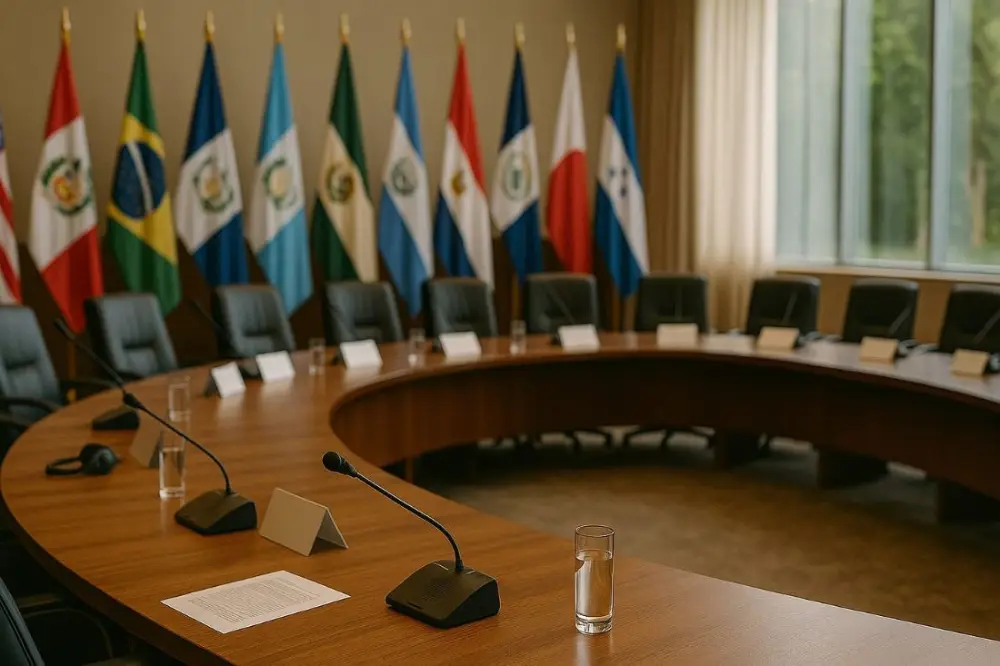
In a significant diplomatic advancement for the Caribbean and the entire region, the Dominican Republic presented on February 20, during the First Ordinary Meeting of the Summit Implementation Review Group (SIRG), its strategic vision for the 10th Summit of the Americas to be held in Punta Cana in December.
The concept note titled “Building a Secure, Sustainable Hemisphere with Shared Prosperity” establishes the theoretical and programmatic framework for this important hemispheric conclave. The document was presented by the National Summit Coordinator of the Dominican Republic and President of the SIRG, who emphasized that “human security in a broad sense is a central element for stability and development.”
The Mosaic of National Positions: Between Support and Reservations
The analysis of the interventions reveals a complex panorama of positions that reflect both convergences and points of tension characteristic of inter-American multilateralism.
Countries with General Support for the Proposal
Peru expressed comprehensive support for the four proposed axes, underlining the importance of the rule of law and the fight against transnational organized crime. As a member of the Steering Committee, it reiterated its commitment to the preparations for the Tenth Summit.
Ecuador, aligned with the multidimensional approach, emphasized security as a prerequisite for youth development, sharing its national experience in crime prevention and migration control. It underscored the need to consider new financing sources and the role of the private sector.
Canada proposed a comprehensive approach to human security that transversally incorporates gender equality and the autonomy of women and girls. It highlighted the importance of sustainable food systems in the face of the interrelated challenges of climate change, agricultural production, and food security, with special attention to vulnerable communities.
Countries with Substantive Observations and Reservations
Brazil presented the most substantive observations to the concept document. It requested a mapping of previous OAS mandates to avoid institutional duplications and asked for greater clarity on the “Hemispheric Platform for Action on Citizen Security” proposal. It expressed significant reservations about the chapter on water security, warning of possible sovereignty conflicts, and recommended reformulating or suppressing this section. It also questioned the approach that links poverty, migration, and criminality due to the risks of stigmatization it entails. As a constructive contribution, it highlighted the Global Alliance Against Hunger and Poverty promoted within the G20 framework and offered to articulate this initiative with the Summit’s work.
Chile highlighted the relevance of the security theme and its link to development, proposing greater alignment between OAS priorities and the Summit agenda. It emphasized that there is no contradiction between respect for human rights and effectiveness in the fight against organized crime, noting that both principles can generate positive synergies.
Mexico underscored the importance of the Summit Process as an inclusive space where all States of the Americas are heard. It emphasized the need to address security from a perspective that includes aspects such as corruption, injustice, poverty, and human rights, insisting on concrete responses to the urgent needs of the population.
The United States highlighted that the strength of the Tenth Summit lies in the shared commitment to a prosperous continent. It underlined that cooperation and strengthening alliances with democratic partners would be essential to address insecurity, improve economic prosperity, face the migration crisis, promote governance, and reinforce hemispheric security.
Argentina introduced a political dimension to the debate, expressing concern about the democratic situation in Cuba, Nicaragua, and Venezuela. It highlighted the importance of a comprehensive conception of security that allows addressing threats to democracies such as corruption and transnational organized crime, emphasizing that without secure environments, democratic institutions become vulnerable.
Differentiated Regional Perspectives
The Caribbean island countries contributed a distinctive regional vision. Saint Lucia highlighted the relevance of the theme for small island developing states, pointing out their specific vulnerabilities to climate change, dependence on tourism, and challenges in food and energy security. Jamaica emphasized the interconnection between security, development, and prosperity, emphasizing the importance of cybersecurity in the face of technological advances. Grenada underscored the relevance of multilateralism to address interconnected challenges such as climate change and economic inequality.
From Central America, El Salvador stated that “without security there is no development,” highlighting its government’s efforts in rebuilding the social fabric and addressing structural causes of poverty through multidimensional policies. Guatemala emphasized the interconnection between citizen, food, energy, and water security as fundamental aspects for social stability. Honduras highlighted the relevance of the theme as a transversal axis, underlining the connection between climate change and food security, and mentioning the Framework Treaty on Democratic Security promoted within the Central American Integration System.
Panama highlighted its experience in water resource management linked to the Canal as a contribution to the debate on water security and emphasized its role as a regional electrical interconnection hub. Guyana expressed particular interest in the areas of food, energy, and climate security, emphasizing issues such as development financing, reduction of Caribbean external debt, and promotion of renewable energies.
Multilateral Organizations: Technical Support and Programmatic Convergence
Representatives of the Joint Summit Working Group expressed their support for the Dominican initiative, offering complementary and convergent perspectives.
The Inter-American Development Bank (IDB) highlighted its support for organizing the V Business Summit of the Americas in coordination with the Dominican government and the private sector through the National Council of Private Enterprise. It mentioned the progress in business dialogue working groups focused on energy, food security, value chains, transparency, and artificial intelligence.
ECLAC emphasized that building inclusive societies requires integrated policies that strengthen institutions, promote social cohesion, and foster investment in strategic sectors, prioritizing sustainability and climate resilience. It highlighted digital transformation as an opportunity for economic growth and social inclusion.
The Pan American Health Organization (PAHO) fully supported the Dominican vision of “building a secure, sustainable hemisphere with shared prosperity,” emphasizing that human security in its multiple dimensions is directly linked to regional priorities in health, including mental health, nutrition, and food security. It highlighted that good nutrition is fundamental for preventing non-communicable diseases such as cardiovascular diseases, cancer, and diabetes, while the link between insecurity and mental health is crucial for population well-being. With 123 years of trajectory, PAHO warned that infectious diseases such as the Oropouche virus, yellow fever, dengue, and avian flu do not respect borders, threatening populations and disrupting trade, travel, and economic stability. It underscored that resilient health systems are essential to minimize the cross-border impact of public health events, which includes strengthening disease surveillance, increasing regional production of medicines, and leveraging data and technology to address shared challenges, reaffirming that “health is a cornerstone of development, security, and prosperity.”
The Development Bank of Latin America and the Caribbean (CAF) expressed its firm support for the preparatory process of the Tenth Summit of the Americas, reiterating its willingness to actively collaborate with the Dominican Presidency and the international organizations that make up the Joint Summit Working Group. From the perspective of human security, the institution emphasized the critical importance of working collectively on a comprehensive agenda, articulating the fundamental principle that without security there can be no growth or sustainable development, and simultaneously, there can be no security without sustainable development, thus establishing a bidirectional relationship between both concepts. CAF reaffirmed its concrete commitment to support both the countries of the region and their local governments and cities, through two complementary routes: the generation of specialized knowledge and the development of innovative financial solutions in the four key areas identified in the Dominican concept note: citizen security, food security, energy security, and water security.
Human Rights and Security: Towards an Integrating Paradigm in the Hemispheric Agenda
Regarding the human rights-security binomial, Chile and Mexico articulated a position of growing relevance in the inter-American debate, insisting that fundamental rights do not constitute an obstacle but a sine qua non condition to effectively combat organized crime and guarantee citizen security. The Chilean delegation specifically referred to the recent debate in the OAS Permanent Council on the human rights approach in combating organized crime, noting that “there is no contradiction between both principles and that respect for human rights strengthens the fight against crime.” Mexico, for its part, underscored the importance of the Tenth Summit providing “concrete responses to the urgent needs of people, always respecting their human rights and dignity.”
This position acquires special significance considering the notorious absence of a consistent human rights approach at the IX Summit held in Los Angeles in 2022, where commitments in this area were diluted among considerations of security and economic development. The Los Angeles Declaration on Migration and Protection only tangentially addressed the rights dimension, privileging aspects of migration management and border control. Perhaps because of this, the insistence of several delegations at the SIRG meeting on the centrality of human rights represents an attempt to rebalance the hemispheric agenda, recovering the comprehensive approach that inspired the Inter-American Democratic Charter (2001) and the Social Charter of the Americas (2012).
Brazil, from a complementary perspective, warned about the need to avoid stigmatizing approaches in dealing with complex social issues such as poverty, migration, and crime. The Brazilian delegation alerted about the risk that certain formulations of the concept document could reinforce negative stereotypes that mechanically link poverty with insecurity, or migratory status with criminal propensity. This concern about language and conceptual frameworks reflects a growing sensitivity about how security policies, when not anchored in a rights perspective, can reinforce structural discriminations against already vulnerable populations.
The articulation of both perspectives — the Chilean-Mexican on the complementarity between rights and security, and the Brazilian on the risks of stigmatization — suggests the possibility of building a transversal human rights approach that permeates all dimensions of security proposed by the Dominican Republic, transforming them into opportunities for the expansion of fundamental capacities and freedoms, according to the human security paradigm promoted by the United Nations since 1994.
Institutional Architecture of the Inter-American System: Between Innovation and Coherence
The institutional architecture of the Inter-American System emerged as another significant point of debate at the SIRG meeting. Brazil, with an argument of organizational rationality and budgetary efficiency, questioned the possible duplication of efforts between the proposed “Hemispheric Platform for Action on Citizen and Community Security” included in the Dominican concept document and existing OAS mechanisms, such as the Hemispheric Security Commission or the various initiatives coordinated by the organization’s Public Security Department.
This questioning is framed in a broader concern about the institutional fragmentation that has characterized the Inter-American System in recent decades. The multiplication of forums, initiatives, and mechanisms has not always been accompanied by the necessary programmatic coordination or financial sustainability. The proliferation of parallel spaces — some within the institutional framework of the OAS and others outside it — has generated confusion, duplication, and dispersion of efforts that contrast with the limited resources of most member states to effectively follow up on so many simultaneous processes.
The Brazilian position, implicitly shared by other delegations, advocates for greater integration and coherence among the various components of the Inter-American System, including better articulation between the Summit Process and the regular organs of the OAS. This concern takes on special relevance considering the fate of many initiatives launched at previous Summits that, despite their relevance, failed to consolidate due to lack of institutional follow-up or sustainable financing.
The debate on institutional architecture transcends the merely organizational and reflects a deeper tension about the nature and scope of inter-American multilateralism in the 21st century. The Dominican proposal for a new hemispheric platform represents the legitimate aspiration to revitalize regional cooperation with instruments adapted to contemporary challenges. However, this aspiration must be reconciled with the need to strengthen — not weaken — the institutional framework built during decades of hemispheric cooperation, particularly in a context where resources for multilateral cooperation are under pressure.
A possible way of reconciliation lies in conceiving any new initiative not as a parallel structure but as an articulating mechanism that enhances existing spaces, provides added value in terms of intersectoral coordination, and mobilizes additional resources — public and private — for strengthening multidimensional security. In this way, the 10th Summit could catalyze an institutional renewal that preserves the best of the inter-American heritage while driving necessary innovations to face emerging challenges.
Conceptual Tensions and Emerging Challenges
The debate revealed significant conceptual tensions that will need to be addressed in the preparatory process.
The issue of water sovereignty emerged as a central point of friction. Brazil and Guatemala alerted about potential tensions over the shared management of water resources. Brazil, in particular, requested the complete elimination of the chapter, pointing out the risks to national sovereignty when rivers serve as border demarcations.
The migratory phenomenon received differentiated treatments according to geopolitical position. Honduras, Guatemala, and El Salvador linked it with structural causes that require comprehensive and multinational attention, while the United States addressed it primarily as a hemispheric security challenge that requires border control.
Democratic governance, explicitly introduced by Argentina, put on the table the discussion about regional democratic deficits with specific mentions of Cuba, Nicaragua, and Venezuela, although this approach did not receive a formal response in the minutes of the meeting.
Towards an Action Agenda: Emerging Recommendations
The analysis of positions and debates suggests a set of strategic recommendations to refine the concept document and move towards a Summit with lasting effects.
To respond to the concerns of Brazil and other States, it would be necessary to clarify the operational framework of the proposed “Hemispheric Platform for Action on Citizen Security,” detailing objectives, governance, financing, and relationship with existing mechanisms.
The approach to water security requires a reformulation sensitive to national sovereignties, possibly orienting it towards technical cooperation, exchange of good practices, and respect for existing bilateral frameworks, avoiding suggesting new supranational regulations.
Responding to the calls of Chile, Mexico, and other States, it would be advisable to incorporate more clearly the human rights perspective as an integral component of security strategies, presenting it as an enhancing factor and not limiting the effectiveness in the fight against transnational crime.
In response to widespread concerns about implementation, it would be beneficial to establish measurable goals and concrete post-summit follow-up mechanisms that would allow evaluating progress in each proposed security dimension, avoiding that agreements remain statements of intent.
Lastly, to ensure social legitimacy, the preparatory process should incorporate effective participation mechanisms for indigenous peoples, youth, women, the private sector, and organized civil society, ensuring that their perspectives are reflected in the final documents.
Work Calendar: A Roadmap to Punta Cana
The SIRG Presidency presented an updated proposal of the work calendar for the preparatory phase of the 10th Summit of the Americas, establishing a complete schedule that extends from February to December 2025.
The process formally began on February 20 with the First Ordinary Meeting of the SIRG in Washington D.C., where the theme of the 10th Summit and its concept document were officially presented. Delegations had until March 14 to submit their comments to this concept document, which will allow incorporating the diverse national and regional perspectives expressed during the first meeting.
A central element of the process will be the elaboration of the “Punta Cana Commitment,” whose draft would be distributed to the delegations on March 24. This document, which will outline the hemispheric agreements and commitments on multidimensional security, will be subject to formal consideration during the Second Ordinary Meeting of the SIRG, scheduled for May 8–9 in the Dominican Republic.
The calendar contemplates an inclusive approach through the programming of dialogues between National Coordinators and representatives of civil society in May, complemented by a broader Hemispheric Dialogue in October.
The intensive negotiation phase will concentrate between September and November, with multiple ordinary meetings of the SIRG in Dominican territory, culminating with a Second Ministerial Meeting in December, immediately prior to the celebration of the 10th Summit in Punta Cana.
This methodologically structured calendar establishes a gradual process of consensus building, from the initial conceptual definition to the adoption of specific commitments, ensuring that all relevant actors — governments, international organizations, and civil society — have substantive opportunities to contribute to the final outcome.
Renewing the Inter-American Architecture from its Foundational Values
The 10th Summit of the Americas is emerging as an exceptional opportunity not only to address specific challenges of multidimensional security but to renew the inter-American institutional architecture from its foundational values. The frank dialogue held at the SIRG reveals both the validity and fragility of hemispheric multilateralism, inviting a deep reflection on its relevance in a changing geopolitical context.
Brazil’s concerns about possible duplication of efforts between the proposed Hemispheric Platform and existing OAS mechanisms transcend the merely organizational. They represent a deeper tension about the nature and scope of contemporary inter-American multilateralism. Institutional fragmentation, manifested in the multiplication of forums and initiatives without sufficient programmatic coordination or financial sustainability, constitutes a structural challenge that the Summit must address head-on.
This fragmentation paradoxically reflects both the creative vitality of the Inter-American System and its vulnerability to political and budgetary cycles that affect its continuity. The proliferation of parallel spaces has generated not only dispersion of efforts but also institutional fatigue in member states with limited resources to effectively participate in all of them.
The Dominican aspiration to revitalize hemispheric cooperation through new instruments is legitimate and necessary in the face of contemporary challenges that exceed traditional frameworks. However, this renewal must be built on the institutional heritage accumulated over decades, enhancing — not duplicating — existing capacities. The guiding principle should be constructive complementarity: new initiatives that provide added value without weakening the pre-existing institutional structure.
A true architectural renewal of the Inter-American System requires reconciling innovation with historical coherence. This implies imagining articulating mechanisms that enhance existing spaces, facilitate intersectoral coordination, and mobilize complementary resources. The 10th Summit could thus catalyze a renewal that preserves the best of the inter-American heritage while driving necessary transformations to respond to emerging realities.
This architectural renewal must, moreover, recover the normative centrality of inter-American legal instruments, particularly those linked to human rights, democracy, and sustainable development. The perspectives expressed by Chile and Mexico on the complementarity between rights and security offer a conceptual basis for this normative reintegration, correcting the human rights deficit evidenced at the IX Summit in Los Angeles.
The true challenge then lies in translating these political consensuses into concrete, sustainable, and measurable actions that effectively transform the realities of a continent that, representing only 8% of the world’s population, concentrates 30% of global violent homicides and where 43 million people suffer from hunger in a region that is a net food exporter.
The Dominican aspiration to conceive the Americas as “a Secure, Sustainable Hemisphere with Shared Prosperity” recovers the foundational vocation of the Inter-American System: to build a community of nations where collective security, solidarity cooperation, and shared development constitute tangible realities for all its societies. With the necessary adjustment to its conceptual and institutional architecture, this aspiration can become a program of effective transformation for a region that, from its diversity, shares common challenges and aspirations.