- De la Visión a la Acción: La Diplomacia Silenciosa de RD hacia la X Cumbre de las Américas
- From Vision to Action: The Quiet Diplomacy of the DR Toward the X Summit of the Americas
- Negociando el futuro de las Américas: De Santo Domingo 🇩🇴 a Los Ángeles 🇺🇸
- Negotiating the Future of the Americas: From Santo Domingo 🇩🇴 to Los Angeles 🇺🇸
- La Cumbre de las Américas: Evolución, Desafíos y Perspectivas
- Punta Cana, sede excepcional de la Décima Cumbre de las Américas
The Summit of the Americas: Evolution, Challenges and Perspectives
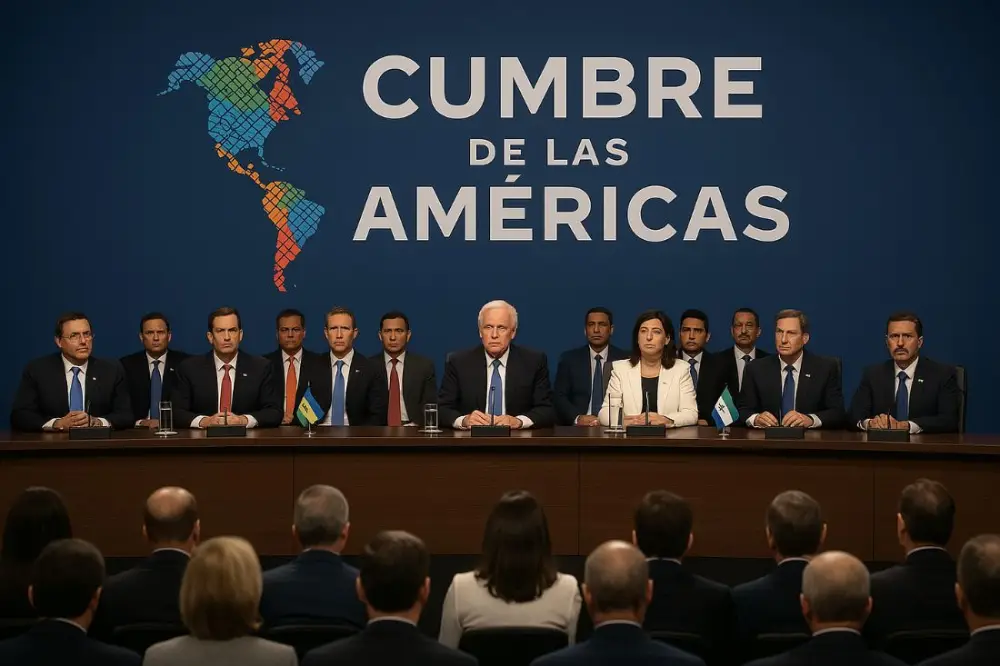
The birth of this mechanism took place in Miami, United States, in December 1994. Convened by then-U.S. President Bill Clinton, the first summit represented a milestone in inter-American relations by bringing together 34 leaders from the hemisphere — with the notable exclusion of Cuba — to deliberate on trade and economic integration in the post-Cold War context. The meeting culminated with a commitment to advance toward the creation of the Free Trade Area of the Americas (FTAA), an initiative that, although it did not materialize, established the foundations for future regional trade negotiations.
Since that founding moment, the summits have been held approximately every three years in various host nations. Each meeting has presented a particular thematic focus, reflecting both contemporary challenges and the strategic vision of the host country. The second summit, held in Santiago, Chile in 1998, prioritized education and democratic strengthening; while the third, held in Quebec, Canada, in 2001, emphasized the consolidation of hemispheric democratic institutions and marked a turning point by formally incorporating the democratic clause as a requirement for participation in these meetings.
One of the most decisive episodes in the trajectory of this mechanism was the Summit of Mar del Plata in 2005, Argentina, where negotiations on the FTAA reached a critical point in the face of deep divergences among member states and the rise of progressive governments in the region that questioned the trade liberalization policies promoted by Washington. This summit evidenced the ideological tensions that would, from then on, mark the development of this multilateral forum.
In recent times, the Summits have incorporated emerging issues such as the climate crisis, migration flows, citizen security, and social inclusion into their agenda. The Panama City Summit in 2015 marked another historic moment by featuring, for the first time, the participation of Cuba, while the Lima Summit in 2018 focused its efforts on the fight against corruption. Meanwhile, the IX Summit held in Los Angeles in 2022 was marked by controversies related to the non-invitation of Cuba, Nicaragua, and Venezuela, which generated significant absences, including that of the President of Mexico.
Structural Challenges
The main challenges facing the Summit of the Americas have been shaped through experiences accumulated in previous meetings, highlighting various structural and conjunctural problems that compromise its effectiveness as a mechanism for hemispheric coordination:
Political polarization and the difficulty in reaching hemispheric consensus constitute a fundamental obstacle. Deliberations on sensitive issues such as the participation of countries with questioned regimes, drug policy, or the question of the Malvinas Islands have generated significant tensions among participants. The Cartagena Summit in 2012 exemplifies this problem by concluding without a final declaration due to the impossibility of reconciling positions, demonstrating how ideological divergences can compromise the results of the mechanism.
The leadership traditionally exercised by the United States in the region has undergone substantial transformations. The hemispheric geopolitical reconfiguration and the emergence of alternative mechanisms such as CELAC and UNASUR have questioned U.S. influence, fostering a scenario where other regional actors assume more prominent roles in defining the inter-American agenda. This phenomenon has manifested particularly in discussions about the criteria for participation in the summits.
Socioeconomic asymmetries persist as a structural challenge for the continent. Despite efforts to promote economic integration and structural reforms, the effectiveness of these initiatives has been limited. The region continues to face high levels of inequality and insufficient economic growth to address sustainable development needs, which affects the capacity of the summits to generate significant commitments with citizen support.
The logistical complexity inherent in organizing meetings of this magnitude represents a considerable operational challenge. From selecting the venue to coordinating agendas, managing security, and administering deliberation spaces, each summit demands meticulous planning and significant resources, which may limit the capacity of some countries to assume the responsibility of hosting these events.
Emerging issues such as the climate crisis, migration flows, and post-pandemic recovery have acquired centrality in hemispheric discussions, demanding more innovative and collaborative approaches from American nations. The capacity of the summits to effectively address these transnational challenges will largely determine their future relevance as a strategic forum.
Critical Assessment and Perspectives
The Summits of the Americas, despite their strategic role in promoting hemispheric dialogue and cooperation, have been subject to various questionings throughout their trajectory. Among the main criticisms are:
- The gap between rhetoric and action constitutes a recurring concern. It is observed that the summits generate numerous declarations and commitments that, frequently, do not translate into effective policies or significant transformations for American societies. This disconnection between the declarative and the programmatic has eroded the credibility of the mechanism and its capacity to effectively impact national realities.
- The selective nature of participation, evidenced in the historical exclusion of Cuba during the first summits and of other countries in recent meetings, has been interpreted as a reflection of the asymmetric influence exercised by the United States in shaping the hemispheric agenda. This phenomenon has sparked debates about the equity and representativeness of the forum as a truly inclusive and democratic space.
- The perception of a predominance of U.S. interests has generated significant resistance. There is an assessment that the summit agendas respond excessively to Washington’s political and economic priorities, relegating priority issues for nations with different realities and needs. This perception has contributed to the search for alternative platforms that exclude the United States and Canada, such as CELAC.
- The political instrumentalization of the mechanism has hindered constructive dialogue. Ideological tensions between member states have diverted attention from the original objectives of cooperation, occasionally turning the summits into scenarios of rhetorical confrontation with limited capacity to generate tangible results.
- The limited capacity to effectively address structural problems such as economic inequality, systemic corruption, transnational drug trafficking, and citizen insecurity has been subject to criticism. Likewise, emerging challenges such as the climate crisis and mass migrations demand more articulated and forceful responses than those that the summits have managed to formulate so far.
- The cost-benefit relationship of these meetings has been questioned. The organization of the summits involves a considerable deployment of logistical and security resources, generating questions about their social profitability compared to the tangible results obtained. For some analysts, the summits have acquired a predominantly symbolic character, with limited impact on the transformation of hemispheric realities.
Despite these criticisms, the Summits of the Americas maintain considerable potential as a space for hemispheric dialogue and coordination. Their revitalization would require:
- Greater inclusivity that ensures the participation of all countries in the region, regardless of their ideological divergences, fostering a pluralistic dialogue that recognizes the political diversity of the continent.
- A programmatic approach focused on verifiable results, with effective follow-up mechanisms that guarantee the implementation of adopted commitments and their translation into concrete public policies.
- A thematic agenda that responds in a balanced way to regional needs, avoiding both excessive breadth that dilutes attention and narrowness that limits its relevance.
- Effective articulation with other multilateral mechanisms and with actors from civil society, the private sector, and academia, enhancing the inclusion of multiple perspectives in building hemispheric consensus.
- Strengthening the citizen legitimacy of the summits, bringing their processes and results closer to the everyday concerns of American populations through innovative strategies for communication and participation.
Ultimately, the future of the Summits of the Americas as an effective mechanism for hemispheric governance will depend on their capacity to reinvent themselves and respond to the challenges of a continent in transformation. Their survival as a relevant forum will require both political will and institutional innovation, in a context marked by the reconfiguration of the international order and the emergence of new paradigms of multilateral cooperation.