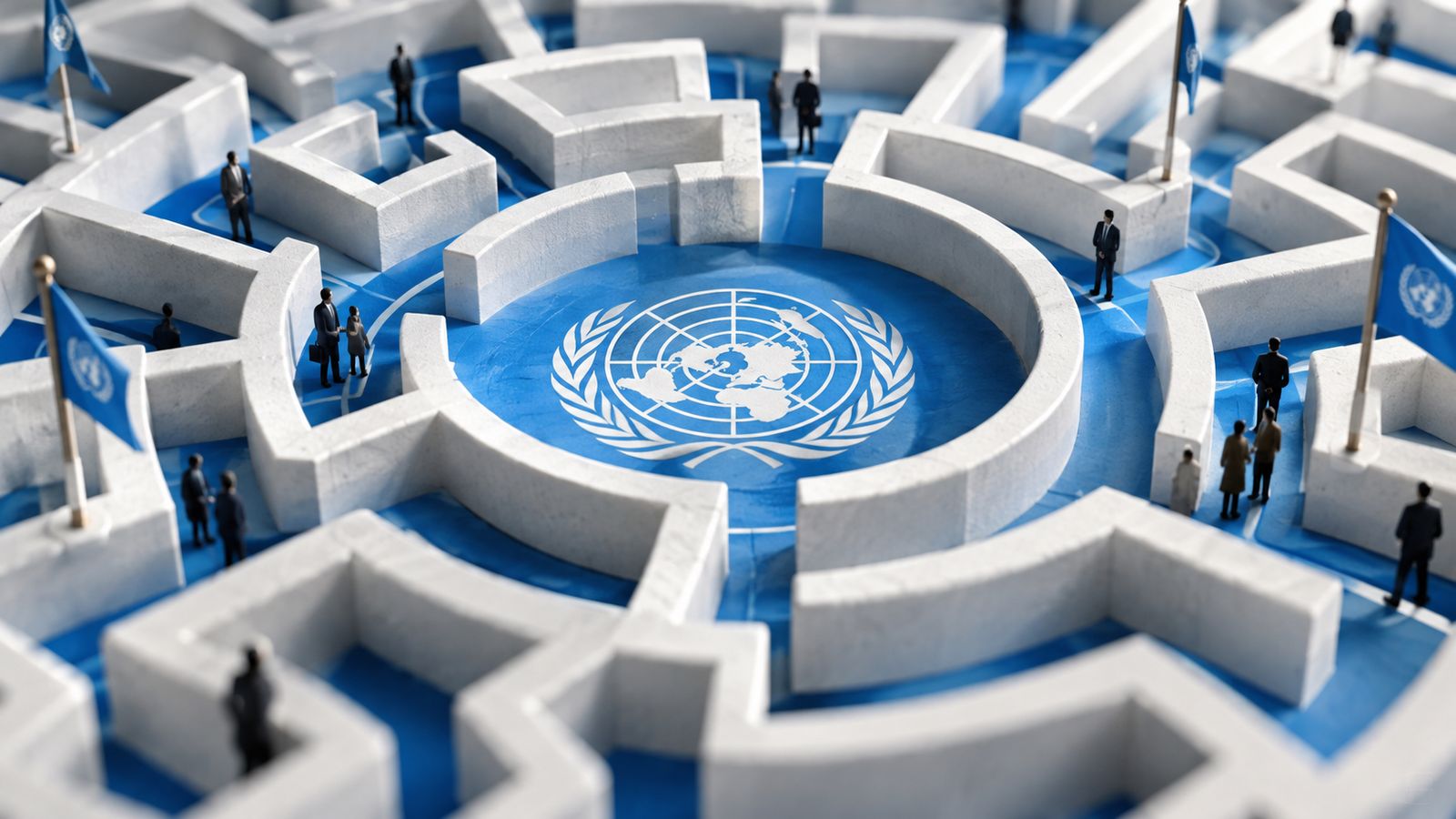
- De la Visión a la Acción: La Diplomacia Silenciosa de RD hacia la X Cumbre de las Américas
- From Vision to Action: The Quiet Diplomacy of the DR Toward the X Summit of the Americas
- Negociando el futuro de las Américas: De Santo Domingo 🇩🇴 a Los Ángeles 🇺🇸
- Negotiating the Future of the Americas: From Santo Domingo 🇩🇴 to Los Angeles 🇺🇸
- La Cumbre de las Américas: Evolución, Desafíos y Perspectivas
- The Summit of the Americas: Evolution, Challenges and Perspectives
Punta Cana, Exceptional Venue for the Tenth Summit of the Americas

Punta Cana, in the Dominican Republic, has been selected to host the 10th Summit of the Americas in December 2025, marking a historic milestone as the first time this hemispheric forum will convene on Dominican soil. Throughout the history of the Summits of the Americas, from Miami in 1994 to Los Angeles in 2022, diverse cities across the continent have welcomed the Heads of State and Government of the hemisphere. Each previous host city — Los Angeles (2022), Lima (2018), Panama City (2015), Cartagena de Indias (2012), Mar del Plata (2005), Quebec (2001), among others — offered a unique context with distinctive strengths and challenges. This comparative analysis examines the exceptional advantages that position Punta Cana as an unparalleled host, addressing factors of logistics, geography, connectivity, tourism infrastructure, diplomatic symbolism, and international projection. The objective is to provide a reasoned and detailed argument for why Punta Cana emerges as a privileged hemispheric meeting point compared to its predecessors.
Strategic Geographic Location and Logistical Facilities
Punta Cana’s geographic location in the heart of the Caribbean confers a remarkable strategic advantage. Situated midway between North and South America, this tropical enclave literally serves as a bridge between the hemisphere’s subregions. The Dominican Republic lies at the center of the Greater Antilles, facilitating attendance from North, Central, South America, and the Caribbean with reasonable flight times for all delegations. In contrast, some previous host cities were located at the extremes of the continent: Los Angeles (USA) in 2022 on the North American west coast required very long transcontinental flights for South American leaders; Quebec (Canada) in 2001, situated in the far north, presented a cold climate and greater remoteness for many Latin American participants. Punta Cana offers a more central convergence point with favorable Caribbean weather in December, avoiding the harsh conditions faced by summits like Quebec (low temperatures) or potential winter storms in cities of the Southern Cone.
Logistically, Punta Cana presents a concentrated and easily controlled environment, unlike the large metropolitan host cities of previous editions. The Punta Cana-Bávaro tourist area consists of hotel complexes and convention centers in close proximity, unlike sprawling cities where transfers can be complicated. In venues such as Lima (2018) or Panama City (2015), delegations faced urban congestion and long security-escorted caravans, as the summit venues were located in dense urban centers. Conversely, in Punta Cana the main hotels and potential meeting venues are within short distances from one another, connected by well-maintained internal roads, minimizing travel times and facilitating coordination of official convoys. This compact geographical layout allows heads of state and their entourages to convene efficiently without logistical setbacks — a challenge in large cities where traffic and geographic dispersion add complexity.
Furthermore, internal road connectivity in the Dominican Republic has substantially improved over the past decade. The Coral Highway and other modern roads link Punta Cana with the rest of the country, including the capital, Santo Domingo. This infrastructure ensures fast land routes for additional logistical support from the capital, where many government institutions and embassies are located, to the summit site. In essence, Punta Cana’s geographical position and its configuration as a tourist enclave ensure outstanding logistical facilities, distinguishing it from previous venues where urban or remote geography posed greater challenges.
Air Connectivity and International Accessibility
One of Punta Cana’s core strengths as a candidate city is its excellent international air connectivity. Punta Cana International Airport (PUJ) serves as the Dominican Republic’s main tourism gateway and ranks among the busiest international airports in the Caribbean region. It offers direct flights to dozens of destinations: over 25 countries and nearly 100 cities worldwide have direct connections to Punta Cana. This includes regular flights from major capitals and financial centers across the hemisphere: Washington D.C., New York, Miami, Toronto, Mexico City, Bogotá, Panama City, Buenos Aires, Santiago de Chile, Lima, among others. Even key European cities like Madrid, Paris, and Frankfurt have direct links, facilitating the attendance of observers or special guests from outside the region. This extensive air network enables most delegations to reach Punta Cana with one or no layovers, greatly simplifying travel logistics.
Flight frequency to Punta Cana is equally noteworthy. During peak season, the airport handles over 100 international flights per day on average and maintains high frequency year-round, reflecting the constant influx of visitors. This capacity ensures that, even with the simultaneous arrival of dozens of official delegations, the airport can efficiently manage landings, takeoffs, and ground services for presidential aircraft and private jets without disruptions. In previous Summits of the Americas, some host cities had limitations in this area: Mar del Plata (2005), for example, lacked broad direct international traffic, requiring many delegations to fly to Buenos Aires and then transfer via domestic flights or land routes to the coastal city, adding stopovers and complexity. Port of Spain (Trinidad and Tobago, 2009), being a smaller Caribbean island nation, had to resort to special coordination of flights and even floating accommodations (cruise ships) due to its limited air and hotel infrastructure. Punta Cana, however, does not require extraordinary solutions: its first-class airport and high-volume regular operations prepare it in advance for the traffic generated by a hemispheric summit.
Additionally, the proximity of the airport to the main hotel zone merits emphasis. Travel time from Punta Cana Airport to the major resorts and conference centers ranges from just 15 to 30 minutes via direct highways. In Los Angeles 2022, delegations had to traverse much greater distances from LAX Airport to downtown amid heavy traffic; in Cartagena 2012, although the airport was relatively close, its capacity was limited and many delegations had to travel via Bogotá. Punta Cana offers the convenience of an almost “door-to-door” arrival: leaders can land and, within minutes, be settled in their accommodations or at the conference hall, optimizing time and reducing travel fatigue. This swift accessibility helps ensure the summit begins with all participants present and minimal logistical stress.
First-Class Tourism Infrastructure and Hotel Capacity
Punta Cana’s reputation as a premier international tourist destination is underpinned by modern and well-developed infrastructure, specifically designed to accommodate thousands of visitors simultaneously at high standards. This distinguishes it from many previous Summit of the Americas host cities, which, while important urban centers, were not as specialized in large-scale tourism. In Punta Cana, hotel capacity is extraordinary: the Punta Cana–Bávaro region boasts more than 50,000 hotel rooms currently operating or nearing completion. There are dozens of 4- and 5-star resorts and hotels, many belonging to well-known international chains, offering a wide range of luxury accommodations, presidential villas, VIP suites, and all necessary services to host high-level dignitaries.
This abundance of hotel rooms guarantees adequate lodging for each delegation close to the meeting venue, without requiring dispersal across different cities or distant locations. In previous summits, hotel availability was sometimes a limiting factor: in Trinidad and Tobago (2009), for instance, Port of Spain’s limited hotel capacity led authorities to charter cruise ships as floating hotels to house attendees and support staff. Similarly, in mid-sized venues such as Cartagena (2012) or Mar del Plata (2005), five-star lodging options were limited, requiring early reservations and spreading delegations across several hotels throughout the city. Punta Cana, by contrast, can comfortably accommodate heads of state, ministers, delegations, security personnel, international journalists, and other participants without overwhelming its normal capacity, as its infrastructure routinely hosts tens of thousands of visitors weekly. This not only enhances comfort but also offers flexibility for unexpected increases in delegation sizes or in participants from parallel forums, such as the Business Summit or Civil Society Summit, which typically accompany the main meeting.
Beyond room quantity, the quality and modernity of tourist facilities stand out. Punta Cana offers several convention centers and conference halls equipped with cutting-edge technology. The Barceló Bávaro Convention Center, the largest in the Dominican Republic, encompasses approximately 11,500 m² of flexible space with capacity for several thousand people — ideal for plenary sessions, meetings, and large-scale events. Additionally, many resorts in the area have modular rooms and auditoriums suitable for simultaneous ministerial meetings, working groups, or cultural events during the summit. By comparison, venues like Lima had to adapt urban convention centers for an event of this magnitude (in 2018, Peru used its then-new Lima Convention Center, originally designed for World Bank meetings); in Panama (2015), the ATLAPA center was used, with space limitations that required special setups; while in Mar del Plata (2005), the city adapted theaters and hotels for meetings due to the lack of a large modern venue at the time. Punta Cana requires no rushed constructions or provisional adaptations: its tourism infrastructure already includes international-standard venues ready to host high-level events, with telecommunications infrastructure, audiovisual equipment, simultaneous translation booths, exhibition areas, and everything necessary for a world-class summit.
An inherent factor of tourism infrastructure is the quality of service and hospitality experience. Punta Cana has built a global reputation for excellence in customer service, with multilingual staff accustomed to hosting visitors from diverse nationalities. This is crucial at a diplomatic event, where each delegation has specific requirements and protocols that hotel staff must manage with discretion and professionalism. With decades of experience as a preferred destination for discerning travelers, Punta Cana has a workforce trained in international etiquette, high-end gastronomy, luxury transport, private emergency medical care, and other premium services. The local tourism infrastructure is exceptionally prepared to meet the standards demanded by summits of heads of state. Major cities like Los Angeles certainly offer top-tier services, but in Punta Cana these are concentrated and dedicated exclusively to participants during the event, without the distractions of a metropolitan area where resources are distributed across millions of residents. This focus enables a more personalized and efficient experience for summit attendees.
Security and Control of the Environment
Security constitutes a critical aspect of any international summit, and Punta Cana offers a particularly favorable setting to ensure the protection of heads of state and delegations with minimal risk of incidents. As a predominantly tourist area relatively isolated from large urban centers, Punta Cana facilitates the implementation of a broad and effective security perimeter with relative ease. Ground access to the hotel zone is limited to a few main roads that can be controlled through checkpoints and military/police surveillance — far more manageable than securing dozens of avenues in a large city. Similarly, the local airspace can be temporarily restricted with less impact on civilian traffic (in coordination with the airport), as the area is less densely populated. Punta Cana’s physical layout enables comprehensive territorial control during the summit.
The Dominican Republic has experience in securing tourist zones through specialized forces such as the Specialized Corps for Tourist Security (CESTUR) and elite units of the national army and police. These forces are accustomed to protecting visiting dignitaries, international tourism events, and maintaining order in enclaves where foreign visitors converge. For an event of the magnitude of the Summit of the Americas, these capabilities will be reinforced by international cooperation, as each country typically brings agents for the security of its head of state, coordinated with the host. The controlled environment of Punta Cana allows for highly effective coordination of security operations, providing peace of mind to all participants. In contrast, Los Angeles 2022 authorities had to manage the protection of leaders across multiple sites as well as activist demonstrations in an open city; likewise, Quebec 2001 and Mar del Plata 2005 were marked by massive protests from anti-globalization social movements which, though democratic expressions, posed major security challenges and generated tension around the events. In Punta Cana, the likelihood of large protests disrupting the summit is significantly lower — both due to the relatively remote location and the local political climate, characterized by stability and the absence of large-scale internal conflicts.
It is also worth highlighting that the Dominican Republic enjoys considerable political and social stability in the regional context. Unlike some previous hosts who faced crises during organization (for example, in 2018 Peru’s president resigned just weeks before the summit), the Dominican Republic enters 2025 with a domestic scenario of social peace and governability. This translates into a predictable and safe setting for hosting the Summit. Dominican authorities can fully concentrate on planning and executing the security operation without distractions from internal upheavals. In fact, inter-institutional coordination for international events was successfully tested at the 28th Ibero-American Summit of 2023 in Santo Domingo, where no security incidents were reported, and the transit of multiple heads of state was efficiently handled in the capital. In Punta Cana — a less complex setting than Santo Domingo — these security guarantees can be further enhanced.
In summary, Punta Cana offers a controllable and highly secure environment for the 10th Summit of the Americas, comparing favorably with past venues where security had to be heightened due to location characteristics. The combination of isolated location, extensive experience in securing tourist enclaves, and national stability provides exceptional confidence that the summit will proceed without public order disruptions.
Diplomatic Symbolism and Historical Significance
The selection of Punta Cana as host of the 10th Summit of the Americas in 2025 carries strong diplomatic symbolism and historical meaning — both for the Dominican Republic and for the hemisphere as a whole. Primarily, it represents an affirmation of the inclusion of the Spanish-speaking Caribbean in continental dialogue spaces. Until now, only once has a Caribbean country hosted this conclave (Trinidad and Tobago in 2009, an English-speaking nation). For a Spanish-speaking Caribbean country to organize the 10th Summit sends a message of hemispheric unity that transcends linguistic and geographic boundaries. The Dominican Republic, a medium-sized country in terms of population and economy, yet with strong ties to both continental Latin America and North America, stands as a bridge between diverse subregions. This contrasts with the previous summit in Los Angeles, hosted by the hemisphere’s largest power; the shift to Punta Cana symbolizes a diplomatic rebalancing, giving prominence to a developing nation and reinforcing the idea that all countries — large and small — have a voice and responsibility in shaping the shared agenda of the Americas.
The setting of Punta Cana also brings special symbolism. Internationally, Punta Cana is synonymous with hospitality, natural beauty, and multicultural gathering. Many associate this locale with paradisiacal beaches where visitors from around the world converge. Bringing the hemisphere’s top leaders to this location creates a powerful image: that of a diplomatic retreat in a Caribbean paradise, conducive to coexistence and frank dialogue. This relaxed but carefully curated atmosphere may foster more informal and sincere negotiations on the sidelines of official sessions, strengthening camaraderie among leaders. In diplomacy, informal settings can sometimes unlock conversations that would not flow as easily in formal government halls. Previous venues had their own symbolic weight — Panama 2015, for instance, went down in history for the rapprochement between Cuba and the United States after decades of estrangement. In 2025, Punta Cana could symbolize the renewed commitment of the Americas to unity and shared security (considering that the official theme of the 10th Summit revolves around building a secure, prosperous, and democratic hemisphere). The image of leaders discussing hemispheric cooperation with the Caribbean Sea in the background sends a powerful message: just as waters connect continents, in Punta Cana nations seek common ground to overcome historic divisions.
For the Dominican Republic, the symbolism is profoundly significant. From the Dominican diplomatic perspective, hosting the summit is a recognition of its recent record of stability and constructive leadership in the region. Many will recall that in past editions, some summits were overshadowed by diplomatic disputes over invitations or the absence of certain countries (in Los Angeles 2022, for example, several Latin American presidents boycotted the event in protest of the exclusion of Cuba, Venezuela, and Nicaragua). This time, the Dominican Republic has positioned itself as a facilitator of an inclusive meeting, inviting all OAS members without ideological distinctions, which enhances its image as a balanced and conciliatory country. The mere act of gathering all leaders on Dominican soil will be seen as a diplomatic achievement in itself, emphasizing that Punta Cana becomes a territory of hemispheric consensus. Its selection as host can also be interpreted as a recognition of the value of democracy and freedom in the Caribbean — at a time when the strength of democratic institutions is being debated globally. In essence, the diplomatic symbolism of Punta Cana 2025 lies in presenting the Americas united in a welcoming, neutral, and emblematic setting of Caribbean brotherhood — setting it apart from the narratives surrounding previous summits.
International Projection and Institutional Preparedness
By organizing the 10th Summit of the Americas, Punta Cana and the Dominican Republic gain unprecedented international visibility, strengthening their position on the global stage beyond tourism. The media coverage accompanying a hemispheric summit is immense: hundreds of international journalists will report on every meeting, every statement, and will also showcase images of the host site worldwide. This means that the name “Punta Cana” and, by extension, the country brand “Dominican Republic” will resonate extensively in news outlets, newspapers, and on social media during the event. The international spotlight this provides is invaluable. Other countries that have hosted summits have capitalized on such exposure: following the 2015 summit, Panama enhanced its image as a hub of connectivity and dialogue; after 2009, Trinidad and Tobago gained visibility in circles where it had previously been little known. Punta Cana, already renowned in the tourism sector, will now project itself as a venue for global diplomacy — associating its name not only with leisure but with the pursuit of solutions to hemispheric challenges.
This projection brings long-term collateral benefits. Demonstrating to the world that the Dominican Republic can flawlessly organize an event of this magnitude will increase international confidence in the country. This could translate into greater foreign investment, expanded business tourism (MICE) in the future, and a strengthened Dominican role in multilateral forums. In fact, the country has already begun to build a reputation in this regard: in 2023, it successfully hosted the Ibero-American Summit of Heads of State and Government in Santo Domingo, and recently Punta Cana was recognized as the “Best Latin American City for Meeting Tourism (MICE)” in 2024. These milestones highlight substantial logistical and institutional preparation, serving as a prelude to the 10th Summit of the Americas. Unlike previous hosts that perhaps received the summit without much immediate experience in similar events, the Dominican Republic is building on an active cycle of international gatherings. The lessons learned at the Ibero-American Summit (security coordination, protocol, transportation, cultural agenda, etc.) establish a valuable precedent. Likewise, the fact that Punta Cana regularly hosts corporate conferences, sectoral summits, and upcoming global events — such as the IOC General Assembly in 2027 — demonstrates that local and national institutions have developed solid organizational expertise.
In terms of international reputation, this summit will consolidate the image of the Dominican Republic as a responsible and committed actor in hemispheric cooperation. As host country, it will lead preliminary discussions, propose themes (the Dominican motto for 2025 emphasizes hemispheric security — a widely shared regional priority), and seek consensus for the final declaration. This gives Dominican diplomacy the opportunity to shine and positively influence the continental agenda. Past hosts have seen their prestige increase: Peru in 2018, despite internal challenges, was praised for promoting a regional commitment against corruption; Panama in 2015 raised its profile as a facilitator of dialogue. Similarly, the 10th Summit of the Americas — Punta Cana 2025 — will position the Dominican Republic as a hemispheric leader in key areas (regional security, sustainable tourism development, natural disaster management, etc.), domains where the country has experience and a distinct voice. The international projection extends beyond the summit’s conclusion: any achievements or agreements reached will bear the Dominican imprint, and the country will remain a key reference in follow-up initiatives.
Finally, it is important to highlight the internal legacy this experience will create. Organizing the 10th Summit involves mobilizing skilled human resources, improving infrastructure, and coordinating multiple public and private entities. This mobilization acts as a catalyst: personnel are trained, protocols are refined, technology is upgraded, and a stronger institutional foundation is laid for future events. While some past hosts had to start from scratch, potentially losing acquired knowledge, the Dominican Republic is building on an existing foundation and creating installed capacity for the future. This reinforces the notion that Punta Cana represents not only a fortunate choice due to current conditions but also a model of sustainable organization that could inspire preparations for high-level events in other tourist destinations worldwide.
Conclusion
All factors considered, Punta Cana emerges as an exceptionally advantageous venue for the 10th Summit of the Americas when compared with previous host cities. Its unique combination of central geographic location, global air connectivity, vast and high-quality tourism infrastructure, secure and controllable environment, and powerful symbolism distinguishes it as an ideal hemispheric meeting point. While Los Angeles offered economic power and Lima cultural history, Punta Cana offers logistical efficiency and Caribbean charm in one package; while Panama or Trinidad provided island hospitality on a smaller scale, Punta Cana does so at large scale with a proven track record. Every previous host contributed valuable lessons, but none combined all optimal conditions as comprehensively as Punta Cana does today.
By supporting the choice of Punta Cana, one can assert that it will not only benefit participants with tangible advantages but will also send a powerful message to the world: that the Americas can unite in harmony in a place that symbolizes unity, prosperity, and shared security. Through Punta Cana, the Dominican Republic is consecrated as a privileged hemispheric host, poised to mark a turning point in the history of the Summits of the Americas. In 2025, the continent’s attention will focus on Dominican shores, where the convergence of advantages described here promises to contribute to a fruitful and memorable summit, honoring the spirit of cooperation that this forum seeks to promote.