- De la Visión a la Acción: La Diplomacia Silenciosa de RD hacia la X Cumbre de las Américas
- From Vision to Action: The Quiet Diplomacy of the DR Toward the X Summit of the Americas
- Negociando el futuro de las Américas: De Santo Domingo 🇩🇴 a Los Ángeles 🇺🇸
- La Cumbre de las Américas: Evolución, Desafíos y Perspectivas
- The Summit of the Americas: Evolution, Challenges and Perspectives
- Punta Cana, sede excepcional de la Décima Cumbre de las Américas
Negotiating the Future of the Americas: From Santo Domingo 🇩🇴 to Los Angeles 🇺🇸
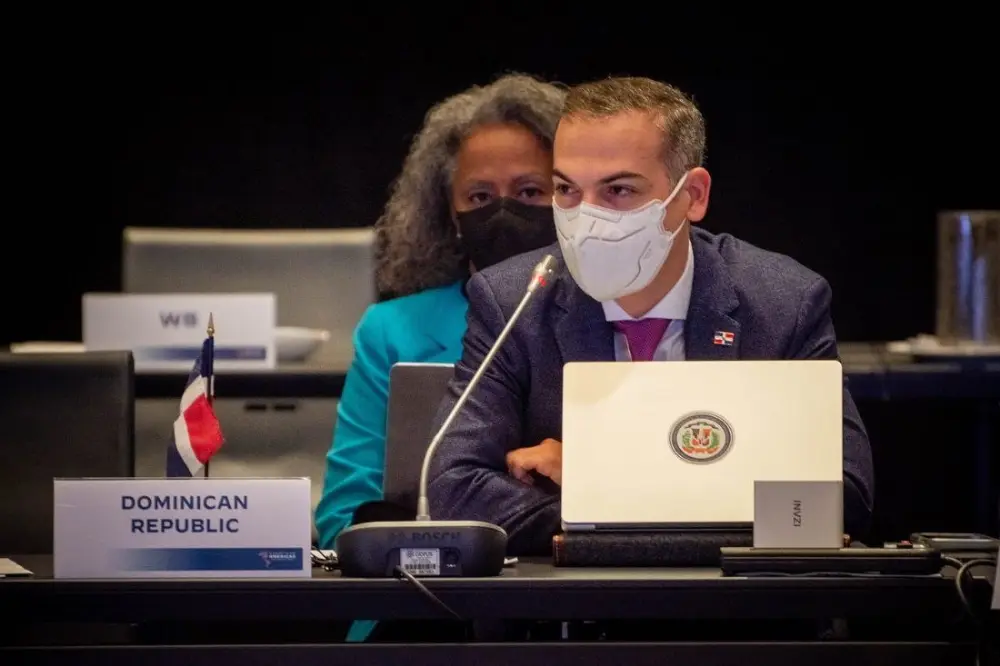
On Sunday, May 1, 2022, as the Permanent Representative of the Dominican Republic to the Organization of American States (OAS) and Deputy National Coordinator of Summits, I embarked on my first trip from Washington D.C. to Los Angeles, California, with a brief layover in Chicago. I was accompanied by Minister Counselor Erika Álvarez (our current ambassador to South Africa).
First Impressions of Los Angeles
It was my first time on the west coast of the United States, and upon landing at LAX airport, I quickly became impressed by the magnitude of the city. The roughly 45-minute drive from the airport to the city center revealed vast urban landscapes and the diversity of its environments. However, the impacts of the pandemic on the economic and social core of the city were also evident.
Upon reaching downtown Los Angeles, what I observed sharply contrasted with the vitality and bustle I had anticipated.
The streets were unusually quiet, with many businesses closed and an alarming number of homeless people, many of whom were visibly struggling with substance abuse. A friend later pointed out to me that the deterioration of this area was not solely a consequence of the pandemic but the result of decades of entrenched socioeconomic inequalities and problems.
This bleak panorama was a stark reminder of how the health crisis had exacerbated pre-existing inequalities, leaving the most vulnerable in an even more precarious situation. The scars of the crisis were palpable in every corner of downtown, where the disparity between the more affluent areas, which seemed to have withstood the economic onslaught better, and the harder-hit areas was evident, highlighting the enormous challenges Los Angeles faced on its path to recovery. The pandemic had aggravated long-standing social and economic problems, underscoring the urgent need for inclusive policies and revitalization strategies that left no one behind.
We stayed at the imposing InterContinental Los Angeles Downtown, a skyscraper located at 900 Wilshire Boulevard that stood majestically on the city’s horizon. Later, I was informed in the lobby that it was the tallest building on the west coast of the USA. From the heights of the hotel, the panoramic view contrasted with the reality on the ground. This refuge of luxury and elegance provided us a comfortable stay, but it could not hide the fact that Los Angeles, despite its grandeur, struggled to regain its vitality.
Logistical Challenges and Regional Solidarity
The face-to-face negotiations in Los Angeles presented significant complications, not only due to the logistics of mobilization but also due to the high costs and limitations faced by less resourced countries. Despite the special rate negotiated by the United States government, for many, it was impossible to mobilize all the necessary technicians and specialists to discuss complex issues such as energy, health, and digital transformation.
This situation forced us diplomats to become intermediaries in communications, often without the technical base sufficient to discuss effectively, adding complexity to the process.
Incidentally, a situation that arose was that the representative from one of the regional countries asked us for assistance because she could not cover the costs of her lodging. Since we were traveling with two rooms, Erika Álvarez informed me of her willingness to share the space with the colleague. This gesture of solidarity reflected the spirit of brotherhood and camaraderie among the countries of the region, creating close bonds and mutual support that transcended formal meetings. We made this decision selflessly, under the conviction and firm belief that, were we to find ourselves in a situation of need, our colleagues would not hesitate to lend us a helping hand.
Although it was a completely internal resolution and we never consulted our superiors, we knew we were acting in line with the values of cooperation and solidarity that guide our diplomatic relations.
This mutual trust and spirit of selfless collaboration are the fundamental pillars that sustain the strong bonds of friendship and brotherhood among our nations.
Internal Coordination
Anticipating the difficulty of having experts on-site during the negotiations, we conducted meticulous direct coordination with our sectoral institutions in Santo Domingo and the Chancellery. Erika Álvarez and I maintained constant communication with those handling affairs in the capital, which allowed us to be prepared to address complex issues and ensure that our interventions were precise and effective contributions.
In the field of democratic governance, we had the privilege of relying on the invaluable support of the General Directorate of Ethics and Government Integrity (DIGEIG), led by the distinguished Milagros Ortiz Bosch and her dedicated focal point, Berenice Barinas Ubiñas.
Their always attentive disposition and tireless commitment allowed us to make substantial contributions to the final document, enriching its content with valuable perspectives and innovative proposals related to open government, transparency, and public procurement.
In the field of clean energy, the Deputy Minister of Energy and Mines, Alfonso Rodríguez, and his exceptional team proved to be our most faithful strategic allies.
Their tireless work ensured that we had the most up-to-date and accurate technical information at all times, providing us with solid backing in the negotiations. I cannot forget those thrilling discussions about the various types of hydrogen: green, blue, gray, among others. For me, it was a total learning experience, as before embarking on this journey, I was completely ignorant on the subject.
I cannot imagine what it would have been like to be sitting there, heading our delegation, without the invaluable support and expertise of our deputy minister and his team.
Likewise, in the topics of digital transformation, we had the invaluable support of Deputy Minister José David Montilla, who, from the Presidency of the Dominican Republic, was always just a message away.
His prompt availability and his ability to facilitate communication and quick decision-making were fundamental for us to successfully navigate the complex waters of the negotiations in this crucial area for the future of our nations.
Montilla’s mastery of our national strategy for digital transformation, cybersecurity, and digitalization granted us an aura that allowed us to project our message with authority and generate trust among our peers. His deep knowledge and his ability to articulate our positions clearly and forcefully were a source of inspiration for all of us.
I felt deeply proud to see that in these topics we stood out for the depth of our arguments and the advanced nature of our experiences, which we could share with countries that in other times could have taught us lessons. It was gratifying to see how our nation had taken significant steps in the field of digital transformation, positioning ourselves as a reference for other nations in the region.
This experience made me reflect on the extraordinary talent and dedication of our officials, who work tirelessly to drive the progress of our country. Thanks to their effort and vision, the Dominican Republic is positioning itself as a leader in the adoption of digital technologies and the implementation of innovative policies that allow us to face the challenges of the future with greater confidence and determination.
As for the public health negotiations, these turned out to be relatively simple, given that the context of the pandemic had already created multilateral discussion spaces in forums such as the World Health Organization (WHO) and the Pan American Health Organization (PAHO), where our country was already actively participating. This made our positions clearly defined, and the differences in the region were minimal, allowing us to advance with agility in this area.
This close collaboration with our sectoral institutions was essential to ensuring that the negotiations progressed effectively, despite the distance and the lack of experts physically present at the meetings.
Americans in the driver’s seat
This first trip, which lasted from May 1 to 7, would be the first of two to Los Angeles for the face-to-face negotiations prior to the IX Summit of the Americas, which would begin the second week of June. The second trip, from May 27 to June 6, intensified the negotiations even more. After months of virtual meetings within the framework of the Summit Implementation Review Group (SIRG), the discussions moved to face-to-face encounters, where deadlines were tight, and tensions to reach consensus increased.
The negotiations took place daily, starting in the morning and often extending into the late evening. Despite the long hours, with several hours of time difference, I had to follow up on the matters in Washington related to the OAS and, at the same time, constantly communicate with our Chancellery in Santo Domingo, keeping them informed about the evolution of the negotiations.
I had never been so tired in my life; these were 27-hour days.
For his part, Kevin O’Reilly, the United States’ National Summit Coordinator and chairman of the meetings as the hosts, is an American diplomat with extensive experience in the region, including a special connection with the Dominican Republic, where he served two decades ago. His mastery of Spanish and his understanding of regional issues allowed him to expertly guide the complex discussions. O’Reilly, with a distinguished career in the U.S. Foreign Service, has held high positions in the State Department and has worked on national security in places like Baghdad, Buenos Aires, Panama, and Santo Domingo. His vast experience and academic background made him the ideal leader to moderate the negotiations.
However, it is worth noting that the methodology adopted for the negotiations, which consisted of dividing the topics into five main areas, presented certain challenges. This thematic fragmentation made coordination and alignment of the countries’ positions difficult, as each delegation had to address multiple fronts simultaneously.
Additionally, the practice of the United States conducting bilateral negotiations in the capitals of the participating countries, while in Los Angeles and Washington the multilateral negotiations were developed, generated some confusion and lack of coherence in the messages.
These strategies, although commonly used in diplomacy, can create difficulties in achieving effective synchronization between the different negotiation instances. Not all countries have the agility and resources necessary to maintain perfect coordination in real time on all fronts. This situation can lead to misunderstandings and misalignment in positions, which in turn can hinder the progress of the negotiations.
I hope this will be a lesson learned for future summits, as maintaining thematic cohesion and establishing efficient negotiation mechanisms help to coordinate bilateral and multilateral negotiations. Only in this way can all participating countries have the opportunity to make their voices heard and contribute effectively to the construction of lasting consensuses for the benefit of the entire region.
The Leadership of the Dominican Republic in the Negotiations
In the midst of these complex negotiations, the Dominican Republic played a crucial role in leading the discussions on clean energy. Deputy Minister of Energy and Mines, Alfonso Rodríguez, it should be noted, was the only sectoral official who accompanied us in person, represented our country with excellence. His vast experience and technical knowledge in the sector allowed him to navigate the negotiations effectively, ensuring that the Dominican Republic stood out in the discussions. Thanks to his leadership, significant agreements were reached on promoting renewable energies, energy efficiency, and the reduction of greenhouse gas emissions, reflecting both our national priorities and the shared interests of the region.
However, it is important to highlight how challenging it was to negotiate on clean energy with so many countries with different contexts at the table. The contrast in the needs and possibilities of the Caribbean islands compared to continental states was particularly notable. The islands, due to their size and limited resources, face unique challenges in terms of energy security, infrastructure, and access to clean technologies. Their economies are more vulnerable to the impacts of climate change and fluctuations in fossil fuel prices, making the transition to sustainable energy sources even more urgent.
On the other hand, continental states, with larger territorial extensions and more diverse resources, have a broader range of options to drive the energy transition. They can leverage sources such as wind, solar, and hydroelectric energy on a large scale and have greater capacity to attract investments and develop infrastructure projects.
Finding a balance between these disparate realities and reaching agreements that benefited all countries was a true challenge.
It required great sensitivity and empathy from the negotiators, as well as the willingness to listen and understand the concerns and aspirations of each nation. The Dominican Republic, as an insular country with experience in promoting renewable energies, was able to build bridges between different perspectives and contribute to the construction of consensuses.
Despite the difficulties, our country’s leadership in the discussions on clean energy strengthened our position on the hemispheric stage, consolidating our reputation as a country committed to transitional energy policies and sustainable development.
Our contributions not only helped to build agreements but also made clear our capacity to lead strategic issues on the regional agenda, taking into account the diverse needs and realities of all participating countries.
In addition to leading the negotiations on clean energy, the Dominican Republic was also tasked with facilitating a solution to the marked differences that arose around the commitment to democratic governance, specifically regarding the OAS electoral observation missions. For months, several countries had expressed concerns about the composition, focus, mandate, and operability of these missions, which generated great resistance to accepting the initial texts. This led us to long hours of work alongside colleagues, seeking language that could be accepted by all.
On the penultimate day of negotiations, around 10 p.m., I proposed a solution that finally satisfied all the delegations. I remember leaving the room and boarding the elevator with Kevin O’Reilly, who, visibly exhausted, commented to me with a tired smile: “sometimes you have to leave it for when we are tired, fatigue, hunger, cold, help…” His observation, although simple, reflected the reality of the exhausting negotiations, where often the most complex solutions are found when everyone is at their limit. Before saying goodbye that night, Kevin also thanked us for the help provided to unlock this critical point, which was key to advancing the negotiations.
Before presenting the text that broke the impasse, I made sure to consult with Chancellor Roberto Álvarez and recognized experts from the region, such as Daniel Zovatto. These consultations were crucial to fine-tune the details and ensure that the proposal was solid, aligned with the positions of the countries, and acceptable to all. Only after receiving their feedback and endorsement did I present the proposal that allowed us to overcome the differences that had persisted for months.
This exercise of consultation and consensus-building demonstrated the importance of collaboration and dialogue in multilateral diplomacy.
Throughout this process, I always had in mind our aspiration to host the next summit. After the necessary consultations, it was appropriate for our country to formally notify in writing the Summit Secretariat of the OAS so that it would be circulated to the other countries and wait for their reactions. If there was no one else interested, the decision would be made at the close of the IX Summit in June.
Therefore, we were always careful in the negotiations and our pronouncements, aiming to play a conciliatory role, bridge positions, and facilitate any procedure that would facilitate the negotiations.
This was not difficult, as our country has never engaged in a foreign policy of contradiction or confrontation. In a sense, it has been a reflection of our Caribbean culture and lifestyle: much passion, much joy and energy, and when we have problems, we express ourselves and move forward.
This conciliatory and constructive attitude allowed us to gain the trust and respect of our colleagues, paving the way for the Dominican Republic to be seriously considered as the host of the next Summit of the Americas.
Moments of Leisure and Final Reflection
Although traveling to Los Angeles for these negotiations sounds interesting, the reality is that on most of these work trips, one gets to know very little about the city and does little tourism. On this occasion, the first day we took advantage of going out to see the famous Hollywood sign, stroll through Rodeo Drive, and later, visit Santa Mónica Beach to see its iconic pier. We only walked along the Walk of Fame during the summit itself. Although cultural events are organized for the participants during the Summit, these are mainly dedicated to high-level officials. In our case, we usually participate only in the opening and closing of these events, as the days of the summit are marked by intense work.
However, for the rounds of negotiations prior to the summit, the mayor of Los Angeles organized a welcoming event in Chinatown, where we had an exceptional evening. The hospitality of our hosts and the opportunity to immerse ourselves in the vibrant culture of Chinatown were a welcome respite on the eve of intense negotiations.
This experience reminded us of the importance of cultural exchanges and how these moments of human connection can strengthen the bonds between nations.
In summary, my experience in the negotiations prior to the IX Summit of the Americas in Los Angeles, which spanned two trips, was one filled with challenges, learning experiences, and achievements. From logistical complications to complex discussions on strategic issues, each moment reflected the importance of cooperation, coordination, and leadership in multilateral diplomacy.
As the Dominican Republic, we demonstrated our ability to lead key issues such as clean energy and facilitate solutions in moments of impasse, strengthening our position on the regional stage.
Although the intense work left little time for tourism, the moments shared with colleagues, the experiences lived in the city, the warm reception in Chinatown, and even the search for the laboratory for the COVID test left an indelible mark.
Los Angeles, despite the effects of the pandemic, remained a fascinating place, full of contrasts and opportunities. I am sure that this experience not only enriched my diplomatic career but also contributed to strengthening the bonds of friendship and solidarity among the countries of the region, while laying the groundwork for the Dominican Republic to be considered as a regional leader and potential host of future summits.